Why the Black Market Still Beats Legal Weed
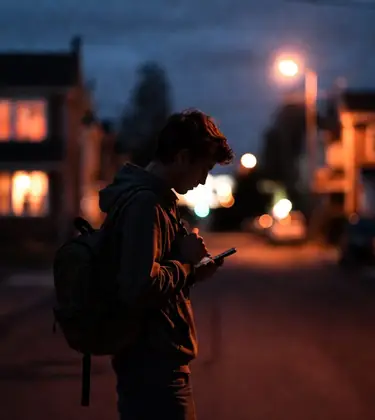
Twenty-four states run legal adult-use sales. The industry moves tens of billions of dollars a year. And the guy with a backpack and a burner phone is still doing fine.
That is the part nobody planned for. Legalization was supposed to starve the illegal trade out within a few years. Instead the two markets settled into an uneasy split, and in some states the unlicensed side is still the bigger one. Here is what is actually keeping it alive in 2026.
How big is the illegal weed market right now?
Bigger than the legal one in the state that legalized first. A decade after Proposition 64 passed, state estimates put illegal cultivation in California at eight times the volume produced by licensed farms, and most of that product never reaches a California customer. It gets trucked to states where prohibition is still in force and the margins are fat.
National figures are softer, because nobody audits a dealer. Analyst estimates of the illicit share of total US consumption land anywhere between half and three quarters depending on the method used. The honest read is that the illegal market is still large enough that its size is genuinely argued about, which tells you plenty on its own.
Why is street weed cheaper than dispensary weed?
Tax stacking. That accounts for most of the gap.
A legal eighth carries a state excise tax, state and local sales tax, and in a lot of cities a separate cannabis business tax layered on top. California pushed its excise rate to 19% in July 2025 before lawmakers reversed course and set it back to 15% through 2028. In Los Angeles, the combined bite still pushes a $35 jar past $50 at the register.
Then come the costs that never appear on the receipt. License fees renewed annually. Mandatory lab testing on every batch. Seed-to-sale tracking software. Vaults, cameras, guards, and armored cash pickups because most banks still keep their distance. Compliant packaging that sometimes costs more than what is inside it. Landlords charging a premium because half of them will not rent to a cannabis tenant at any price.
A dealer carries none of that. He pays for product and gas.
What the guy with the backpack still does better
Price is the headline. Convenience is the reason he keeps the customer.
He delivers. Licensed retailers cannot cross state lines, and legal delivery is banned outright in plenty of jurisdictions that allow storefronts.
He takes no ID and leaves no record. Some people weight that higher than a pesticide screen, particularly anyone with a job that drug tests.
He runs a tab. No dispensary is fronting anybody an eighth until Friday.
He is open when the store is closed. Regulators set retail hours, and they usually end well before the night does.
He is everywhere. Large stretches of legal states have banned retail locally, which means legal on paper with no licensed store within an hour's drive.
Retail deserts do more damage than any tax rate. A customer who cannot reach a dispensary is not weighing options. They are calling the only number they have.
Feeling lost on how to start? Try taking our quiz!
Start a QuizWhy do people still buy from dealers in legal states?
Because price is one input among several. A discrete choice study of roughly 960 adult cannabis consumers living in legal states found that the odds of picking the legal source rose with lab testing, shorter travel distance, higher potency, and lower price acting together. Fix one of those and leave the rest broken and the customer does not move.
Loyalty is real too, and the industry keeps underrating it. If somebody has bought from the same person for eleven years, a glass counter and a QR code is not an upgrade. It is a stranger asking for a driver's license.
Cash friction adds to it. Card processing at licensed shops still runs through workarounds, ATM surcharges, and cash-only registers. Meanwhile the unlicensed market took payment apps years ago.
The unexamined day is a wasted opportunity. Reflect on what you did, what you learned, and how you can improve.
John Dewey
Is illegal weed actually worse?
Sometimes. Sometimes not, and pretending otherwise costs the legal side credibility.
Plenty of unlicensed flower comes from small growers who care about their reputation and their gardens. Plenty of it also comes from trespass grows run with banned pesticides, sprayed on plants nobody tests. The buyer has no way to tell the two apart. The real risk sits there, in the part you cannot see.
The legal market's one unbeatable feature is verification. A COA lets you check a claim instead of trusting the person making it. Everything else about a dispensary can be matched or beaten by a good dealer. That cannot.
What changed in 2026
Two federal moves are reshaping this fight, and neither has fully landed.
In April 2026 the Justice Department moved marijuana in FDA-approved products and state-licensed medical programs from Schedule I to Schedule III, with a broader administrative hearing on the plant's overall status opening in June. If that broader move completes, licensed operators finally shed the federal tax penalty that has been eating their margins for a decade. That is the first realistic path to legal prices dropping on their own.
The second move targets a market most consumers never thought of as illegal. Congress rewrote the federal definition of hemp in November 2025, capping finished consumer products at 0.4 milligrams of total THC per container, with the new definition taking effect on November 12, 2026. That takes out most THCA flower, hemp gummies, and hemp beverages sold in smoke shops and gas stations across prohibition states.
Millions of those customers get handed back to whoever is willing to serve them, and in Texas or Tennessee that will not be a dispensary. We covered how that whole category got built in our piece on what THCA is and why it was everywhere.
Forty years of watching the same argument
Barney's Farm has been in this since the 1980s, back when there was no legal market anywhere to compare against. Our founder Derry was traveling through Afghanistan and the Himalayas collecting landrace genetics from farmers who had grown the same lines for generations. No lab certificates. No batch numbers. No regulators anywhere in the chain.
What existed instead was reputation, and reputation was the entire enforcement mechanism. Send somebody bad seed once and you were finished. That is a harsher accountability system than most people assume, and it produced genetics that are still in circulation forty years later.
This matters because the current debate treats quality as something regulation invented. It did not. The Amsterdam coffeeshops that built our name operated in a legal gray zone for decades and held their standards because customers walked out when they slipped. Our 40-plus Cannabis Cup wins came out of that pressure, not out of compliance paperwork.
Regulation added verification, which is a genuine improvement. It did not add care. Growers who take the plant seriously have always existed on both sides of the line, and the price gap has nothing to do with which side they picked.
Is the gap closing?
Slowly, and unevenly.
Legal flower prices have fallen hard since 2021 in mature markets. In some of them the cheapest licensed eighth now undercuts street prices outright, which was unthinkable five years ago. Oversupply did what enforcement never managed.
The pattern is consistent. Where legalization arrived with real retail density and a workable tax rate, legal market capture climbs steadily. Where it arrived with local retail bans and a 40% effective tax, the unlicensed market simply kept operating and nothing about consumer behavior needed explaining.
It was never a morality problem. It was a math problem, and the states that fixed the math got the result.
The third option most of this coverage skips
There is a way out of the comparison entirely.
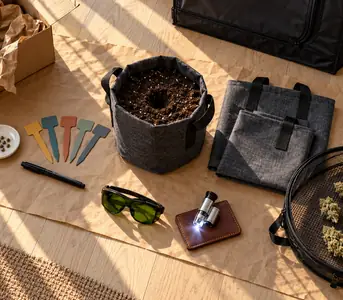
In most adult-use states, adults can legally grow a small number of plants at home. The economics are not close. One feminized seed costs less than a single eighth at a dispensary, and a single healthy plant produces a haul measured in hundreds of grams. If you want a sense of what that means in retail terms, our breakdown of cannabis weights and what they cost per gram puts the numbers side by side.
Pineapple Chunk is the obvious starting point for anybody thinking this way. A Cannabis Cup winner at 28% THC, hard to knock over, resistant to mold and pests, and finished indoors in 55 to 60 days. Pineapple Chunk produces dense, heavy flower for the footprint it occupies, which is the number that matters when space is the constraint.
Blue Gelato 41 goes the other direction, toward scale. Indoors it runs 110 to 150cm with harvests reaching 700 to 800 grams per square meter. Outdoors it climbs past two meters and finishes in October. Blue Gelato 41 is the one to run when the ceiling is high and the season is long.
Home cultivation rules vary by state, and a handful of legal states still prohibit it entirely, so check your local law before germinating anything.
No excise tax. No retail markup. No question about who touched it or what they sprayed on it. That is the answer both markets have spent a decade avoiding.
Barney's Farm has been developing premium cannabis genetics since the 1980s, with over 40 Cannabis Cup wins. Explore our full seed catalog and find strains bred for every climate and skill level.