The Cannabis Creator Economy: Who Actually Gets Paid
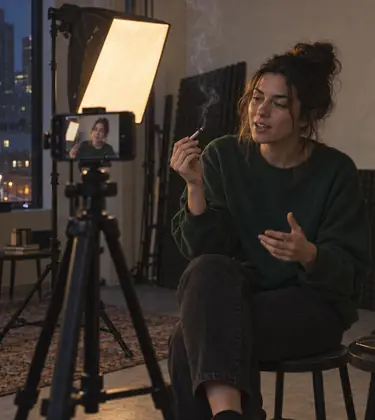
There are cannabis channels with a million subscribers. There are cannabis accounts with audiences that any beauty or fitness brand would pay six figures to reach. What there mostly is not, is a straightforward way to turn that audience into money.
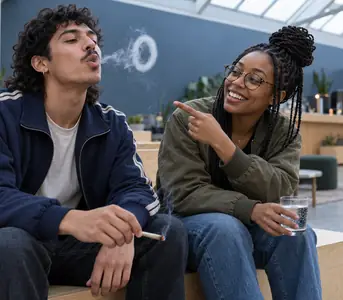
Cannabis influencers sit in an odd position. They have the reach of any lifestyle account and the advertising market of a banned category, and every part of the normal creator business model is either blocked or complicated here. Ads are prohibited. Sponsorship is legal but heavily conditioned. Affiliate links run into payment processors that will not touch the category. The result is an industry where the audience arrived years before the revenue, and a lot of people are still working out what fills the gap.
What the platforms forbid
The important distinction, and the one most coverage misses, is between a ban on advertising and a ban on content. They are separate rules with separate penalties.
YouTube's advertiser-friendly guidelines have a section headed Recreational drugs and drug-related content, and the framing sentence is blunt: content promoting or featuring the sale, use or abuse of illegal drugs, regulated legal drugs or substances and other dangerous products is not suitable for advertising. What follows is not a single ban but a sorting exercise. Content offering educational, humorous or music-related references to drugs or paraphernalia can carry full ads. A video whose focus is consumption gets limited ads. Anything instructional about buying or making drugs earns nothing at all.
Limited ads is the tier most cannabis creators land in, and YouTube states plainly what it costs: advertisers who have opted to run only on safer content will not appear on the video, and creators should expect lower revenue from it. The yellow icon is not a strike. It is a pay cut, applied automatically, and it is the single most important economic fact in cannabis content.
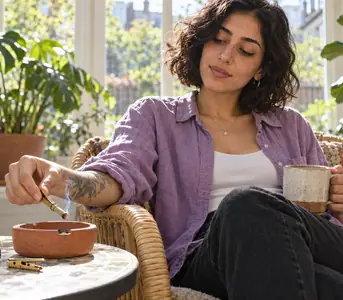
Notice where the line falls, though, because it decides what is worth making. A grow diary following a run of Banana Runtz from germination to harvest is educational content about horticulture. A video of the same creator consuming the result is not. Same channel, same plant, two different revenue tiers.
The other platforms are less forgiving. TikTok's community guidelines on regulated commercial activity prohibit showing, possessing or using drugs, which describes most of the format. Meta's restricted goods standard forbids speaking positively about non-medical drugs, and older Instagram wording added the phrase that made the point unmistakable: even if legal in your region. X opened a narrow door to licensed cannabis advertising in February 2023, then wrote into that carve-out a ban on celebrity endorsements, so the one platform willing to take the money will not take the format.
The year the channels vanished
In spring 2018, a wave of cannabis channels disappeared from YouTube within a few weeks. Loaded Up, with over 100,000 subscribers, was deleted. Marc and Jodie Emery's Pot TV, running since 2000, was suspended. Another creator told BuzzFeed News he had 199,000 subscribers when his channel came down. One reviewer's termination notice cited violent or dangerous content, which is a strange label for a strain review and a good illustration of how blunt the enforcement categories are.
One of the creators caught in that sweep, Arend Richard, responded by building somewhere else. WeedTube launched in 2018, funded by a crowdfunding campaign of around $15,000, and he later told Forbes it had passed two and a half million users. Its creator payouts run on monthly views with a minimum payment threshold of $20.
The problem it did not solve is the one that matters. Richard said it himself to Forbes: the platform cannot run commercial advertisements before its videos unless it sells those spots itself. Moving off YouTube escapes YouTube's rules. It does not escape the advertising industry's, and a platform that has to sell every slot by hand is not a replacement for an ad network. That is why nobody has built a working cannabis YouTube, and why sponsorship became the default instead.
What cannabis brand deals have to carry
Cannabis creator sponsorship is the one revenue line that still functions at scale, and it comes with conditions most people never read. A sponsored post is advertising, and in a licensed state it is advertising subject to the same rules as a billboard.
California's Business and Professions Code requires that advertising placed in broadcast, cable, radio, print and digital communications only be displayed where at least 71.6 percent of the audience is reasonably expected to be 21 or older, judged on reliable and current audience composition data. The same section requires that every advertisement identify the responsible licensee by, at a minimum, its license number.
Read that against a normal creator feed and the gap is obvious. Almost no cannabis brand deal on Instagram carries a license number. Most creators could not produce audience composition data if asked. The rules are not ambiguous, they are simply not being applied to social posts. The audience thresholds are not a California quirk either:
- Connecticut sets the bar at 90 percent of the audience aged 21 or over.
- Massachusetts and Vermont require 85 percent, and the Massachusetts regulation names social media directly alongside television, radio and billboards.
- California, Colorado, Michigan, Nevada and New Jersey all use 71.6 percent.
- Oregon and New Mexico sit at 70 percent.
A creator whose audience skews young is not merely a poor fit for a cannabis brand. They may be a compliance problem for the licensee paying them, which is a very different conversation about rates.
Feeling lost on how to start? Try taking our quiz!
Start a QuizDisclosure is not optional
Layered on top is federal advertising law, which applies to every sponsored post in every category.
The FTC's endorsement rules require that where a connection exists between an endorser and the seller that might materially affect the weight or credibility of the endorsement, and the audience would not reasonably expect it, that connection be disclosed clearly and conspicuously. Payment counts. Free product counts. So does early access, a prize, or the prospect of appearing in the brand's own media.
The 2023 revision of those guides did two things worth knowing. It brought social media tags inside the definition of an endorsement, and it warned that a platform's built-in disclosure tool may not be adequate on its own. The paid partnership toggle is not automatically a defense. And responsibility sits with the creator and the brand jointly, never with the platform.
One point creators get wrong constantly: each new post needs its own disclosure. A pinned note in a bio does not cover a feed, because a viewer arriving at one video has not seen it.
The unexamined day is a wasted opportunity. Reflect on what you did, what you learned, and how you can improve.
John Dewey
Why cannabis affiliate marketing barely functions
The escape route from ads and sponsorship is supposed to be affiliate links and your own products. Here the payment layer closes in.
Stripe's published list of restricted businesses covers cannabis products, dispensaries, hydroponic equipment marketed for growing marijuana, and, notably, courses and information on cultivating marijuana. That last item is exactly the digital product a demonetized creator would build to get free of platforms. PayPal's acceptable use policy prohibits transactions involving narcotics, certain controlled substances and drug paraphernalia. So the position for a cannabis creator is roughly this:
- Advertising revenue is reduced by policy on the platform where most of the audience is.
- Sponsorship is legal but carries state advertising duties that most posts ignore.
- Affiliate commissions depend on merchants who often cannot process payments normally in the first place.
- Selling your own educational product runs into the same processor restrictions as selling flower.
There is one more thing worth saying plainly. No reliable public figure exists for what a cannabis creator earns. Sponsorship rates, commission percentages and brand deal values in this category are published almost exclusively by agencies selling influencer campaigns. A 2025 Forbes feature profiling the biggest cannabis creators in the country managed not to name a single number.
What this looks like from the seed side
We have watched this from the other end for years, and the pattern is consistent: the accounts that survive are the ones teaching something.
Grow content ages well, gets shared for reasons that have nothing to do with hype, and sits in the tier platforms are least hostile to. A creator documenting eight weeks of a single plant is producing a record that is still useful two years later. Consumption content burns fast and rides much closer to the rules.
The honest summary of the last eight years is that hype does not compound and knowledge does. The creators still standing from the 2018 purge are the ones people go to for an answer, not a reaction. If you are choosing what to document, choose something with enough behind it to be worth a season of your attention, whether that is a Precision F1 line like MAC 1 or anything else you can follow properly from seed to jar.
Where the money actually comes from
Nobody in cannabis content is getting rich on ad revenue, because the platforms have priced the category down and in some cases out. What is left is sponsorship that carries real legal duties, affiliate income throttled by payment processors, and direct support from an audience.
That makes the audience the whole asset, and it makes trust the thing that converts. Disclose the deals, know which state rules apply to the brand paying you, and build the kind of following that would still turn up if a platform deleted the account tomorrow, because for a lot of people in this industry it already has. Barney's Farm has been developing premium cannabis genetics since the 1980s, with over 40 Cannabis Cup wins. Explore our full seed catalog and find strains bred for every climate and skill level.