What Is THCA and Why Was It Suddenly Everywhere?
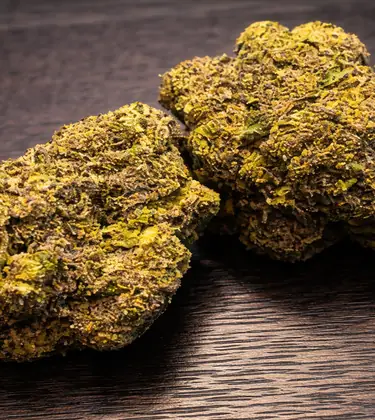
THCa showed up in gas stations, smoke shops, and online dispensaries across the United States. People who had never set foot in a legal dispensary were suddenly buying flower that looked, smelled, and hit like the real deal. And technically, under federal law, it was hemp.
So what happened? And what is this compound that turned the American cannabis market upside down?
Let's get into it.
What Is THCA, Exactly?
THCA stands for tetrahydrocannabinolic acid. It is the raw, naturally occurring precursor to THC, the compound responsible for the psychoactive effects of cannabis. Every cannabis plant produces THCA first. THC comes later, after heat does its thing.
THCA is found in variable quantities in fresh, undried cannabis and is progressively decarboxylated to THC with drying and especially under intense heating, such as when cannabis is smoked or cooked.
In simpler terms: the plant doesn't make THC. It makes THCA. You make the THC when you light it up.
That extra "A" stands for an additional carboxyl group attached to the molecule. This group is what prevents THCA from binding to CB1 receptors in the brain, which is why eating a raw cannabis bud won't get you high. The molecule is literally the wrong shape to fit the lock.
How Does THCA Turn Into THC?
The process is called decarboxylation. Heat strips away that carboxyl group, converting THCA into THC. This happens every time someone smokes a joint, hits a vape, or bakes a batch of edibles. It also happens slowly over time during storage and drying.
A comprehensive review found that the decarboxylation of THCA to THC was essentially complete during the smoking process, though only about 30% of the total THC was recovered, with the rest likely lost to combustion.
This is the core chemistry that every cannabis consumer interacts with, whether they know it or not. When you see a THC percentage on a dispensary label, that number is actually a measurement of total potential THC from decarboxylated THCA. The flower sitting in the jar is loaded with THCA, not THC.
Is THCA the Same as Weed?
Here's where it gets interesting. THCA flower and traditional cannabis flower come from the same plant species: Cannabis sativa L. Same genetics. Same terpenes. Same trichomes packed with cannabinoids. If you put THCA hemp flower and dispensary flower side by side, most experienced smokers couldn't tell the difference. Because, functionally, there isn't one.
The difference was legal, not botanical.
Under the 2018 Farm Bill, "hemp" was defined as cannabis containing less than 0.3% delta-9 THC by dry weight. The law measured only delta-9 THC, not THCA. So a flower could contain 20% or even 25% THCA, and as long as the delta-9 reading stayed below that 0.3% line at the time of testing, it shipped legally as hemp.
Once you lit it, all that THCA converted to THC. Same high. Same plant. Different paperwork.
Feeling lost on how to start? Try taking our quiz!
Start a QuizWhy Was THCA Suddenly Everywhere?
The THCA boom wasn't some underground movement. It was a direct result of how the 2018 Farm Bill was written. The law's definition of hemp focused exclusively on delta-9 THC concentration, creating what regulators and lawmakers later called the "hemp loophole."
Producers figured out they could grow high-THCA cannabis strains, test them before harvest when delta-9 levels were still low, and ship them across state lines as legal hemp. Consumers in states without recreational cannabis programs suddenly had access to flower that delivered a full THC experience, purchased legally online or from local shops.
The market grew fast. The hemp-derived cannabinoid retail market reached an estimated $28 billion, with THCA flower accounting for hundreds of millions in annual sales on its own. Products showed up in gas stations, corner stores, and dedicated hemp shops from Texas to Tennessee.
It was the wild west. No standardized testing at the retail level. No age restrictions in many states. And for a while, no one in Washington seemed to know what to do about it.
The unexamined day is a wasted opportunity. Reflect on what you did, what you learned, and how you can improve.
John Dewey
Does THCA Have Benefits Beyond Getting High?
One of the more overlooked aspects of THCA is what it does before you heat it. In its raw, acidic form, THCA interacts with a range of biological targets that have nothing to do with CB1 receptor activation.
Research published in the British Journal of Pharmacology found that THCA was a potent agonist of PPARγ receptors, demonstrating significant neuroprotective activity in models related to Huntington's disease. The researchers concluded that THCA shows promise for addressing neurodegenerative and neuroinflammatory conditions.
Preliminary research also suggests THCA may have anti-inflammatory, anti-emetic, and immunomodulatory properties, though much of this work is still in early stages. The compound inhibits COX-1 and COX-2 enzymes and appears to modulate immune response through pathways separate from those activated by THC.
This is an area that deserves serious attention as cannabis research continues to expand, and it reinforces something experienced growers have always known: the raw plant has value that goes beyond the high.
What Barney's Farm Knows About Cannabinoid Chemistry
At Barney's Farm, we've been breeding cannabis genetics for over 30 years. Our seed bank was founded in Amsterdam in 1986, and our strains have collected Cannabis Cup titles across multiple decades. We've watched the science catch up to what experienced cultivators already understood.
Every strain has its own cannabinoid fingerprint. The ratio of THCA to other acidic cannabinoids like CBDA and CBGA varies significantly between cultivars, and these ratios shape the entire experience, from onset to duration to the character of the effects. A strain bred for high THCA and a specific terpene profile is going to deliver a fundamentally different session than one that leans toward balanced cannabinoid ratios.
This is why genetics matter. You can't hack your way to quality by manipulating a lab result or timing a harvest to dodge a testing window. The plant either has the goods or it doesn't. Our decades of selective breeding have produced strains with consistent, verified cannabinoid profiles that growers around the world trust.
Understanding THCA isn't academic for us. It informs how we select parent plants, how we stabilize genetics, and how we guide growers toward results that match their goals, whether that's maximum potency, balanced effects, or specific medicinal applications.
Is THCA Flower Still Legal?
This is the big question, and the answer just changed dramatically.
In November 2025, Congress passed legislation that effectively closes the THCA loophole. The new law, signed by President Trump as part of a government funding package, redefines hemp using a "total THC" standard that includes THCA in the calculation. It also caps finished hemp products at 0.4 milligrams of total THC per container.
The hemp provision nearly extended the longest government shutdown in U.S. history, with Senator Rand Paul arguing the ban would make "the hemp industry kaput."
The new rules take effect on November 12, 2026. After that date, most THCA flower products currently on the market will no longer qualify as legal hemp under federal law. Products that exceed the new thresholds could be classified as Schedule I controlled substances.
Several Congressional efforts are underway to modify or repeal these restrictions before they kick in, but nothing is guaranteed. The landscape is shifting, and anyone involved in the THCA market, from growers to consumers, needs to pay attention.
Why This Matters for the Cannabis Community
The THCA story reveals something important about how cannabis prohibition works and fails. A single definition in a federal law created a multi-billion dollar market overnight. Another definition change is about to close it down. The plant didn't change. The chemistry didn't change. The politics did.
For growers, the lesson is clear: know your genetics, understand your cannabinoid profiles, and stay ahead of the regulatory curve. At Barney's Farm, that's been the approach since day one. We breed for excellence, test for consistency, and trust the plant.
For consumers, the takeaway is equally straightforward. THCA is THC waiting to happen. It always has been. The legal framework around it has been a moving target, but the science is settled. If you want to understand what you're consuming and why it affects you the way it does, start with the chemistry. The rest is politics.
And if there's one thing the cannabis community has always been good at, it's outlasting the politics.
Barney's Farm has been developing premium cannabis genetics since the 1980s, with over 40 Cannabis Cup wins. Explore our full seed catalog and find strains bred for every climate and skill level.