Regular seeds produce both male and female plants. Breeders use them for exactly that reason, and so do growers who want to keep a mother plant or make seeds of their own. All of it depends on knowing which plant is which.
What is on the label
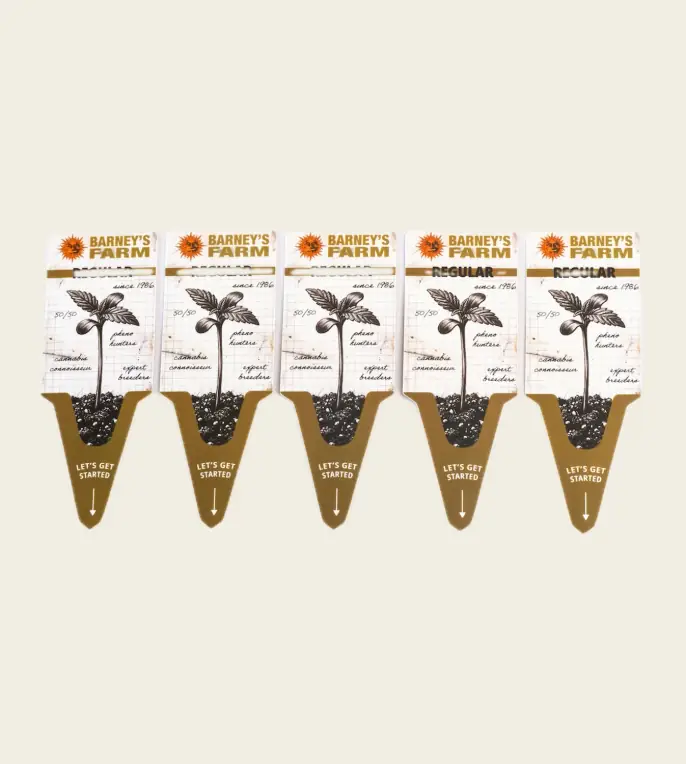
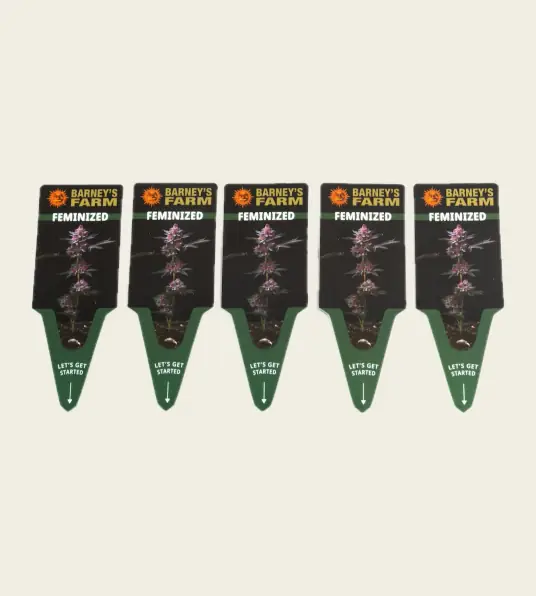
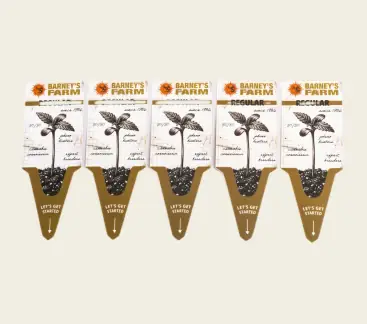
The front carries the Regular seed type and a photo of a finished plant, printed in the color that marks regulars across the Barney's Farm label range. The back has four write-on fields: Strain Name, Seedling Date, Veg Date and Flower Date. The Barney's Farm sun logo sits on both sides.
Sexing a regular grow
Regular plants start showing preflowers at the nodes around the fourth to sixth week of growth, and their sex is clear within the first couple of weeks after the flip to 12/12. Males form pollen sacs, females form white pistils. With several seedlings from one pack, the label is how you keep track of which plants you kept, which you culled, and which male went to another room for pollen. The strain name field takes a short pheno code as easily as a name.
Dates for a breeding project
Breeding records start with dates. The seedling, veg and flower dates on each stake let you compare how long each plant vegged, when it showed sex and how many weeks it took to finish, which is the information you need to pick a keeper.
Waterproof and UV stable
The labels survive daily watering, sprays, grow lights and outdoor sun without the writing or the print fading. At 12.8 cm tall the stake stands clear of the soil and reads from outside the tent.
Packs of 3, 5 or 10
One stake per plant. A regular grow usually starts with more seedlings than it finishes with, so the pack of 5 suits most runs, and the pack of 3 covers a small test of a single strain.