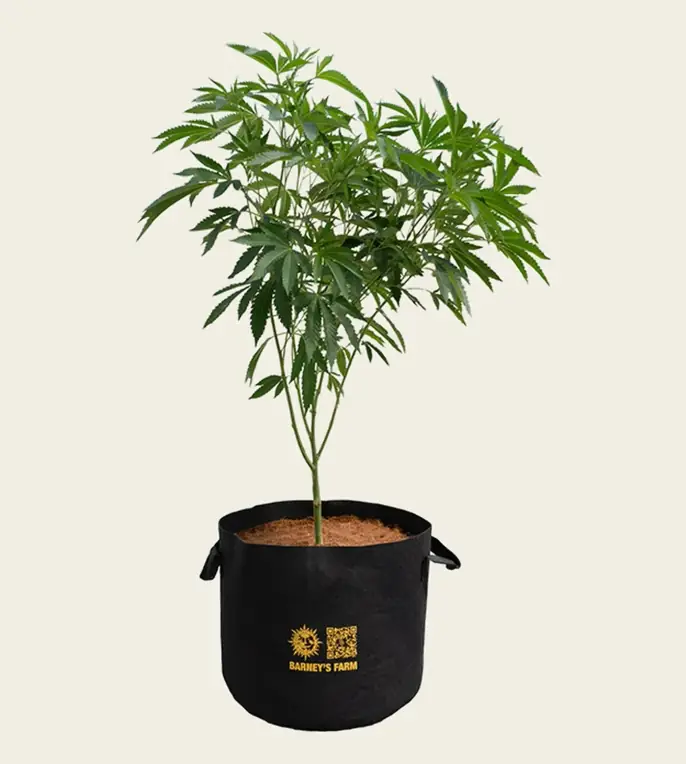
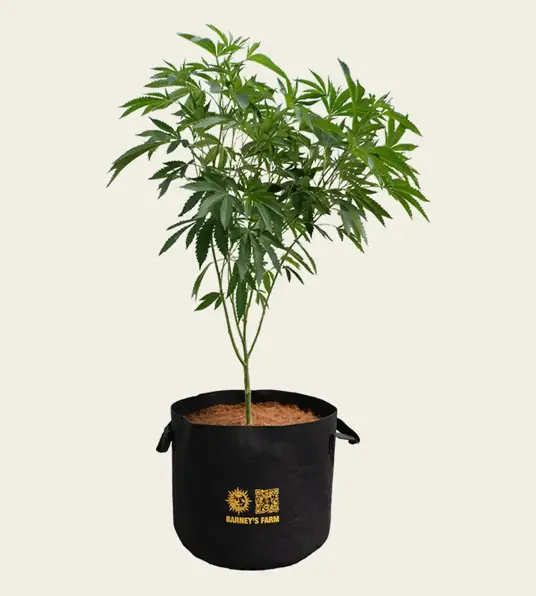
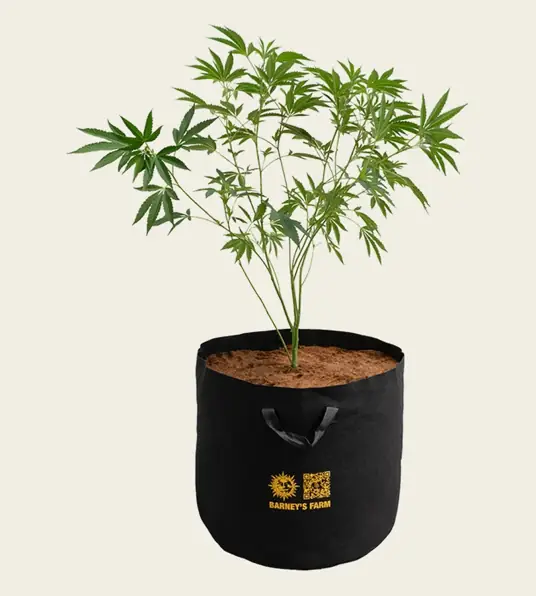
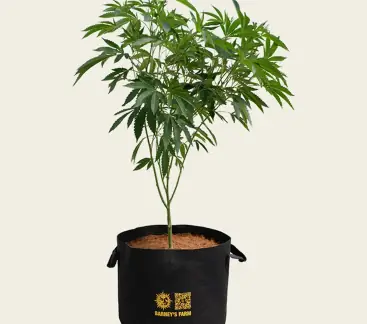
The size most indoor growers settle on. Ten gallons carries a photoperiod plant from seedling to harvest in a 3x3 or 4x4 tent with no repotting, and the breathable fabric keeps the root zone drained and oxygenated the whole way through. Reinforced handles make it possible to lift a full bag in and out of a tent.
The default size for an indoor photoperiod grow
Ten gallons matches a four to six week vegetative period, which is where most indoor grows land. Below that the plant runs out of root space before flower finishes and starts wilting between waterings. Above it you are paying for medium the roots never reach. Growers who veg for eight weeks or more, or who run one large plant instead of four, are the ones who move up a size.
A seedling can go straight into the final bag
Large containers are often said to drown seedlings, but that problem comes from medium staying wet, and fabric drains and breathes fast enough that it rarely happens. Water only a small circle around the seedling for the first week or two, then widen the watered ring each week as the roots spread outwards. Going straight into the final bag removes two transplants and the pause in growth that follows each one.
37.7 litres, or roughly 1.3 cubic feet
A single 50 litre bag of medium fills one with a small amount to spare. Leave a couple of centimetres of headroom at the top for watering and for any top dressing added later in the grow.
Feeding, run-off and flushing
Fabric drains from every surface, so watering to run-off is straightforward and salts leave the medium rather than accumulating at the bottom the way they do in a pot with four drainage holes. That matters most in the last weeks of flower, when a heavy feed schedule has been running for months. It also means feed that is too strong shows up quickly, because the medium clears rather than holding the excess.