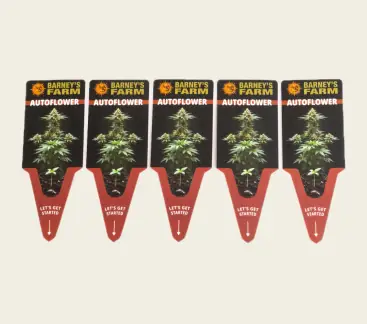
Autoflowers move into flower on their own, a few weeks after sprouting, and they never wait for a change in the light schedule. That makes age the number that matters on an autoflower, and the label is where it belongs.
What is on the label
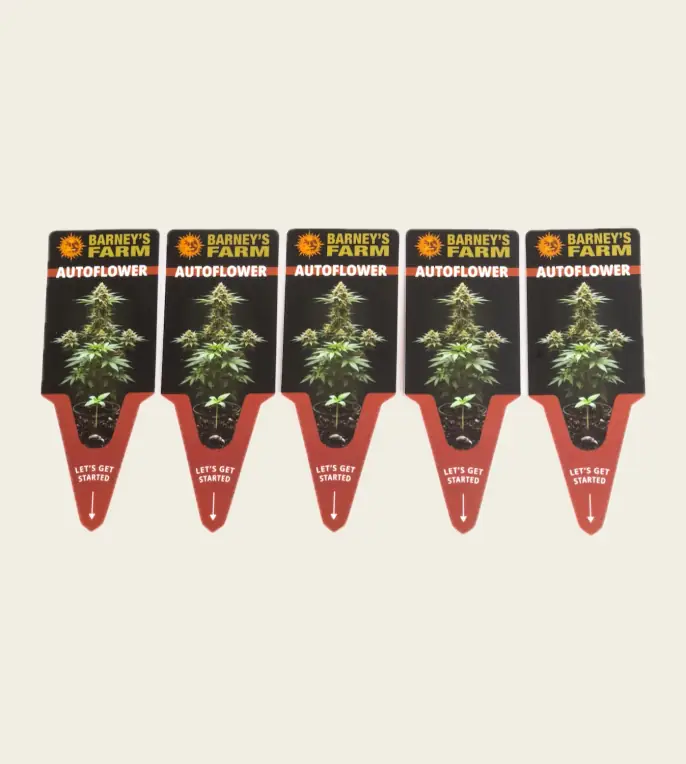
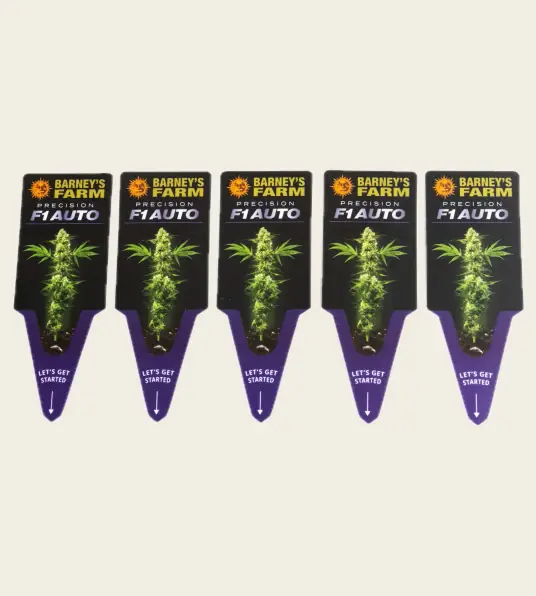
The front carries the Autoflower seed type and a photo of a finished autoflowering plant, printed in the color that marks autos across the Barney's Farm label range. The back has three write-on fields: Strain Name, Seedling Date and Grow-Flower Date. The Barney's Farm sun logo sits on both sides.
Three dates instead of four
There is no flip on an autoflower, so there is no separate veg date and flower date to record. The seedling date starts the count, and the grow-flower date marks the day the plant shows its first pistils and moves into bloom by itself. With both written down, you can tell at a glance whether a plant is on schedule or running long, which is the question every autoflower grower ends up asking around week eight.
Autos next to photoperiods
Autoflowers often share a tent with photoperiod plants, finishing while the photos are still in veg. The autoflower label has its own color, so the plants on their own clock stand out from across the room and nobody flushes or chops the wrong one.
Waterproof and UV stable outdoors
Outdoor growers often plant autos in succession through the summer. The labels are waterproof and UV stable, so a stake that goes in with a May seedling still reads clearly at an August harvest.
Packs of 3, 5 or 10
A pack of 3 marks a small run or a single strain. A pack of 5 covers a full tent of autos or a staggered outdoor planting.