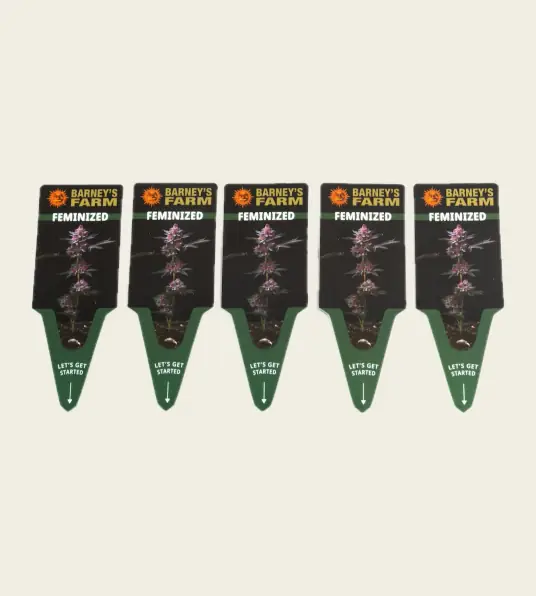
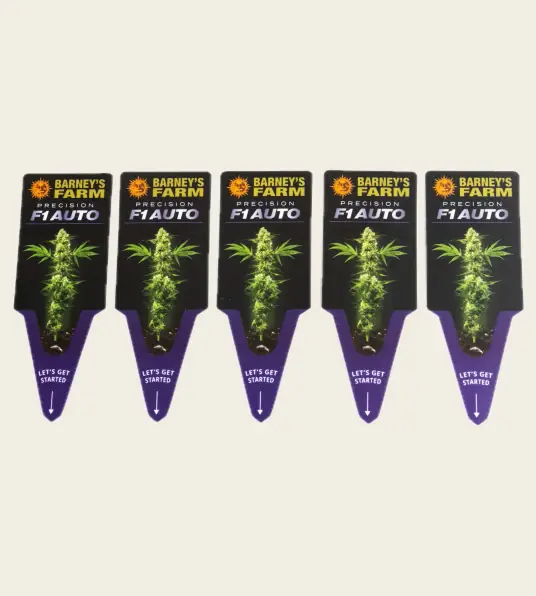
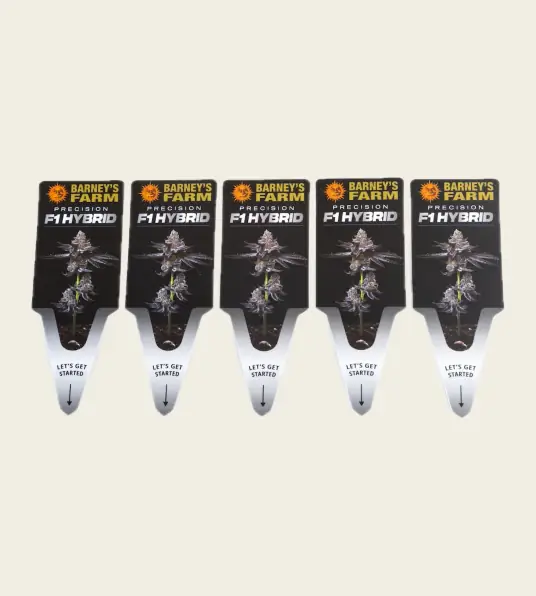
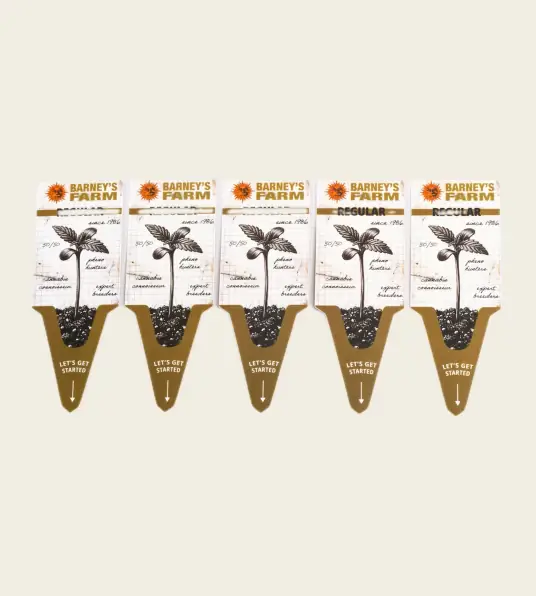
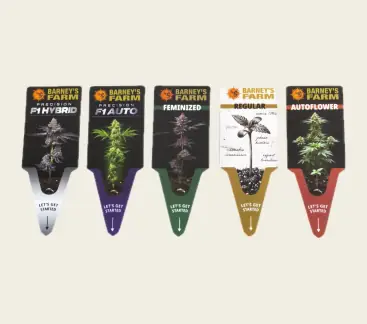
By week four of flower, nobody remembers which pot is which
Two plants of the same age look identical from above. The moment there is more than one strain in a tent, or a photoperiod running alongside an autoflower, feed schedules and harvest windows become guesswork. Colour coding fixes it from the doorway, without reading anything, which is the only system that survives contact with a busy grow.
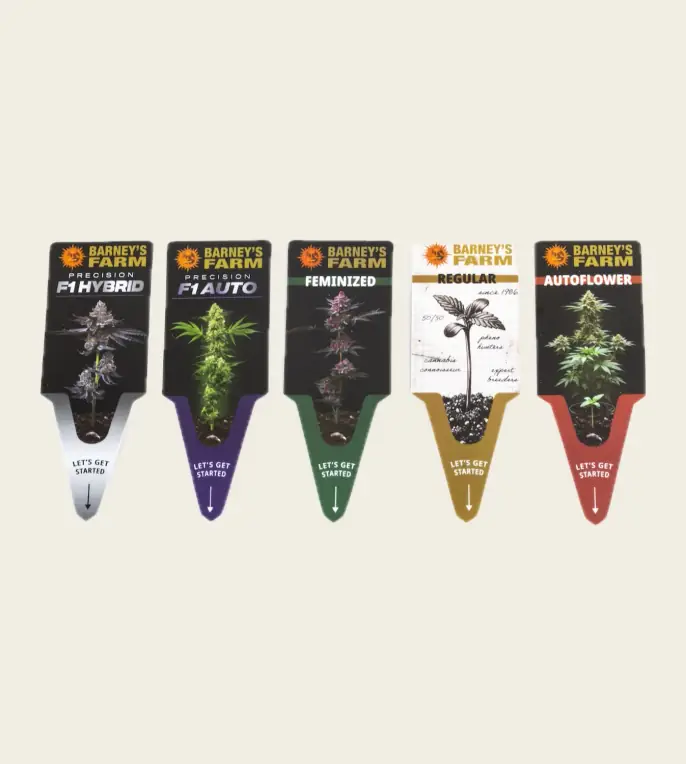
What is printed on each label
The front carries the seed type and a photograph of a finished plant of that kind. The back has write-on panels for the strain name and the dates that matter. Both sides are printed, and at 4.7 by 12.8 centimetres each stake is large enough to read from outside the tent without going in.
Five types, and two different date sets
Feminized, Autoflower, Regular, F1 Hybrid and F1 Auto, each in its own colour. The write-on fields differ because the two groups run on different clocks. Feminized, Regular and F1 Hybrid carry Strain Name, Seedling Date, Veg Date and Flower Date. Autoflower and F1 Auto carry Strain Name, Seedling Date and Grow-Flower Date, since an autoflower is never switched over.
The dates worth writing down
The seedling date gives the plant's real age, which is the number you need when an autoflower is not finishing on schedule. The flip date is what flowering weeks are counted from, and it is the one everybody assumes they will remember. Written on the label, both are in front of you at the plant rather than in a notebook in another room.