PGR Weed: How to Spot Buds Grown with Plant Growth Regulators
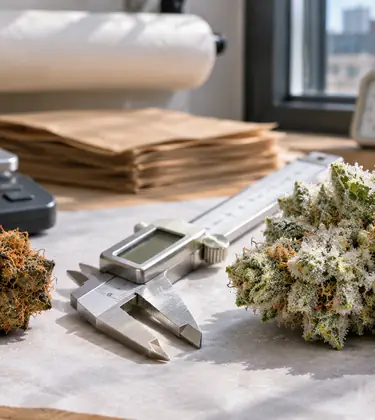
Some buds look perfect in the bag and disappoint in the pipe. They are rock hard, heavy for their size and oddly dark, yet they smell faint, burn harsh and barely sparkle. Growers and buyers have a name for that combination: PGR weed, cannabis grown with chemical plant growth regulators.
PGRs keep plants short and pack their flowers tight, which pays off for anyone who sells by weight. Knowing what these chemicals do, and what they leave behind, makes a treated bud fairly easy to suspect.
Key takeaways
- Plant growth regulators are chemicals that keep plants short and pack flowers tight, adding weight at harvest.
- In a 2023 hemp study, a related growth retardant enlarged the flowers without changing their THC or CBD content.
- Growers usually name three PGRs: paclobutrazol, daminozide and chlormequat chloride.
- California tests licensed cannabis for paclobutrazol and daminozide under rules that took effect on October 1, 2026.
- Rock-hard buds, sparse frost, dark hairs and a faint smell are warning signs, though only a lab test proves anything.
Plant growth regulators, in plain words
Every plant runs on hormones. Gibberellins stretch stems, cytokinins drive cell division, and the balance between them decides how tall a plant grows and how its flowers form. Plant growth regulators, or PGRs, are compounds that mimic or block those hormones. When people ask, “What are PGRs?” about cannabis, they usually mean the synthetic growth retardants that block gibberellin, so the plant stays short and puts its energy into tight, heavy flowers instead of stretch.
The appeal is easy to see. A plant that stays short fits more plants under each light, and flowers that pack tight weigh more per square foot, so for anyone selling by the pound, a PGR looks like extra money for little work. The cost lands on the buyer, who pays for weight that may come with residue and, many smokers say, less aroma.
Research on them in cannabis is thin, and it does not all point one way. In a 2023 study of hemp in a vertical farm, a low dose of diniconazole, a growth retardant from the same chemical family as paclobutrazol, increased inflorescence biomass and apical inflorescence size while shrinking the plants. The THC and CBD content of the flowers stayed statistically the same, and the lowest dose tested gave the most THC and CBD per plant. The study measured yield and cannabinoids, not what stays on the flower when someone smokes it, which is the part buyers worry about.
Density alone proves nothing, though. Some genetics stack tight flowers on their own: Gelato 45, a Sunset Sherbet and Thin Mint Girl Scout Cookies cross at 30% THC, forms densely compacted, orbit-shaped buds under a golden coat of sticky resin, with no help from a bottle.
Paclobutrazol and the usual suspects
Three names come up again and again when growers talk about PGR weed. They have very different histories, and none of them was developed for cannabis:
| Growth regulator | How it works on the plant | Legal uses | Why people worry |
|---|---|---|---|
| Paclobutrazol | Blocks gibberellin, so stems stay short and flowers pack tight | Potted flowers, turf and fruit trees in some countries | Lingers in soil and plant tissue, with little data on smoking it |
| Daminozide | Slows stem growth for a compact plant | Potted ornamentals, pulled from US food crops in 1989 | Sold for apples as Alar until a cancer scare |
| Chlormequat chloride | Shortens and thickens stems | Cereal crops such as oats and wheat | Lowered fertility in animal studies |
| Growth regulator | Paclobutrazol | Daminozide | Chlormequat chloride |
|---|---|---|---|
| How it works on the plant | Blocks gibberellin, so stems stay short and flowers pack tight | Slows stem growth for a compact plant | Shortens and thickens stems |
| Legal uses | Potted flowers, turf and fruit trees in some countries | Potted ornamentals, pulled from US food crops in 1989 | Cereal crops such as oats and wheat |
| Why people worry | Lingers in soil and plant tissue, with little data on smoking it | Sold for apples as Alar until a cancer scare | Lowered fertility in animal studies |
Spraying paclobutrazol on cannabis keeps the plant compact for the same reason it keeps a potted poinsettia short: it blocks the hormone that stretches stems. The worry is the residue. Food rules set limits for eating these chemicals, not for burning them and inhaling the smoke, and we have not found published research on what smoking PGR residues does to people.
Daminozide carries an older story. Its breakdown product, UDMH, drove the 1989 Alar scare over apples, and heat speeds that breakdown, an obvious concern for anything that ends up in a pipe.
Chlormequat has the longest record of concern. Farmers spray it on oats and wheat so the stalks stand up to wind and rain. Danish pig farmers in the early 1980s noticed reproductive declines in pigs raised on treated grain, a 2024 US study recounts. The same study found the chemical in 80% of the 96 urine samples it tested and in all but two of 25 conventional oat products bought in the US.
Feeling lost on how to start? Try taking our quiz!
Start a QuizLab tests catch some of it
Licensed cannabis in most legal states goes through pesticide testing, and PGRs count as pesticides. California, the biggest legal market, screens every batch for a long list that includes paclobutrazol and daminozide, and a rulemaking package that updates the action levels for testing of pesticide residues in cannabis products took effect on October 1, 2026. An action level is the most residue a batch may carry before it fails, and a failed batch cannot go on sale as it is. Each state writes its own list, though, and unlicensed weed skips testing entirely.
A certificate of analysis, or COA, that passes its pesticide and heavy metal screens is the best evidence a buyer can get, since looks alone can mislead. A chemical missing from a state's list never appears on its reports, so a clean COA covers only what the lab looked for. Ask for the full report, pesticide pages included, and check that its batch number matches the package.
The unexamined day is a wasted opportunity. Reflect on what you did, what you learned, and how you can improve.
John Dewey
Reading a bud for PGR signs
Without a lab report, nobody can prove a bud was treated, and anyone who claims to is guessing. Still, people wondering how to tell if weed has PGR can compare suspect PGR buds with naturally grown flower on a few points:
| What to check | Likely PGR flower | Naturally dense flower |
|---|---|---|
| Squeeze test | Rock hard, with no spring back | Firm but slightly springy |
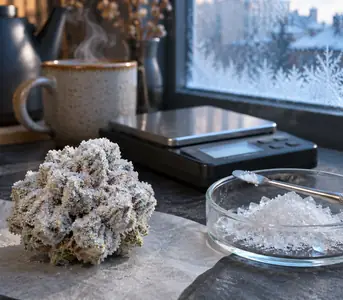
| Trichome coverage | Sparse, dull frost | Heavy, glistening frost |
| Hairs | Many dark orange or brown hairs | Fewer hairs, mostly tucked in |
| Shape | Small, round and uniform, like pebbles | Varied, with calyxes stacking up |
| Smell when broken | Faint, hay-like or chemical | Strong and true to the strain |
| Smoke | Harsh and scratchy | Smoother, with clear flavor |
| What to check | Squeeze test | Trichome coverage | Hairs | Shape | Smell when broken | Smoke |
|---|---|---|---|---|---|---|
| Likely PGR flower | Rock hard, with no spring back | Sparse, dull frost | Many dark orange or brown hairs | Small, round and uniform, like pebbles | Faint, hay-like or chemical | Harsh and scratchy |
| Naturally dense flower | Firm but slightly springy | Heavy, glistening frost | Fewer hairs, mostly tucked in | Varied, with calyxes stacking up | Strong and true to the strain | Smoother, with clear flavor |
No single sign settles the question, and several innocent causes can mimic PGR weed:
- Indica-heavy strains stack dense, rounded buds without any help.
- Hairs darken naturally as a plant ripens and as flower ages in storage.
- Overdried flower smells faint and smokes harsh, however it was grown.
- Rough machine trimming can strip trichomes from perfectly clean buds.
Ash color and how evenly a joint burns say more about moisture and drying than about growth regulators, so the old burn tests prove little. A bud that smells loud, feels slightly springy and sparkles under a phone light is a good sign, whatever its density.
Dense buds the natural way
Dense flower does not need a bottle. Most of what a PGR fakes, a healthy plant does on its own in the last weeks of flower, when the buds put on much of their final weight. In our grow rooms, that weight comes from genetics, light and a patient finish:
- Choose genetics known for compact buds, since no technique turns an airy sativa into pebbles.
- Give flowering plants strong, even light, and keep the canopy flat so the lower buds get their share.
- Let night temperatures fall a few degrees below daytime temperatures in late flower.
- Remove larf, the weak lower growth, early in flower so the plant feeds its top colas.
- Harvest when most trichomes have turned cloudy, since flowers keep swelling until the last weeks.
Critical Kush, a Critical Mass and OG Kush cross at 26% THC, shows the payoff: the Critical Mass side brings the weight, and its dense indica colas need steady airflow late in flower, because tight buds trap moisture and invite mold. A slow dry and a proper cure then keep that density springy and aromatic, which is exactly what a PGR bud lacks.
Weight, frost and honest labels
PGR weed is cannabis grown with synthetic growth regulators such as paclobutrazol, daminozide or chlormequat chloride, which keep plants short and pack flowers into heavy, rock-hard buds. Research on them in cannabis is limited, little is known about smoking their residues, and California tests licensed cannabis for the first two. Rock-hard, thinly frosted, faint-smelling buds are a warning sign, a passed pesticide panel is the real proof, and dense, resinous flower is easy to grow without any of it.
Barney's Farm has been developing premium cannabis genetics since the 1980s, with over 40 Cannabis Cup wins. Explore our full seed catalog and find strains bred for every climate and skill level.