Cannabis Pesticides and Heavy Metals: What Lab Testing Actually Catches
You scan the QR code on a jar of flower. A lab report loads on your phone, every line says Pass, and you light up without a second thought. That report is the only thing standing between you and whatever got sprayed on that plant before it reached the shelf. Most people never open it. Fewer still know what it actually checks, and what it quietly skips. A regulated market runs on the promise of clean cannabis, so it pays to understand what the lab is testing, how it does it, and where the gaps are.
What does cannabis lab testing actually look for?
Every batch of legal cannabis has to clear a lab panel before it can be sold. Accredited labs measure cannabinoid potency, water content, residual solvents, microbes like mold and yeast, mycotoxins, pesticides, and heavy metals. Two of those categories cause the most trouble, and they are the ones that quietly end up in your lungs: pesticides and heavy metals.
Heavy metals get measured on an instrument called ICP-MS, inductively coupled plasma mass spectrometry, which can spot lead, arsenic, cadmium, and mercury at parts-per-billion levels. Pesticides run through chromatography paired with mass spectrometry, screening each sample against a defined list of compounds. That word, defined, is the whole story. A lab finds what its method is built to find. Every chemical outside that list walks straight through the screening without tripping a single alarm.
There is a second wrinkle. ND on a report means not detected, which is not the same as zero. It means the contaminant fell below the limit the lab's equipment can register. A Pass tells you a batch came in under the action limit for the things the lab actually looked for. It does not promise the plant is spotless, and it cannot speak to anything the panel ignored.
How do pesticides end up in legal weed?
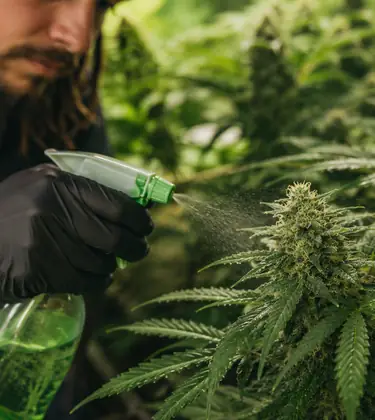
Cannabis is a crop, and crops attract pests. Growers fight spider mites, powdery mildew, aphids, and root rot, often with the same chemicals sprayed on tomatoes or grapes. The problem is that nobody sets a tomato on fire and inhales it. Heat changes pesticides. Some of them break down into compounds far nastier than what went on the leaf.
Regulation has not kept pace with what growers actually spray. In 2024, an investigation by the LA Times and the newsletter WeedWeek bought 42 legal products off dispensary shelves, paid private labs to test them, and found 25 of them carried pesticide levels above state or federal limits while California's required panel still covered only 66 pesticides set back in 2018. Some single products in that testing held as many as two dozen different pesticides, several not even on the state list, so the official COA read Pass while the product was loaded. The chemicals involved have been tied to cancer, liver damage, and reproductive harm.
What are heavy metals doing in your cannabis?
Cannabis is a hyperaccumulator. Its roots are unusually good at pulling metals out of soil and water and parking them in the plant tissue. That trait makes it useful for cleaning up polluted land and dangerous for anyone smoking the result. Lead, cadmium, arsenic, and mercury get in through contaminated soil, dirty irrigation water, cheap phosphate fertilizers, and metal parts in extraction gear and vape hardware. These are not metals your body flushes out. Lead is a neurotoxin that builds up over years, cadmium settles into the kidneys, and inhaling either one skips the digestive system and heads straight for the bloodstream.
A peer-reviewed review of cannabis contamination found that the plant takes on pesticides, heavy metals, and microbial pathogens across cultivation, manufacturing, and packaging, with the danger rising sharply for medical patients who have weakened immune systems. Concentrates raise the stakes. When flower gets pressed or extracted into rosin, wax, or oil, the process concentrates the cannabinoids you want and the metals you do not. A flower batch that barely scraped a pass can become a concentrate that fails outright.
Feeling lost on how to start? Try taking our quiz!
Start a QuizHow often does contaminated cannabis actually slip through?
More often than that Pass stamp suggests. When Maine's Office of Cannabis Policy collected samples from its medical cannabis program, 42 percent came back carrying harmful contaminants. The most common pesticide in those samples was myclobutanil, a fungicide that releases hydrogen cyanide gas when it burns, which is exactly what happens when you spark a joint. Other batches failed for heavy metals, usually cadmium and lead.
Testing does its job most of the time. Labs catch enormous volumes of contaminated product before any of it reaches a customer. But batches still get through when a lab runs a narrow panel, when state rules trail behind new chemicals, or when a testing facility fudges results to keep a client happy. Several states have suspended lab licenses over precisely that. So a Pass means a batch cleared one specific panel, with one specific method, on one specific day. It describes a moment, and moments miss things.
The unexamined day is a wasted opportunity. Reflect on what you did, what you learned, and how you can improve.
John Dewey
Clean weed starts with the genetics
Here is what no lab report will ever tell you. The cleanest cannabis is the kind that barely needed help to grow. A weak, unstable plant gets sick, and a sick plant gets sprayed. A vigorous, disease-resistant plant shrugs off mold and pests on its own, which means fewer fungicides, fewer miticides, and fewer mystery residues left in the smoke. Contamination prevention starts at the seed, long before any lab gets involved.
This is what four decades of breeding actually buy you. Barney's Farm has been stabilizing genetics since 1986, hauling landrace seeds down from remote mountains and valleys and breeding them into plants that hold their traits generation after generation. Derry's sourcing trips were never about romance. Wild landrace genetics carry a natural resilience that mass-market hybrids tend to breed out, and that resilience is your first defense against ever needing a chemical fix.
Stable genetics matter for another reason. A seed line that has been locked in over decades grows into the plant you expect, with the same vigor and the same structure every run. Predictable plants stay healthy, and healthy plants do not send a grower reaching for the spray bottle in a panic. Unstable, hastily crossed seed throws weak phenotypes that struggle, and a struggling plant in a damp room is an invitation for mold. The genetics on the front end quietly decide how much chemistry ends up on the back end.
Take Pineapple Express. It is bred to be naturally resistant to mold and disease, the difference between a plant that powers through a humid grow and one that needs constant chemical babysitting. Gorilla Z brings the same backbone, a vigorous West Coast hybrid with dense structure and heavy resin that thrives without being rescued every week. Start with stable, cup-winning genetics and you strip out the conditions that cause most contamination before the seed is even in soil. Forty years and a wall of Cannabis Cups stand behind that approach.
How do you read a COA before you buy?
A Certificate of Analysis is that lab report, and reading one takes about thirty seconds. First, match the batch or lot number on the COA to the number on your package, because a clean report for a different batch tells you nothing about what is in your hand. Next, find the pesticides, heavy metals, and microbials sections and look for Pass or ND, which stands for not detected. Check the date the test was run, since stale results on fresh-looking product deserve suspicion. Confirm the lab holds ISO 17025 accreditation, the standard that says its methods are independently verified. If any of those three categories shows a fail, set it down and walk away.
Growing your own from quality seed hands you the one thing a dispensary never can: the full history of the plant. You know what touched it, what fed it, and what never got sprayed on it. That is the most honest report you will ever read, because you are the one who wrote it.
Lab testing is a safety net, and every net has holes. The rules move slowly, the panels are finite, and a Pass only ever describes one batch on one day. Learning what the test catches and what it misses puts the decision back where it belongs, in the hands of the person doing the smoking. Clean cannabis is a chain that runs from the seed to the COA, and the more of that chain you understand, the harder you are to fool.
Barney’s Farm has been developing premium cannabis genetics since 1986, with more than 40 Cannabis Cup wins. Explore our full cannabis seed catalog and find the genetics that fit how you actually medicate.