Live Rosin Carts: Why Solventless Vapes Cost Double
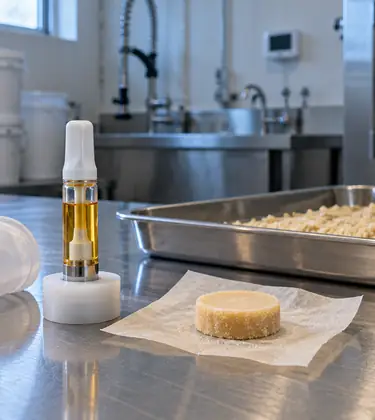
A live rosin cart is the most hands-on vape on the menu. The oil inside started as fresh-frozen plants, was washed into hash with ice water, pressed with heat and filled into a cart with nothing added.
That handwork shows up in the price. In our experience, a live rosin cart often costs close to twice as much as a live resin cart from the same strain, and whether it is worth it depends on what you want from a vape.
Key takeaways
- A live rosin cart holds rosin pressed from ice water hash of fresh-frozen plants, with no solvent beyond water.
- Only 4% to 7% of a fresh plant's weight becomes hash in a good wash, one reason rosin carts cost more.
- Colorado tests rosin for microbial contamination, while solvent-based concentrates there face residual solvent tests.
- Oregon's law files mechanical and water-based products as concentrates and butane products as extracts.
- Coil heat matters, and one study found voltage alone was a poor guide to how hot a cart runs.
Ice water, heat and pressure
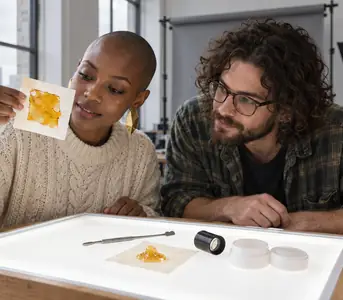
Live rosin starts in the freezer. Makers freeze whole plants right after harvest, wash them in ice water to knock the trichomes loose, dry the resulting hash and press it between heated plates. In our experience, hash presses at a lower temperature than flower, and the oil that seeps out goes straight into a cure container or a cart filler. No butane or propane touches it, which is why a live rosin vape is often sold as a solventless cart. Regulators file it separately too. Washington's testing rules list nonsolvent concentrates "such as kief, hash, rosin, or bubble hash" apart from extracts made with hydrocarbons, and only the solvent-made groups need residual solvent testing.
Good live rosin starts with resinous plants. Rainbow Sherbet, a Champagne and Blackberry cross at 28% THC from our washing collection, finishes with dense, resinous buds and a sweet, tropical candy aroma, the kind of flower that washes well in our experience.
Where the extra cost comes from
Most of the price comes from how little oil a plant gives up. Our washing collection page puts a good washing return at 4% or more by weight, with top performers pushing toward 7%, and pressing loses more on the way to the cart. In our experience, the numbers from 1,000 grams of fresh-frozen plants run like this:
| Production stage | What you end up with | What changes |
|---|---|---|
| Fresh-frozen plants | 1,000 g, mostly water | Frozen within hours of harvest |
| Ice water hash | About 40 to 70 g | Trichomes washed off and dried |
| Rosin pressed from the hash | About 25 to 50 g | Some oil stays in the press bag |
| Filled 1-gram carts | About 25 to 50 carts | A little oil stays in the filling gear |
| Production stage | Fresh-frozen plants | Ice water hash | Rosin pressed from the hash | Filled 1-gram carts |
|---|---|---|---|---|
| What you end up with | 1,000 g, mostly water | About 40 to 70 g | About 25 to 50 g | About 25 to 50 carts |
| What changes | Frozen within hours of harvest | Trichomes washed off and dried | Some oil stays in the press bag | A little oil stays in the filling gear |
Those are rough figures, and real results swing widely with the strain, the health of the plants and the skill of the person running the wash.
Labor adds the rest. Washing is done by hand in small batches, the hash has to be dried before pressing, often in a freeze dryer, and many makers cold cure the rosin for days before it goes into a cart. A hydrocarbon lab, by comparison, can run much larger batches with less handwork per gram. Sorting the hash by grade cuts the usable share further, since in our experience the best carts use only the cleanest, most melt-friendly hash from each wash.
Feeling lost on how to start? Try taking our quiz!
Start a QuizLive rosin vs live resin carts
Both start with fresh-frozen plants, so the real difference in live rosin vs live resin carts is the solvent, and testing rules follow it. In Colorado, heat- and pressure-based concentrates and vape devices must be tested for microbial contamination, while solvent-based concentrates must be tested for residual solvents. Oregon exempts processors that used only a mechanical process, or only water, animal fat or vegetable oil, from solvent testing. Michigan goes the other way and tests all marihuana concentrates for residual solvents. Wherever you buy, the microbial line on a rosin cart's lab certificate deserves the closest look, since in our experience mold and bacteria, not solvent residue, are the main risks in solventless oil.
In our experience, the two carts also differ in a few practical ways:
- Rosin tastes closer to the flower it came from, while live resin can taste brighter but more uniform from batch to batch.
- Thicker oil means a rosin cart can cloud or crystallize over time, which is normal and not a flaw.
- Live resin is easier to fill and usually costs less, since hydrocarbon labs work at a larger scale.
Potency is not the reason for the price. Solvent-based products average about 54% to 69% THC, against 39% to 60% for non-solvent ones, Wikipedia's cannabis concentrate entry notes.
The unexamined day is a wasted opportunity. Reflect on what you did, what you learned, and how you can improve.
John Dewey
The word solventless on a label
Solventless is a marketing word, and state rules use other terms. Oregon's law defines a cannabinoid concentrate as one made by a mechanical extraction process or with a nonhydrocarbon solvent such as water, vegetable glycerin, vegetable oils, animal fats, isopropyl alcohol or ethanol. Butane, hexane or propane products count as cannabinoid extracts. So in Oregon, the word concentrate covers rosin but also ethanol products, and only the word extract points clearly to a hydrocarbon. Colorado's testing rules sort concentrates into physical separation, heat and pressure, food and solvent groups, and rosin falls in the heat and pressure group.
In our experience, the label's ingredient list and the lab certificate tell you more than the front of the box. A true live rosin cart lists rosin and nothing else.
Hardware and heat
Thick rosin and a hot coil do not mix well. Scientists at PAX Labs, a vape maker, measured coil temperatures with an infrared camera during simulated puffs and found that voltage alone was a poor indicator of coil temperature. A variable-voltage battery set at 4.0 V averaged 543°C (1,009°F), while a temperature-controlled device held close to its settings, averaging 246°C (475°F) at its lowest and 420°C (788°F) at its highest. The oil was an 87% THC extract bought at a California dispensary. Given who ran the study, read it as a strong hint, not the final word.
In our experience, the lowest setting is the right one for a rosin cart, since high heat burns off the terpenes that justify its price. If a rosin cart clogs, warming it in your hand for a minute usually gets it flowing again. The heat loss is biggest with citrus-heavy strains. Tropicana Cookies Auto F1, a Tropicana Cookies and BF Super Auto #1 cross at 25% to 27% THC, opens with fresh orange peel and tropical fruit, and its page calls it a serious candidate for extract work.
Worth the price, or not
So are live rosin carts worth it? For flavor and for buyers who want nothing added, often yes, in our experience. For a daily vape on a budget, a good live resin cart gets close for much less. Rosin also suits people who simply prefer that nothing but ice, water, heat and pressure went into their oil. Massachusetts helps here, since its vape labels must say whether a product was made with only cannabis-derived terpenes or was produced using terpenes derived from sources other than cannabis. Before you pay rosin prices, run through a quick check:
- Read the ingredient list, which should show rosin and nothing else.
- Look for a solvent line, which a true rosin cart should not need.
- Scan the lab certificate for microbial results, since rosin skips solvent tests in many states.
- Check the terpene line or statement for added terpenes.
- Compare the price per gram with a live resin cart from the same strain.
In our experience, a rosin cart that passes all five checks is worth trying at least once, side by side with a live resin cart from the same strain.
Solventless carts at a glance
A live rosin cart holds oil washed from fresh-frozen plants with ice water and pressed with heat, so it skips the solvent tests that live resin must pass but still faces microbial testing in states like Colorado. Low yields and handwork drive the price, not higher THC. Keep the battery on its lowest setting, read the ingredient list and lab certificate, and pay the premium when flavor and a clean label matter most to you.
Barney's Farm has been developing premium cannabis genetics since the 1980s, with over 40 Cannabis Cup wins. Explore our full seed catalog and find strains bred for every climate and skill level.