Cured Resin vs. Live Resin: What the Label Is Telling You
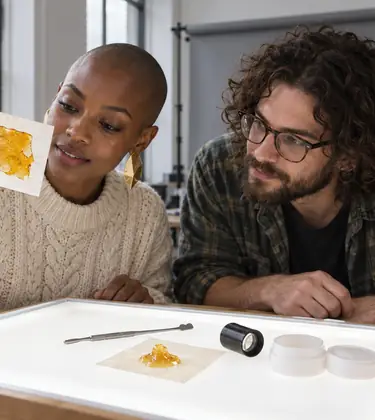
Two concentrates can sit side by side on a dispensary menu, one labeled live resin and the other cured resin. Both are usually made with the same solvents in the same kind of licensed lab.
The difference starts at harvest, with what happened to the plant before extraction. The rest of the label says more than most buyers notice, from the solvent to the source of the terpenes.
Key takeaways
- Made from dried, cured flower or trim, cured resin is a solvent extract, while live resin starts with plants frozen at harvest.
- Drying shifts a strain's aroma, and one study found terpinolene dropped sharply after a week of air-drying.
- Earthier, spicier flavor is typical of cured resin, since drying tips the balance from monoterpenes toward sesquiterpenes.
- California caps butane and propane at 5,000 micrograms per gram in finished cannabis products.
- Colorado allows botanical terpenes in vape concentrates but bans PEG, vitamin E acetate and MCT oil.
- New York, Colorado, Washington and Massachusetts labels name the solvent, while Oregon and California labels do not.
Two resins, one difference
So what is cured resin? It is a concentrate made with a solvent, usually butane or propane, from flower or trim that was dried and cured first, the same way smokable flower is. Live resin uses the same kind of extraction on plants that never dried. Wikipedia's cannabis concentrate entry describes live resin as made from fresh, live cannabis, either freshly harvested or flash-frozen cannabis, which helps protect its aroma and flavor.
Both are strong. Cannabis concentrates range from 40% to over 90% THC, the same entry notes, against around 20% for high-grade flower. The word cured describes the plant, not the oil. In our experience, cured resin is the everyday option, since dried flower and trim are easier to store and ship to a lab than frozen plants.
Menu terms decoded
Resin labels mix two kinds of words, the starting material and the texture. In our experience, the common ones mean this:
| Menu term | What it usually means | Common starting material |
|---|---|---|
| Cured resin | Solvent extract from dried, cured plants | Dried flower or trim |
| Live resin | Solvent extract from plants frozen at harvest | Fresh-frozen plants |
| Shatter | Glassy, brittle sheet that snaps | Usually cured |
| Badder or budder | Soft, whipped texture like frosting | Cured or live |
| Sauce | Runny, terpene-rich oil, often with crystals | Usually live |
| Distillate | Refined THC oil with most terpenes stripped out | Any plant material |
| Menu term | Cured resin | Live resin | Shatter | Badder or budder | Sauce | Distillate |
|---|---|---|---|---|---|---|
| What it usually means | Solvent extract from dried, cured plants | Solvent extract from plants frozen at harvest | Glassy, brittle sheet that snaps | Soft, whipped texture like frosting | Runny, terpene-rich oil, often with crystals | Refined THC oil with most terpenes stripped out |
| Common starting material | Dried flower or trim | Fresh-frozen plants | Usually cured | Cured or live | Usually live | Any plant material |
Texture comes from how the lab handles the oil after extraction, so a cured resin can be shatter, badder or sugar, and so can a live resin.
Feeling lost on how to start? Try taking our quiz!
Start a QuizDrying, freezing and flavor
Freezing matters because drying changes the aroma before extraction even starts. A 2020 study compared volatile oils from fresh and air-dried buds of three cannabis chemotypes and identified 71 compounds, 33 monoterpenes and 38 sesquiterpenes. After a week of air-drying, terpinolene was dramatically decreased upon drying in the THC-rich type, and the ratio of sesquiterpenes to monoterpenes rose. Monoterpenes are the lighter compounds behind citrus, pine and fruit notes, and sesquiterpenes are the heavier ones behind spicy, woody notes.
In our experience, that is why live resin tastes brighter and fruitier, while cured resin leans earthier, spicier and deeper. A slow, careful cure keeps more of the flavor than a fast, hot one, but it cannot bring back the monoterpenes already lost. Neither resin is better in every case, and strains built on diesel and spice notes often make excellent cured resin.
The unexamined day is a wasted opportunity. Reflect on what you did, what you learned, and how you can improve.
John Dewey
How licensed labs make resin
Both kinds are usually extracted with butane or propane in a closed system that recovers the solvent. Washington, for example, requires a professional grade closed loop extraction system, certified by a licensed engineer and approved by the local fire code official, with hydrocarbons of at least 99% purity.
What matters to you is what remains in the oil. California's rule on residual solvents and processing chemicals testing sets an action level of 5,000 micrograms per gram for both butane and propane in finished cannabis products, or 0.5% by weight, while far more toxic solvents such as benzene are held to 1.0 microgram per gram. In our experience, butane extraction belongs in those licensed labs and never in a kitchen.
Carts, dabs and added terpenes
A cured resin cart holds extract made from dried plants, and in our experience some makers thin it with extra terpenes so it flows through the coil. Colorado's rules allow botanically derived compounds and/or terpenoids in vape concentrates but ban polyethylene glycol, vitamin E acetate and MCT oil in inhaled products. A distillate cart works the other way. It starts with refined THC oil that has lost most of its terpenes, and the flavor goes back in later, so in our experience a resin cart, cured or live, keeps more of the strain's own character.
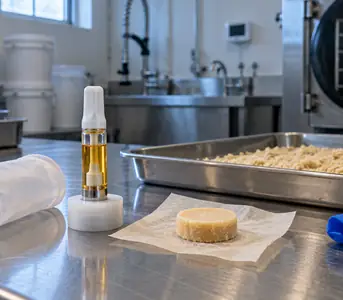
Cured resin dabs are the classic form, from shatter to badder, and a dab tool with the right tip makes each texture easier to handle. To taste the difference yourself, try a cured and a live resin from the same strain side by side at a low temperature, since high heat flattens the brightest notes first. Dense, resinous flower with diesel and spice notes suits cured resin, and two of ours fit the profile:
- Biscotti, a Gelato, Girl Scout Cookies and OG Kush cross at 29% THC, packs a compact, resinous plant with creamy cookie flavor and diesel undertones.
- Glookies, a GG4 and Thin Mint Girl Scout Cookies cross at 29% THC, tastes of key lime, sour diesel and walnut.
Price, freshness and value
The cured resin vs. live resin price gap comes from the plant, not the solvent. In our experience, live resin costs more to make for three reasons:
- Fresh plants have to be frozen within hours of harvest and kept frozen until extraction, which takes freezer space and fast handling.
- A fresh plant is mostly water, so a lab moves far more weight for the same amount of oil.
- Live resin usually runs on whole fresh plants, while cured resin can use the trim and small buds left after a harvest.
Cured resin wins on price and on steady supply, since dried material keeps for months before extraction. For a daily cart, a well-made cured resin from a gassy, spicy strain is often the better buy in our experience, while live resin earns its price on fruit-forward strains whose top notes fade fastest during drying.
Label rules state by state
The rest of the label depends on the state. New York requires a list of any solvent used to produce the cannabis product, if one was used, along with total THC in milligrams, calculated as THC plus 0.877 times THCA, a terpene profile if terpenes are marketed and a QR code linked to the lab certificate. Other states ask for different things:
| U.S. state | Solvent named on the label? | How THC appears | Added terpenes |
|---|---|---|---|
| Colorado | Yes, for solvent-based concentrate | Total THC and CBD as a percentage | Vape labels list every ingredient, additives included |
| Washington | Yes, if solvents were used | As total THC | Listed with other additives and thickeners |
| Massachusetts | Yes, with any processing technique | In absolute terms and as a percentage | Vape labels say whether terpenes came only from cannabis |
| New York | Yes, any solvent used | Total THC in milligrams | A terpene profile if terpenes are marketed |
| Oregon | No, the label says concentrate or extract | Milligrams per serving and per container | The words "non-cannabis additive" |
| California | No | Milligrams per serving and per package | Optional, verified by the lab certificate |
| U.S. state | Colorado | Washington | Massachusetts | New York | Oregon | California |
|---|---|---|---|---|---|---|
| Solvent named on the label? | Yes, for solvent-based concentrate | Yes, if solvents were used | Yes, with any processing technique | Yes, any solvent used | No, the label says concentrate or extract | No |
| How THC appears | Total THC and CBD as a percentage | As total THC | In absolute terms and as a percentage | Total THC in milligrams | Milligrams per serving and per container | Milligrams per serving and per package |
| Added terpenes | Vape labels list every ingredient, additives included | Listed with other additives and thickeners | Vape labels say whether terpenes came only from cannabis | A terpene profile if terpenes are marketed | The words "non-cannabis additive" | Optional, verified by the lab certificate |
In our experience, three checks cover most of what a buyer needs:
- Look for the solvent line, or the word concentrate or extract in Oregon.
- Compare the milligrams of THC with the size of the cart or container.
- Check whether any terpenes came from sources other than cannabis.
Cured or live, and what to check
Cured resin and live resin differ in one step, whether the plant was dried and cured or frozen at harvest before extraction. Drying shifts the aroma toward earthy, spicy notes, while freezing keeps more of the bright ones. Both should pass the same residual solvent limits, and the label, read with the lab certificate, tells you the total THC, the source of any added terpenes and, in some states, the solvent.
Barney's Farm has been developing premium cannabis genetics since the 1980s, with over 40 Cannabis Cup wins. Explore our full seed catalog and find strains bred for every climate and skill level.