Cannabis Taxes by State: Where You Pay the Most for Legal Weed
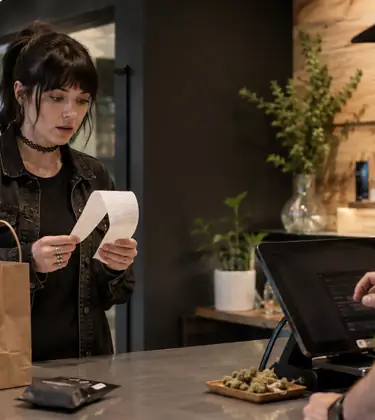
Walk into a dispensary in Seattle, grab an eighth off the shelf, and by the time the register finishes with you the price has climbed by nearly half. Drive south into Oregon and the same purchase carries a fraction of that load. Same plant, same country, completely different receipt.
Cannabis is one of the most heavily taxed legal products in the United States. Nobody arrived at these numbers by measuring harm. State budgets found a new revenue stream and started squeezing, and the squeezing has gotten harder as legal markets matured and other tax bases came up short. In 2026 several states raised rates, one state cut them, one state finally scheduled its first legal dispensary, and the federal government moved part of the plant off Schedule I without changing a single thing about what adult-use buyers pay.
Here is what every legal state actually charges right now, what shifted this year, and why the highest-tax states keep pushing customers back toward the unregulated market.
How does weed actually get taxed at a dispensary?
Most people look at their receipt and see one number. There are usually three, sometimes four, stacked on top of each other.
- The state cannabis excise tax. This is the big one, the cannabis-specific levy that exists only because the product is cannabis. It ranges from 6% to 37% depending on where you stand.
- The general state sales tax. The same rate that applies to a toaster. Some states exempt cannabis from it, most do not, and a few states have no sales tax at all.
- Local taxes. Cities and counties in California, Colorado, Illinois, Massachusetts, Michigan, Missouri, Montana, New York and Oregon can layer their own cannabis-specific tax on top. In Los Angeles or Denver this alone can add close to ten points.
- Wholesale or cultivation taxes. These do not appear on your receipt at all. They get baked into the shelf price upstream, which makes them the sneakiest layer of the four.
States also disagree fundamentally on what they are taxing. Four different structures are in play across the country, and understanding which one your state uses tells you a lot about how your prices will behave over time.
Percentage-of-price taxes are the most common. Simple to administer, easy for shoppers to understand, and they fall as wholesale prices fall, which is why states that rely on them keep watching their cannabis revenue shrink even as sales volume holds.
Weight-based taxes charge a flat amount per ounce or per pound regardless of what the product sells for. Alaska and Maine both use this approach. When prices crash, and prices have crashed almost everywhere, a flat weight tax becomes a brutally high effective rate. Alaska charges $50 per ounce of mature flower at the cultivation level. On cheap flower that is a bigger bite than Washington's headline 37%.
Potency taxes charge by the milligram of THC. Connecticut and Illinois both run versions of this. Illinois splits retail into three tiers, taxing flower under 35% THC at one rate, infused products at another, and anything above 35% THC at the highest rate. In theory this targets the compound doing the work. In practice it means concentrate shoppers in Chicago pay a tax rate that would be considered punitive on any other consumer good.
Hybrid systems combine two or more of the above. Colorado, Nevada, Maine and Michigan all run wholesale taxes alongside retail taxes, which is how a state with a modest-looking headline number can end up costing you plenty.
Which state has the highest weed tax?
Washington, and it is not a contest. The state charges a 37% excise tax at retail, the highest cannabis-specific rate in the country by a wide margin. Add the 6.5% state sales tax and local sales tax on top and the total burden on a recreational purchase lands somewhere between 43% and 47% depending on the city.
The number is a historical accident that stuck. Washington's original 2012 legalization measure imposed 25% at three separate points in the supply chain, which compounded into something even worse. The legislature collapsed that into a single 37% retail tax in 2015 as a fix. Eleven years later, the fix is the highest rate in America and nobody has managed to move it. Three bills to raise the rate further died in the 2026 session, and a citizen initiative to slash it from 37% to 7% failed to make the November ballot.
Alaska deserves a mention alongside it. The $50-per-ounce cultivation tax on mature flower does not look dramatic next to a 37% headline, but as Alaska wholesale prices have fallen, that flat charge has quietly become one of the heaviest effective rates in the country. A tax that does not move when prices do gets more painful every year prices drop.
Michigan joined the top tier in January 2026 for reasons that have nothing to do with cannabis policy, which is covered further down.
What are the cannabis tax rates in every legal state?
Twenty-four states plus the District of Columbia have legalized adult-use cannabis, though DC still has no licensed retail market thanks to a congressional budget rider. Here is where every state that actually sells legal weed stands as of July 2026.
West and Southwest
Alaska charges $50 per ounce on mature flower, $25 per ounce on immature flower, $15 per ounce on trim and $1 per clone, all at the cultivation level. There is no state sales tax, though some boroughs add their own.
Arizona charges a 16% excise tax plus the 5.6% state transaction privilege tax and local rates. State law caps the combined burden at 30% if a federal excise tax ever appears, which is unusually forward-thinking drafting.
California charges 15% excise plus 7.25% state sales tax plus local cannabis business taxes that reach roughly 10% in cities like Los Angeles and Oakland. Total burden in the worst jurisdictions clears 38%.
Colorado runs a 15% retail excise tax and a 15% wholesale tax on the average market rate, plus a 2.9% state sales tax and local add-ons up to 8%. The wholesale layer is invisible at the register but very real in the shelf price.
Montana charges 20% at retail, one of the higher single-rate states, plus up to 3% county tax. Medical cannabis is taxed at 4%.
Nevada stacks a 15% wholesale tax on fair market value with a 10% retail excise tax and standard sales tax. Las Vegas dispensaries move enormous volume, which has kept shelf prices competitive despite the double layer.
New Mexico sits at 14% as of July 1, 2026, and it climbs one point every July until it hits 18% in 2030. That escalator is written into statute. Growers and retailers lobbied to kill it in the 2025 session and got nowhere.
Oregon charges 17% at retail with local governments allowed up to 3% more. No general sales tax applies, which is why Oregon consistently ranks among the cheapest legal markets in the country.
Washington charges 37% plus 6.5% state sales tax plus local rates, as covered above.
Midwest
Illinois runs the most complicated system in America. Wholesale gets a 7% tax. Retail splits three ways: 10% on flower testing at or below 35% THC, 20% on infused products like edibles and drinks, and 25% on anything above 35% THC. Then add 6.25% state sales tax and local taxes up to 3.75%. A concentrate buyer in Chicago is looking at a combined rate north of 35%.
Michigan charges a 10% retail excise tax and 6% sales tax, and since January 2026 also a 24% wholesale excise tax. More on that below.
Minnesota charges a 15% gross receipts tax, raised from 10% in July 2025 before the state's first legal store had even opened. Add the 6.875% state sales tax and applicable local sales taxes.
Missouri charges 6%, the lowest headline excise rate in the country, plus 4.225% state sales tax. Cities and counties can each add 3%, and Missouri courts ruled that a city and a county can both do it, so 6% of local tax is possible.
Ohio charges 10% excise plus 5.75% state sales tax and 0% to 2.25% county sales tax, so a purchase in a higher-tax county runs around 18% all in.
Northeast
Connecticut taxes by potency rather than price. Plant material is charged $0.00625 per milligram of THC, edibles $0.0275 per milligram, and other products $0.009 per milligram, plus $1 per THC-infused beverage. Add a 3% municipal tax and the 6.35% state sales tax.
Delaware charges a flat 15% at retail and has no state sales tax at all, making it one of the gentlest markets in America. Legal sales opened on August 1, 2025.
Maine rebalanced its system in 2025, cutting the per-pound wholesale charge on flower substantially while raising the retail percentage tax to 14%. Add the 5.5% state sales tax.
Maryland charges 12% and nothing else. No separate sales tax on adult-use cannabis, no local add-ons, one flat statewide number.
Massachusetts charges 10.75% excise plus 6.25% state sales tax plus up to 3% local option tax, landing most purchases between 17% and 20%.
New Jersey has the lightest structure in the country. The Social Equity Excise Fee runs $2.50 per ounce at the cultivation level, plus 6.625% sales tax and municipal taxes up to 2%. On a normally priced ounce that per-ounce fee works out to a rounding error.
New York charges 9% state retail tax, 4% local retail tax and a 9% wholesale tax. The state swapped out its original potency-based system in 2024 after it proved unworkable.
Rhode Island charges 10% state cannabis excise plus 3% local plus the 7% state sales tax, so roughly 20% at the counter.
Vermont charges 14% excise plus 6% sales tax.
South
Virginia is the newest entry and does not have dispensaries yet. Everything about it is covered below.
Everywhere else, adult-use retail either does not exist or exists only on paper. DC voters approved legalization in 2014 and still cannot buy from a licensed store. Several southern and plains states run medical-only programs with their own separate tax schedules, and a handful still have nothing at all.
Feeling lost on how to start? Try taking our quiz!
Start a QuizWhat changed in cannabis taxes in 2026?
More than in any year since the first legal markets opened. States facing budget shortfalls went looking for money, and a maturing cannabis industry with weak political defenses made an obvious target.
Michigan delivered the biggest shock. As part of a road funding package attached to the state budget, lawmakers imposed a 24% excise tax on wholesale marijuana transactions starting January 1, 2026, on top of the existing 10% retail excise and 6% sales tax. The stated goal was roughly $420 million a year for bridges and local roads. Michigan had one of the healthiest, cheapest legal markets in the country, with ounce prices among the lowest in America. The industry sued, arguing the wholesale tax functions as a sales tax and blows past the 6% cap in the state constitution. A judge declined to block it. By mid-2026 collections were running well behind projections and processors had already started closing plants.
Maryland moved from 9% to 12%, an increase that took effect on July 1, 2025 under the state's budget reconciliation bill. The comptroller's office reported that more than $26.8 million in cannabis sales tax came in during the first quarter at the new rate, with the extra three points routed to the general fund.
Minnesota jumped from 10% to 15% before its first legal store opened its doors, a 50% rate increase on a market that did not yet exist. The state also eliminated the local government cannabis aid account, so cities lost their dedicated cut at the same moment customers started paying more.
New Mexico climbed from 13% to 14% on July 1, 2026, the second step of an escalator that will not stop until 2030.
Maine went the other way on structure, cutting per-pound wholesale charges and shifting the burden to a 14% retail rate.
Ohio kept its 10% rate but rewrote where the money goes. Senate Bill 56, which took effect in March 2026, folded the adult-use framework into the medical chapter of state code, eliminated the Cannabis Social Equity and Jobs Program that voters had approved in 2023, and redirected that share of revenue. Host communities keep 36%. The rest now flows to the general fund.
The unexamined day is a wasted opportunity. Reflect on what you did, what you learned, and how you can improve.
John Dewey
Why did California roll its cannabis tax back?
California is the one state that went the other direction in the last year, and the story is worth understanding because it is the clearest evidence anywhere that overtaxing legal weed destroys the tax base.
Back in 2022 the state killed its $161-per-pound cultivation tax, which had become an absurd burden as wholesale prices collapsed. To backfill the lost revenue for social programs, lawmakers tied the excise rate to an automatic adjustment mechanism capped at 19%. That trigger fired on July 1, 2025, pushing the excise from 15% to 19% overnight.
The legal market, already losing ground to an illicit supply that produces several times what licensed cultivators do, could not absorb it. Assembly Bill 564 passed the Assembly 76-0 and the Senate 39-1, and Governor Newsom signed it on September 22, 2025, returning the rate to 15% effective October 1 and freezing it there until at least 2028. Taxable cannabis sales in the state had fallen from roughly $1.5 billion to $1.2 billion, and legal purchases account for only about 40% of what Californians actually consume. Lawmakers concluded that a smaller percentage of a functioning market beats a larger percentage of a collapsing one.
Whether 15% is low enough is a separate question. Stack the excise, the 7.25% state sales tax and a Los Angeles business tax and a shopper still hands over close to 40 cents on the dollar.
When will Virginia have legal dispensaries and what will they charge?
Virginia legalized possession and home cultivation in 2021 and then spent five years failing to open a single licensed store. Governors vetoed retail bills. Legislatures let deadlines lapse. Meanwhile the unregulated market did what unregulated markets do.
That ended in June 2026. After vetoing a standalone retail bill in May, Governor Abigail Spanberger reached a compromise with Senator Lashrecse Aird and Delegate Paul Krizek that folded the framework into the state budget. Licensed dispensaries will open on July 1, 2027, with a 6% state cannabis tax that rises to 8% after July 1, 2029. Localities may add 1% to 3.5% on top, and the existing state sales tax of 5.3% and up still applies. Legislative analysts put the combined rate somewhere between 12.3% and 16.5% depending on where you shop.
The reasoning behind that low starting number is the interesting part. Aird has argued publicly that keeping the rate low is a public safety strategy rather than an economic one, because a legal market that cannot undercut the illicit market does not displace anything. Virginia watched what happened in California and Washington and priced accordingly. It is the first state to set an opening rate with that lesson explicitly in mind.
Did federal rescheduling lower anyone's cannabis taxes?
Short answer for adult-use shoppers: no.
In December 2025 President Trump signed an executive order directing the Attorney General to expedite reclassification of marijuana under the Controlled Substances Act. In April 2026 the DOJ and DEA issued a final order moving two narrow categories to Schedule III: FDA-approved drug products containing marijuana, and marijuana covered by a qualifying state medical marijuana license. Everything else, including every gram sold at every adult-use dispensary in America, stayed in Schedule I.
The practical effect is a tax break for one slice of the industry. Section 280E of the tax code bars businesses trafficking in Schedule I or II substances from deducting ordinary expenses like rent and payroll, which means cannabis companies get taxed as though most of their costs do not exist. State-licensed medical operators escaped that trap in April. Adult-use operators did not. The DEA has since opened an expedited administrative hearing, beginning June 29, 2026, on whether marijuana as a whole should move to Schedule III, and the outcome of that proceeding will decide whether the rest of the industry gets the same relief.
None of this touches state excise taxes. Rescheduling changes what operators owe the IRS. It does not change what Washington charges you at the counter, and it does not create interstate commerce. Full legalization would require Congress. We broke down the market fallout from the partial order in our piece on why cannabis stocks crashed in 2026.
Why do high weed taxes keep feeding the illicit market?
Because the illicit market pays no tax, holds no license, funds no compliance department and does not test anything. That is a structural cost advantage of thirty to fifty percent before anyone even discusses quality.
The math is not complicated. A legal operator pays for licensing, security, seed-to-sale tracking, lab testing, packaging compliance, and a federal tax bill calculated as though rent and payroll were imaginary. Then the state adds an excise tax at the register. The unlicensed seller down the street pays for none of it. When the tax layer alone reaches the high thirties or low forties, the legal product has to be dramatically better to justify the gap, and for a lot of shoppers it simply is not.
California is the case study. Legal sales cover roughly 40% of actual consumption there. Washington, with the highest rate in the country, has watched cannabis tax revenue fall from a 2021 peak of about $555 million to roughly $455 million by 2024, without any corresponding collapse in how much weed people smoke. The consumption did not go away. It moved.
There is a threshold effect at work. Below roughly 20% combined tax, legal cannabis competes on convenience, consistency and safety, and most people happily pay a modest premium for a tested product with a label. Above roughly 35%, price starts overriding everything else. States that keep pushing past that line are not collecting more money, they are collecting a bigger percentage of a shrinking pool. Michigan's own numbers in the first months of the 24% wholesale tax made the point uncomfortably well.
Is a medical cannabis card still worth getting?
In high-tax states it is the single largest legal discount available, and the gap has widened as adult-use rates climbed.
Washington exempts registered medical patients from both the 37% excise tax and state and local sales tax, a swing of more than 40 percentage points on the same product. That exemption is scheduled to sunset on June 30, 2029 unless the legislature extends it. Minnesota exempts medical purchases from both the 15% gross receipts tax and state sales tax. Maryland exempts medical patients from the 12% rate entirely. New Mexico exempts medical from the excise tax and offers a gross receipts deduction. California exempts patients holding a valid state medical ID card from sales tax.
Ohio's Senate Bill 56 widened the medical advantage further, since medical cardholders kept access to higher potency products and stronger legal protections that adult-use buyers lost.
Card fees and doctor visits cost money, so the calculation depends on how much you actually buy. For a regular consumer in Washington or Minnesota, the exemption pays for itself in a couple of months. For someone who buys an eighth twice a year, it does not.
What forty years of breeding says about the real cost of cannabis
Barney's Farm has been in this business since 1986. Our founder Derry spent the 1980s travelling through Afghanistan, the Himalayas and Southeast Asia, collecting landrace genetics from farmers who had been working with those plants for generations. Nobody was charging an excise tax on a hillside in the Hindu Kush. Nobody was writing potency tiers into a revenue code. The value of a plant was measured in what it did and how reliably it did it.
Four decades and more than forty Cannabis Cup wins later, that is still the only measurement that survives contact with reality. Tax codes change every legislative session. Rates go up in Michigan and down in California and sideways in Maine. Genetics do not care. A stable, well-bred plant produces the same result in a Detroit basement in 2026 as it did in an Amsterdam grow room in 1996.
This is why we pay attention to yield and stability rather than headline THC numbers. When a state decides your flower is worth 37% to the treasury, the arithmetic that matters is grams produced per unit of effort and cost.
Our Gorilla Z is a good example of what that looks like in practice. A cross of GG4 and the Original Z, it finishes in 55 to 65 days, tests at 32% THC, and delivers 700 to 800 grams per square meter indoors with outdoor plants reaching 2 to 2.5 kilograms. Blue Gelato 41, built from Blueberry crossed with Thin Mint Girl Scout Cookies and Sunset Sherbert, runs 28% THC with the same 700 to 800 gram indoor range and up to 3 kilograms outdoors on a stretched pre-flower. Both are feminized, both are stable, and both were bred long before anyone in Lansing decided cannabis should pay for bridges.
Twenty of the twenty-four adult-use states permit personal cultivation, most of them capping it around six plants per adult. Delaware, Illinois, New Jersey and Washington legalized possession but still ban home growing, which is its own kind of policy choice. Where it is permitted, the tax question changes shape entirely, and we ran the actual numbers on that in our breakdown of whether growing your own is cheaper than buying.
What this means for your next dispensary run
Check three numbers before you assume you know what you are paying: the state excise rate, whether your state applies general sales tax to cannabis, and whether your city charges its own cannabis business tax. Those three together explain almost every price difference between one state and the next, and they explain why the shelf price tells you almost nothing.
If you are near a state line, the arbitrage is real. Delaware against Maryland. New Jersey against New York. Oregon against Washington. Crossing state lines with cannabis is federally illegal and will stay that way until Congress acts, but plenty of people quietly notice which side of the line their nearest dispensary sits on.
And if you live somewhere that decided your flower should fund road repairs, remember that the tax applies to the transaction, not to the plant. Good genetics were never the expensive part.