Why Instagram Keeps Deleting Cannabis Accounts in 2026: Social Media's Weed Problem
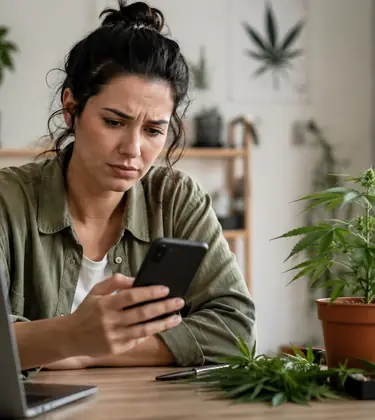
You post a photo of a plant. A green, leafy, legal-in-most-of-the-country plant. Twelve hours later your account is gone. Ten years of posts wiped, no warning, no explanation, and an appeal button that does nothing. Welcome to running a cannabis account on social media, where the rules are invisible, the enforcement is random, and the ban hammer swings hardest at the people playing fair.
If you grow, sell seeds, review flower, or just love the plant enough to post about it, you have either lost an account or watched a friend lose theirs. It happens constantly, and almost nobody gets a straight answer about why. Here is what is really going on, and how to keep your page alive.
Why does Instagram delete cannabis accounts?
The short version: cannabis is still illegal under federal law, and the platforms would rather delete your account than untangle fifty different state rules.
Instagram, Facebook, and Threads all belong to Meta, a company that operates in almost every country on earth. Cannabis is legal in some of those places and a prison sentence in others. So Meta writes one blanket policy pinned to the strictest reading of the law, and in the United States that means the federal one.
And federally, weed is still mostly banned. In April 2026 the Justice Department moved FDA-approved and state-licensed medical marijuana down to Schedule III, but recreational cannabis stayed on Schedule I, the same tier as heroin. Rescheduling is not legalization. To a content-moderation algorithm, your post is drug content, full stop.
Here is the part that stings. More than half of Americans now live in a state where recreational cannabis is legal, and a large majority want it legal in some form nationwide. The culture moved. The dispensaries are on Main Street. The platforms are still enforcing rules written for a country that no longer exists.
And plenty of the accounts that vanish never sold a thing. Dispensary review platforms, harm-reduction groups, policy educators, and even state cannabis regulators have all been swept up in the same net. When a system is tuned to flag a word, it cannot tell a drug deal from a public-health post. It deletes both and moves on.
What is a shadowban, and how do you know if you have one?
A shadowban is worse than a deletion in one way: nobody tells you it happened. Your account stays up. You keep posting. Your reach just quietly falls off a cliff.
The trick is older than Instagram. The term traces back to forum moderators in the early 2000s who hid a troublemaker's posts from everyone else while letting them keep typing into the void. Same move, bigger stage. Today it means your content stops surfacing in hashtags, Explore, and Reels recommendations, so only your existing followers see you, and often not even all of them.
One honest caveat before you spiral: not every quiet week is a shadowban. Reach rises and falls on its own, and the algorithm rewrites itself constantly. The Account Status page is the only place that tells you the truth, so start there instead of guessing.
Signs you have been shadowbanned:
Engagement tanks overnight. A sudden fifty percent drop in likes and comments is a red flag, not a slow day.
You vanish from search and hashtags. Have a friend on another account look for your posts. If you are missing, that is your answer.
No notification ever comes. Meta will not confirm it. Open Settings, then Account Status, to see whether anything is flagged.
What actually gets a cannabis account flagged?
We have been breeding and selling cannabis genetics out of Amsterdam since the 1980s, and we have watched these platforms swallow accounts whole for years. The triggers are more predictable than the chaos makes them look. These are the ones that get people burned:
Anything that reads like a sale. Prices, “DM to order,” menu links, delivery deals. This is the single fastest way to lose a page. The platforms tolerate the plant. They do not tolerate the transaction.
Banned hashtags. Tagging the obvious weed keywords in the wrong combination hands the algorithm a signed confession, and whole batches of tags get quietly hidden.
Piles of product. A jar or a bag big enough to look like distribution raises a flag fast, even if it is your personal stash.
Sketchy growth tools. Bots that auto-like, auto-comment, or auto-follow break the terms of service and freeze accounts, cannabis or not.
Getting reported. Sometimes it is not the algorithm at all. A rival, a troll, or one bad-faith report can start the whole pile-on.
None of this comes in a tidy list from Meta. It is learned the hard way, one dead account at a time. And the part that makes people insane is the inconsistency. Two accounts post the same photo, one gets struck, one sails through. A page runs clean for years, then loses everything over a caption it has used a hundred times. There is no clean logic to reverse-engineer, only patterns to respect.
Feeling lost on how to start? Try taking our quiz!
Start a QuizIs cannabis censorship getting better or worse?
Slowly and unevenly, it is loosening. In 2025 Meta quietly stopped blocking searches for the words “marijuana” and “cannabis” after critics pointed out the filter was so broad it buried public-health pages, advocacy groups, and even government cannabis regulators. For a stretch, searching those words on Facebook returned nothing but a warning telling you to report drug sales.
That is progress, and it is fragile. Accounts still get throttled, posts still get pulled, and enforcement still swings without warning from one week to the next. Loosening a search filter is a long way from fixing the machine underneath it. Ask anyone who rebuilt a following from scratch only to get clipped again a month later.
The unexamined day is a wasted opportunity. Reflect on what you did, what you learned, and how you can improve.
John Dewey
Which platforms are worst for weed?
The rules shift by platform, and knowing the terrain saves you a lot of pain.
TikTok is the strictest. Its system pulls almost anything that reads as cannabis, which is why creators there speak in code and swap letters for symbols.
Instagram and Facebook give you room for culture and education as long as you never cross into selling. Show the plant, talk about the plant, do not price the plant.
X is the loosest of the big visual platforms and has let some licensed brands run paid ads in legal states.
LinkedIn and Reddit are the calm harbors. LinkedIn treats cannabis like any other industry, and Reddit's communities let people talk openly about growing, dosing, and effects.
The pattern is consistent. The more a platform leans on visuals and viral reach, the twitchier it gets about a single leaf.
App stores play the same game. For years Google's Android store has blocked apps that connect users to cannabis, legal state or not, while the same phone happily runs a liquor-delivery app. That double standard is the whole story in miniature. Alcohol gets a pass, a plant gets policed.
Can you get a banned cannabis account back?
Sometimes, and it is a grind. The free route is the appeal: request a review through the app and state plainly that you run an educational or lifestyle account that follows the rules. Keep it short and calm. The paid route is verification, where a blue check buys access to actual human support, which is often the only way to reach anyone at Meta at all.
Neither is guaranteed. Plenty of accounts bounce back in a day. Others never return. The smart play is to assume it will happen eventually and prepare before it does. Save your content, know your followers through other channels, and never build your whole house on rented land.
What this means if you grow
Here is the quiet absurdity of it. You can legally buy seeds, legally grow them in your state, pull a harvest you are proud of, and still lose your account for posting a picture of it.
That is why the whole industry runs on workarounds. Backup accounts. Coded captions. Famous faces doing the talking, which is a big part of why nearly every celebrity suddenly has a weed brand. When you cannot buy an ad or post a price, a name people already follow becomes the megaphone.
It is a strange thing to sit on decades of breeding work and know that a photo of something like Runtz Muffin, a twenty-nine percent THC dessert hybrid, or Gorilla Zkittlez, a resin-drenched Gorilla Glue cross, can trip a filter built to catch street dealers. The plant on the other end of that ban is an award-winning cultivar sold legally to adults. The algorithm cannot tell the difference, and it is not trying to.
The plant outlasts the algorithm
So you adapt. You back up your grid, you build an email list the platforms cannot delete, and you post anyway. Cannabis survived a fifty-year federal ban. It will survive a moody recommendation engine too. Keep growing. Keep posting. Make them hit delete.
Barney's Farm has been developing premium cannabis genetics since the 1980s, with over 40 Cannabis Cup wins. Explore our full seed catalog and find strains bred for every climate and skill level.