
TSA Found Weed in Your Checked Bag: What Actually Happens Next
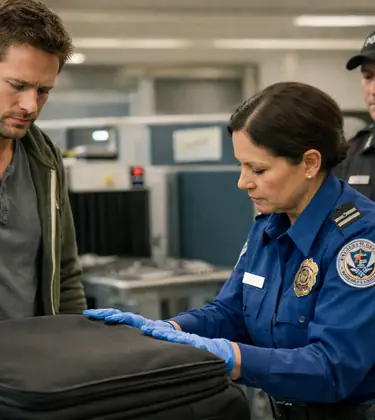
We've already covered the rules around flying with weed, and the short version hasn't changed: it's federally illegal, TSA isn't hunting for it, and your medical card won't save you at a checkpoint. But a lot of people want to know what happens after the discovery. What's the actual process when a TSA officer opens your checked bag in that back room and finds a jar of flower sitting between your shirts?
The consequences range from a shrug and a confiscation note to felony charges and a criminal record. Where you land on that spectrum depends on the state, the quantity, and the type of product. Here's the full breakdown.
What Happens Step by Step When TSA Finds Weed in a Checked Bag?
The process with checked luggage is different from carry-on, and not in your favor. Every checked bag goes through X-ray and CT scanning in a secure area before it's loaded onto the aircraft. You're not present. You have no opportunity to explain, discard, or intervene.
Step one: the scan flags something. TSA's imaging systems are designed to detect threats to aviation security, but organic masses, unusual densities, and unidentified substances all trigger manual inspection. Dense flower shows up on CT scans as a conspicuous organic mass. If the system flags your bag, a TSA officer opens it in the secure baggage area.
Step two: the officer identifies cannabis. TSA agents are not law enforcement. They cannot arrest you. They cannot charge you. But they are required to report any suspected violation of law to local, state, or federal authorities. That referral is mandatory, regardless of the amount or the state.
Step three: law enforcement gets involved. This is where everything branches. Local or airport police respond to the referral. Depending on the jurisdiction, they may page you at the gate, meet you at your destination, confiscate the product with no further action, or place you under arrest. In some cases, travelers simply find a "Notice of Baggage Inspection" card tucked into their suitcase when they land, with the cannabis gone and no further contact from anyone.
The critical difference with checked bags versus carry-on: you have no chance to toss it, explain it, or walk it back to your car. Once that bag leaves your hands, the outcome is entirely out of your control.
Can You Get Arrested for Weed at the Airport?
Yes. It happens. The likelihood depends almost entirely on where you are.
In legal states, arrest is rare for personal amounts. When TSA refers cannabis to airport police in California, Colorado, Oregon, or New York, the responding officers typically operate under state law. In these jurisdictions, possessing a small amount of cannabis as an adult isn't a crime under state code, so there's nothing for them to charge. The most common outcomes are confiscation, a verbal warning, or being told to dispose of it. Most travelers in legal states walk away with nothing more than a missed flight and an empty stash jar.
In prohibition states, the math changes fast. Texas is the most extreme example. Under Texas Health and Safety Code, THC concentrates (which includes edibles, vape cartridges, and wax) fall under Penalty Group 2. Possessing less than one gram of a THC concentrate is a state jail felony carrying up to two years in a state jail facility and fines up to $10,000. That means a single THC gummy found in your checked bag at DFW or Houston Hobby could result in a felony charge. And Texas weighs the entire product, not just the THC content. A package of infused brownies weighing a few ounces can escalate the felony classification dramatically.
Other strict states carry similar risks. Idaho treats any amount of cannabis as a misdemeanor for a first offense, but subsequent offenses become felonies. Tennessee and Alabama both maintain strict possession statutes where even small amounts can lead to arrest, fines, and a criminal record. In these jurisdictions, local airport law enforcement responds to TSA referrals with the same seriousness as any other drug possession case.
How Does the Amount of Weed Change What Happens?
Quantity is the single biggest factor in determining whether you face confiscation, a misdemeanor, or a trafficking charge.
Personal amounts usually stay in the nuisance zone. A pre-roll, a few grams of flower, or a small bag of gummies in a legal-state airport is overwhelmingly likely to end with confiscation and nothing else. Law enforcement at major airports in California, Colorado, and Illinois deals with these referrals constantly. As one cannabis attorney told the Washington Post, cases of everyday travelers facing jail time over personal amounts at airports are "pretty rare."
Larger quantities trigger trafficking suspicion. Once you cross into ounces or pounds, the legal framing shifts entirely. At that volume, law enforcement stops treating it as personal use and starts building a distribution or trafficking case. Federal trafficking charges for cannabis carry mandatory minimums: 50 kilograms or more triggers a minimum five-year federal sentence. But even well below those thresholds, state-level trafficking charges kick in at surprisingly low amounts in some jurisdictions. Arkansas and Tennessee have both seen airport operations where DEA-partnered drug dogs screened checked luggage, leading to arrests involving quantities measured in pounds.
The type of product matters too. This is where a lot of travelers get blindsided. In states like Texas, flower and concentrates are classified differently. Two ounces of flower is a misdemeanor. But a single vape cartridge containing THC oil is a felony, because concentrates sit in a higher penalty group. Edibles carry the same risk: the entire weight of the product counts, not just the THC. That distinction has turned college kids carrying leftover vacation brownies into felony defendants.
Feeling lost on how to start? Try taking our quiz!
Start a QuizDoes Getting Caught With Weed at the Airport Affect Global Entry or TSA PreCheck?
This is a consequence most people don't think about until it's too late. Customs and Border Protection runs both Global Entry and TSA PreCheck, and they enforce federal law aggressively.
Global Entry revocation is standard procedure. CBP has publicly documented multiple cases of travelers losing their trusted traveler status over small amounts of cannabis. In one case at Baltimore-Washington International, a woman had her Global Entry membership revoked and was hit with a $500 penalty after CBP found less than two grams of marijuana in her luggage. In another case at Philadelphia International, a man returning from Amsterdam lost his Global Entry status and received a $1,000 fine over 2.5 grams.
A drug conviction can also disqualify you from future enrollment. Even a misdemeanor marijuana conviction on your record can result in denial when you apply for Global Entry or attempt to renew. CBP conducts thorough background checks, and drug-related offenses are specifically listed among the disqualifying factors. For frequent international travelers, losing Global Entry over a stray gummy in a suitcase is a painful and expensive lesson.
The unexamined day is a wasted opportunity. Reflect on what you did, what you learned, and how you can improve.
John Dewey
Why Cannabis Penalty Disparities Are Absurd in 2026
At Barney's Farm, we've been breeding cannabis since the late 1980s. We've watched the plant go from underground to award-winning, from counterculture to mainstream consumer product. We've won over 40 Cannabis Cups. We've developed genetics that serve medical patients, creative professionals, and recreational enthusiasts across the world. And the idea that a consumer can legally walk into a dispensary in Denver, buy a pack of THC gummies, and then face a felony charge for having a single leftover piece in their bag when they land in Dallas is one of the most irrational policy outcomes in modern American law.
The plant itself hasn't changed. A carefully bred strain like Gorilla Z or Mimosa EVO delivers specific terpene profiles and cannabinoid ratios that generations of breeders have refined through deliberate genetic selection. The difference between legal product and felony contraband is a state line and a boarding pass. The science is the same. The plant is the same. The consumer is the same. Only the zip code changes.
Federal rescheduling from Schedule I to Schedule III has been in motion since 2023, but even if it goes through, it won't legalize recreational cannabis at the federal level. The gap between state legalization and federal policy will continue creating exactly these kinds of absurd enforcement outcomes at airports for the foreseeable future.
What Collateral Consequences Come With an Airport Cannabis Charge?
Beyond fines and potential jail time, an airport drug charge generates ripple effects that many travelers don't anticipate.
Criminal record. Even a misdemeanor possession conviction creates a permanent record that shows up on background checks. This affects employment, housing applications, professional licensing, and security clearances. In states where the charge is a felony, the consequences are career-altering.
Missed flights and travel disruption. If law enforcement responds to a TSA referral while you're still at the airport, expect to miss your flight. If the response happens after you've boarded, you could be met by police at your destination. Either way, your travel plans are wrecked.
Immigration consequences. For non-U.S. citizens, a cannabis charge at an airport can trigger inadmissibility or removal proceedings. CBP treats drug violations seriously at ports of entry, and a controlled substance offense on your record can permanently affect your ability to enter the United States.
Driver's license suspension. In Texas, a drug conviction triggers a driver's license suspension of up to six months, regardless of whether the offense had anything to do with driving. Other states have similar provisions. An airport gummy charge can cost you your ability to drive.
The Smartest Move for Cannabis Consumers Who Fly
Leave it at home. Buy at your destination. That's it. That's the entire strategy.
The legal cannabis market in the U.S. has matured enough that finding quality flower, edibles, or concentrates in any legal state is straightforward. Dispensaries carry genetics from respected breeders, including Barney's Farm cultivars grown by licensed operators. The days of settling for questionable product at your destination are long gone. Whether you prefer the energizing terpene profile of a sativa-dominant strain or the deep relaxation of a myrcene-heavy indica, you'll find options that match your preferences.
The risk-reward calculation is simple. The consequences of getting caught range from inconvenience to life-altering criminal charges, and the variable that determines where you land is often just geography. A $30 dispensary purchase at your destination eliminates every single one of those risks. No checked bag anxiety. No TSA referral. No felony in Texas over a leftover vape cartridge. Just good cannabis, legally sourced, waiting for you when you arrive.
Barney's Farm has been developing premium cannabis genetics since the 1980s, with over 40 Cannabis Cup wins. Explore our full cannabis seed catalog and find strains bred for every climate and skill level.