THC-O: The Acetate Cannabinoid the DEA Called Illegal
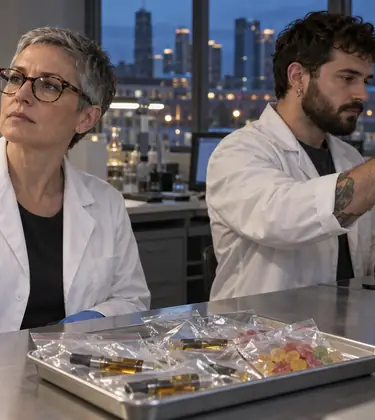
For a few years, THC-O was the hardest-hitting promise on a gas station counter. It sat in vapes and gummies next to the delta-8, sold on a pitch that sounded like a dare: two to four times stronger than regular THC, and legal because it started life as hemp.
Neither half of that pitch aged well. The strength claims rest on anecdotes, the DEA has called THC-O a controlled substance since 2023, and on November 12 a federal rule aimed squarely at lab-made cannabinoids takes effect.
An acetate group bolted onto THC
Chemically, THC-O-acetate is the acetate ester of THC: an ordinary THC molecule with an acetyl group, a small chemical cap, fastened onto the spot where THC normally carries an oxygen-hydrogen pair. It sells as THC-O, THCO, THC-O-A and THC acetate, and it is made by reacting THC with acetic anhydride, a corrosive industrial chemical. A 2022 paper in the Journal of Analytical Toxicology notes it can be made from delta-8, delta-9 or delta-10 THC. In the hemp market, the chain often ran from CBD to delta-8 to THC-O.
The idea is older than the hemp boom. Sometime between 1949 and 1975, the US Army's Edgewood Arsenal experiments looked at THC-O as a possible nonlethal incapacitating agent, and researchers noted it had about twice THC's ability to make dogs lose their coordination. The DEA first ran into it in 1978, when an attempt to make it from cannabis extracts turned up around Jacksonville, Florida.
Is it stronger in people? The 2022 toxicology paper says minimal clinical and pharmacological data is available, and that delta-9 THC-O is described anecdotally as being anywhere from two to four times as potent. A 2023 study of users found little support for the other big claim, that it feels psychedelic: 79 percent said it was not at all or only a little like a psychedelic experience. It is also commonly described as a prodrug, something the body has to convert before it acts, which would fit reports of a slow start.
None of this chemistry happens in a plant, and a plant does not need it to get strong. Our Mimosa x Orange Punch, a cross of Mimosa EVO and Orange Punch with a candy-orange taste, has tested at 32 percent THC and finishes flowering in 55 to 60 days.
Is THC-O legal? The DEA says no
The hemp argument went like this: the 2018 Farm Bill legalized hemp and its derivatives, THC-O is made from hemp, so THC-O is hemp. Retailers ran with it, and THC-O vapes and edibles became common at convenience stores and gas stations.
Attorney Rod Kight asked the DEA directly. On February 13, 2023, the agency answered that delta-8 and delta-9 THCO do not occur naturally in the cannabis plant and can only be obtained synthetically, and therefore do not fall under the definition of hemp. As Forbes reported it, that makes both controlled substances in Schedule I. The agency judged the molecule by its chemical structure, not by where its starting material came from. Kight said he was not surprised: he had long argued THCO was a laboratory creation the hemp plant does not make.
So is THC-O legal? Under federal law, the DEA's answer since 2023 has been no. A letter is the agency's reading of the law, though, and courts do not have to agree with it. That gap kept the argument alive.
Delta-8 won in court, THC-O never did
The THC-O vs. delta-8 split comes down to one word: natural. Delta-8 occurs naturally in hemp, just in small amounts, so makers convert CBD to get enough of it, as our guide to delta-8 THC explains. THC-O has no natural version at all, which is exactly the line the DEA drew.
Courts drew a different line. In 2022, in a fight over counterfeit delta-8 vapes, the Ninth Circuit Court of Appeals held that the plain text of the Farm Act compels the conclusion that AK Futures' delta-8 THC products are lawful. The court wrote that the source of a product, whatever the method of manufacture, decides whether it counts as synthetic. By that logic, THC-O made from hemp might pass too.
In 2024 the Fourth Circuit leaned that way without settling it. The case came from a worker fired by a land acquisition company after failing two drug tests, who argued that her hemp products, THC-O among them, were legal. The majority said it found the Ninth Circuit's reading the better one and rejected the argument that the DEA's letter by itself made THC-O illegal. She lost anyway, because she had no evidence of the delta-9 THC levels in what she used, and one of the three judges refused to join the THC-O part of the opinion, calling it a thorny question better left for another day.
Feeling lost on how to start? Try taking our quiz!
Start a QuizNovember 12 closes the door
Congress has now answered the question in the statute itself. The November 2025 hemp law rewrites the federal definition of hemp to exclude final products containing any of three things:
- Cannabinoids that are not capable of being naturally produced by the cannabis plant.
- Natural cannabinoids that were synthesized or manufactured outside the plant.
- More than 0.4 milligrams of total THC, or similar cannabinoids, per container.
The rewrite was due on November 12, 2026. In September, Congress pushed most of it back to December 11 but left the first clause on schedule. As Forbes put it, synthetic cannabinoids not naturally produced by the cannabis plant will still be prohibited. On the DEA's own reasoning, that is the clause THC-O falls under, so for THC-O the federal hemp argument ends on November 12. Delta-8 converted from CBD follows on December 11, when the made-outside-the-plant clause and the 0.4 mg cap arrive together, unless Congress moves the dates again.
The unexamined day is a wasted opportunity. Reflect on what you did, what you learned, and how you can improve.
John Dewey
Strong flower never needed a lab
From where we stand, THC-O was always a workaround. It existed because hemp law let lab conversions through a gap while flower with real THC stayed illegal in much of the country. The plant never needed the help. Breeding has pushed flower THC into the 30s the slow way, by picking parents, stabilizing lines and testing the results.
Biscotti Mintz is one example: Biscotti crossed with our exclusive Mintz phenotype, a mostly indica plant with a creamy mint and kushy flavor, 33 percent THC and a finish in 56 to 63 days of flowering. Grown legally from seed, it comes with no acetic anhydride, no mystery cartridge and nothing added after harvest.
If you want strong cannabis without the chemistry set:
- Grow it yourself where home growing is legal. A seed-grown plant carries only what the plant made.
- Buy from licensed dispensaries, where products are tested and labeled.
- Treat anything sold as THC-O or THC acetate as a lab product, whatever the package says about hemp.
- Skip unlabeled or untested vape carts entirely.
Vaping an acetate is the real worry
The legal story gets the headlines, but the lung question may matter more. THC-O was widely sold in vapes, and the word acetate should ring a bell: vitamin E acetate is the prime suspect in the vaping lung injury outbreak that began in the summer of 2019, known as EVALI. Its cause is still listed as unclear, probably inhalation of vitamin E acetate from illicit vaping products, and a 2020 study found that vaped vitamin E acetate produced ketene, an exceptionally toxic gas.
In 2022, researchers at Portland State University vaporized THC-O-acetate, along with acetate versions of CBD and CBN, and reported that all three produced ketene gas when heated, just like vitamin E acetate. What that means for people who vaped THC-O regularly is unknown, which is not reassuring. The 2022 toxicology paper, which analyzed four products sold as plant material and gummies in a case where hallucinations led to a felony and an arrest, found THC-O acetates among the contents, compounds with almost no clinical research behind them.
A shortcut the law is closing
THC-O is THC with an acetate cap, made in a lab from hemp-derived cannabinoids and sold on a legal theory the DEA rejected in 2023. The courts never gave it the clean win delta-8 got, and on November 12 the federal hemp definition shuts out cannabinoids the plant cannot make. The potency claims are anecdotes, and heating an acetate is the part nobody should shrug off.
If you want strong cannabis, grow it where the law allows or buy it where it is licensed and tested. Barney's Farm has been developing premium cannabis genetics since the 1980s, with over 40 Cannabis Cup wins. Explore our full seed catalog and find strains bred for every climate and skill level.