What Is Delta-8 THC and How Is It Different From Delta-9?

If you walked into a gas station in Texas, Tennessee, or Indiana over the last few years, odds are you saw gummies and vape carts plastered with the words "Delta-8 THC" right next to the energy drinks. For a stretch, this strange little cousin of regular weed was everywhere, sold openly in states where actual cannabis was still very much illegal. Plenty of people tried it without really knowing what they were buying.
So what is delta-8 THC, why did it explode, and how does it actually compare to the delta-9 THC in your favorite flower? Here is the straight story.
What Is Delta-8 THC, Anyway?
Delta-8 THC is a cannabinoid produced by the cannabis plant, same as delta-9, CBD, CBG, and the rest of the family. The catch is that the cannabis plant only makes trace amounts of it. You will not find a strain that is naturally loaded with delta-8 the way you find strains loaded with delta-9.
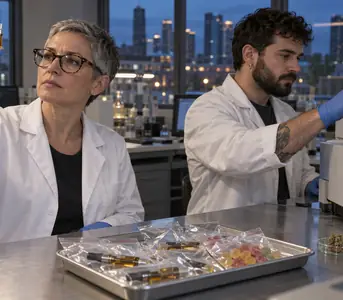
That is why almost every delta-8 product on the shelf today is made in a lab. Producers start with hemp-derived CBD, then run it through a chemical conversion using solvents and acids to flip its structure into delta-8. The end product is sold as gummies, tinctures, vapes, and pre-rolled "hemp flower" sprayed with delta-8 distillate.
So when someone hands you a delta-8 gummy, you are not really getting a piece of the plant. You are getting a lab-converted cannabinoid that started its life as CBD and went through a few extra steps to get high-adjacent.
How Is Delta-8 THC Different From Delta-9?
Chemically, delta-8 and delta-9 are siblings. Both are forms of THC. Both bind to the CB1 receptors in your brain that are responsible for feeling stoned. The only structural difference is where one double bond sits on the carbon chain. Delta-9 has it on the ninth carbon, delta-8 has it on the eighth. That is literally where the names come from.
This tiny shift changes how the molecule fits into your CB1 receptors. Delta-8 binds less tightly, which is why most users describe its effects as noticeably weaker than regular THC. Rough rule of thumb most consumers settle on: delta-8 feels somewhere between half and two-thirds the strength of an equivalent dose of delta-9.
The other major difference has nothing to do with chemistry and everything to do with where it comes from. Delta-9 in your dispensary jar was extracted directly from a cannabis plant grown for that purpose. Delta-8 in a gas station gummy was synthesized from hemp CBD in a facility that may or may not have any meaningful quality control.
Quick reference for anyone keeping score. Delta-9 is naturally abundant, plant-derived, heavily studied, federally controlled but legal in most states for medical or adult use. Delta-8 is naturally rare, lab-converted from hemp CBD, lightly studied, and currently sitting in a legal gray area that is about to get a lot less gray.
What Does a Delta-8 High Actually Feel Like?
People who use delta-8 tend to describe it as a calmer, foggier version of a regular weed high. Less head-rush, less racing thoughts, more body sedation. A peer-reviewed survey of 521 delta-8 consumers published in the Journal of Cannabis Research found that most users reported strong relaxation and pain relief while experiencing very little anxiety or paranoia, and around 57% said they used delta-8 as a substitute for delta-9 cannabis.
That last part is the key to understanding why delta-8 took off. The people buying it were not chasing a brand new experience. They were chasing the closest thing to weed they could legally buy in their state.
Worth noting though: "milder" does not automatically mean "safer." Because delta-8 is converted from CBD using industrial chemicals, the finished product can carry leftover solvents, heavy metals, and unknown reaction byproducts that nobody has bothered to test for. The mellow vibe in the marketing copy hides a real lack of quality control.
Feeling lost on how to start? Try taking our quiz!
Start a QuizIs Delta-8 Legal in the United States?
This is where things get spicy. Delta-8 exists thanks to one specific sentence in the 2018 Farm Bill, which legalized hemp by defining it as cannabis containing less than 0.3% delta-9 THC by dry weight. The bill said nothing about delta-8 or any other isomer. Manufacturers spotted that opening immediately, started making delta-8 from hemp CBD, and ran with it.
That window is closing. Congress passed federal legislation in November 2025 that redefines hemp using a "total THC" standard and caps finished hemp products at 0.4 milligrams of total THC per container, with full enforcement scheduled for November 2026. The change was enacted as Public Law 119-37 and explicitly targets synthesized cannabinoids like delta-8. Industry estimates suggest the new rules will wipe out roughly 95% of the hemp-derived intoxicating products currently on shelves.
On the safety side, the FDA has been waving a red flag for years. The agency logged 104 adverse event reports tied to delta-8 between December 2020 and February 2022, plus more than 2,300 calls to poison control, including hospitalizations involving children. Many of those calls involved gummies and edibles in packaging designed to look like popular candy brands.
The unexamined day is a wasted opportunity. Reflect on what you did, what you learned, and how you can improve.
John Dewey
Why People Started Reaching for Delta-8 in the First Place
To understand the delta-8 boom, you have to look at the map. Sales spiked hardest in states with no recreational cannabis program and limited medical access. People in those places were not turning their nose up at "real" weed. They just did not have legal access to it.
Delta-8 also got popular with consumers who wanted something gentler. Older folks new to cannabis. People who get anxious off strong sativas. Users coming back to weed after years away and finding modern flower way more intense than they remembered. For that crowd, a softer high without the racing heart felt like a feature, not a bug.
Convenience played its part too. No medical card, no dispensary trip, no cash-only ATM fees. Just a gummy at the smoke shop next to the Slim Jims.
The Barney's Farm Take: Real Cannabis Beats a Lab Workaround
We have spent over thirty years breeding cannabis genetics in Amsterdam, and our position on delta-8 is pretty simple. If you want a mild, body-heavy, mellow high, the plant already grows that for you. You do not need a chemistry set.
Want something close to the chill body buzz people are buying delta-8 for? Reach for an indica-leaning strain like Critical Kush. It delivers that heavy-limbed, couch-locked relaxation without anyone running CBD through acid baths to make it happen. And if you want to feel a real delta-9 high without anxiety hijacking the trip, the trick is slowing your dose down rather than reaching for a weaker molecule. Half a joint of Wedding Cake, hydrated, fed, and not on an empty stomach, will treat you better than any synthetic shortcut.
The other thing worth saying out loud: a properly grown cannabis plant gives you the entire cannabinoid and terpene profile working together. Myrcene for sedation, limonene for mood, linalool for relaxation, caryophyllene for pain. That orchestra is the whole point of cannabis. A converted cannabinoid stripped out of CBD and sprayed onto hemp biomass is not playing the same instrument.
And on the growing side, modern genetics have come a long way in producing strains that hit specific lanes. If anxiety is the reason you bounced off strong THC in the past, the answer is usually picking a better strain and dialing in your dose, not switching to a weaker analog made in a lab. The plant has options. Use them.
So Should You Bother With Delta-8?
If you live somewhere with legal cannabis, the answer is easy. Buy real flower from a regulated dispensary, start with a low dose, pick a strain that matches the vibe you want. You will get a better experience and you will know exactly what you are putting in your body.
If you live somewhere cannabis is still locked down, delta-8 has been a workaround, and we get the appeal. Just go in with eyes open. Buy from brands that publish third-party lab tests for solvents and heavy metals, never from a random gas station. And keep an eye on the law, because the federal landscape is shifting fast and a lot of what is on the shelf today will not be there in 2026.
Either way, the cannabis plant has been doing this job naturally for thousands of years. Delta-9 is the original. Everything else is just trying to keep up.
Barney's Farm has been developing premium cannabis genetics since the 1980s, with over 40 Cannabis Cup wins. Explore our full cannabis seed catalog and find strains bred for every climate and skill level.