Cannabis and Endometriosis: What the Pain Research Shows
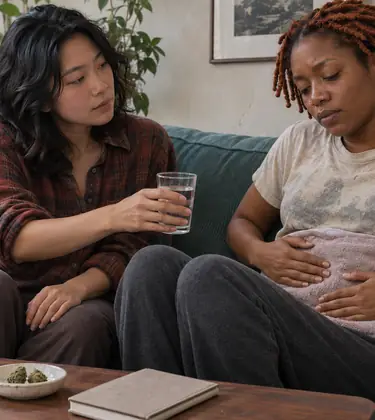
Endometriosis pain can throw an entire day off course. When usual treatments fall short, it's easy to see why people are asking about cannabis and endometriosis.
Some report relief, and small studies offer early clues. There still isn't enough evidence to know how much cannabis helps.
Key takeaways
- People with endometriosis frequently report using cannabis for pelvic pain, cramps, sleep disruption, and related symptoms.
- Observational studies and small prospective cohorts report lower pain scores, but high-quality randomized evidence remains limited.
- CBD for endometriosis is being investigated, yet CBD alone has not been established as an effective treatment for the disease.
- THC may change pain perception but can also cause dizziness, anxiety, impairment, and other unwanted effects.
- Cannabis has not been shown to shrink lesions, preserve fertility, or replace hormone treatment, surgery, and individualized gynecologic care.
Why endometriosis pain can reach beyond menstrual cramps
Endometriosis involves tissue resembling the uterine lining growing outside the uterus. It can trigger inflammation, scar tissue, and persistent pain, yet the size of a lesion does not neatly predict how bad someone feels. Cramps may be only part of it. Pain during sex, painful bowel movements, fatigue, bladder symptoms, and pain between periods can all enter the picture, sometimes alongside fertility concerns.
Repeated pain can make the nervous system increasingly sensitive. Sleep gets harder, pelvic-floor muscles may tense up, and everyday plans become unpredictable. A treatment that changes pain perception might make those days easier to manage while the underlying condition remains. Researchers need to measure those outcomes separately.
Where the endocannabinoid system fits in
Your body makes cannabinoids involved in pain signaling and mood. THC acts on these pathways and can cause intoxication; CBD works differently. Researchers are exploring both, but there's no proven product or dose for endometriosis.
What happens when people use weed for endometriosis?
The best-known findings initially came from questionnaires. People who already chose cannabis were asked about pain and quality of life, often reporting meaningful relief. A 2025 scoping review screened hundreds of records, and 13 met the inclusion criteria. Many involved self-selected cannabis users, products containing both THC and CBD, and short follow-up periods. The observations are valuable, but they cannot eliminate placebo effects, selection bias, or the natural ups and downs of the condition.
Some survey participants reported using fewer conventional pain medicines. That is worth studying, particularly when standard treatments cause side effects. It is not a reason to change a prescription without speaking to the clinician managing your care.
What two recent endometriosis studies found
A prospective New Zealand cohort followed people with diagnosed endometriosis who were prescribed CBD oil alone or CBD oil combined with dried cannabis flower. Pelvic pain scores decreased over 12 weeks: average overall pain fell from 5.46 to 3.77, while the average worst-pain score fell from 7.62 to 5.38. Participants also reported improved endometriosis-related quality of life. Without a randomized placebo group, however, the study cannot isolate the effect of cannabis from other factors.
A separate pilot study enrolled 30 adults with confirmed endometriosis and chronic pelvic pain; 27 completed the 3-month treatment period. Participants received standardized oral extracts containing THC and CBD. Pain and quality-of-life measures improved during follow-up, offering a useful signal for further testing rather than proof of efficacy. Small studies are especially vulnerable to expectation effects and changes in concurrent care.
Feeling lost on how to start? Try taking our quiz!
Start a QuizHow CBD and THC differ for pelvic pain
CBD and THC are often discussed together, though they act differently. THC can cause intoxication and may change how pain feels. CBD does not produce the usual THC high, but studies have not established it as an endometriosis treatment. Many trials use products containing both compounds, making it difficult to tell which ingredient contributed to a reported improvement. Here is a quick comparison:
| Feature | THC | CBD |
|---|---|---|
| Intoxicating effect | Yes; can impair attention and coordination | No typical THC high |
| Pain evidence | Appears in mixed-product studies; effect remains uncertain | Studied alone and in blends; benefit unproven |
| Main cautions | Anxiety, impairment and dependence risk | Medication interactions and product variability |
| Disease effects | No proof it reduces lesions or improves fertility | No proof it reduces lesions or improves fertility |
| Feature | Intoxicating effect | Pain evidence | Main cautions | Disease effects |
|---|---|---|---|---|
| THC | Yes; can impair attention and coordination | Appears in mixed-product studies; effect remains uncertain | Anxiety, impairment and dependence risk | No proof it reduces lesions or improves fertility |
| CBD | No typical THC high | Studied alone and in blends; benefit unproven | Medication interactions and product variability | No proof it reduces lesions or improves fertility |
Because most studies have used mixed THC-CBD products, researchers still struggle to pin down which compound, if either, helps. Bigger placebo-controlled trials are needed.
How strong is the evidence so far?
Patient accounts help explain what people experience day to day. Study design tells researchers how confidently they can attribute changes to a treatment. Here is how the current evidence stacks up.
| Evidence type | What was observed | What remains unknown |
|---|---|---|
| Surveys | Users report pain relief and less medicine | Causation, consistent doses, lasting safety |
| 12-week cohort | Mean pain score fell from 5.46 to 3.77 | Placebo-adjusted treatment effect |
| Oral extract pilot | 27 completed; some scores improved | Whether benefits persist in a larger trial |
| Clinical guidance | ACOG says evidence remains insufficient | A proven treatment recommendation |
| Evidence type | Surveys | 12-week cohort | Oral extract pilot | Clinical guidance |
|---|---|---|---|---|
| What was observed | Users report pain relief and less medicine | Mean pain score fell from 5.46 to 3.77 | 27 completed; some scores improved | ACOG says evidence remains insufficient |
| What remains unknown | Causation, consistent doses, lasting safety | Placebo-adjusted treatment effect | Whether benefits persist in a larger trial | A proven treatment recommendation |
The next step is a trial with a defined product, consistent doses, a comparison group, and longer follow-up. Researchers also need to measure different symptoms separately, including period pain, pain during sex, everyday pelvic pain, and quality of life.
The unexamined day is a wasted opportunity. Reflect on what you did, what you learned, and how you can improve.
John Dewey
Why professional guidelines remain cautious
There are insufficient data to make a recommendation regarding the use of cannabis products for management of pain associated with gynecologic conditions. That conclusion from the American College of Obstetricians and Gynecologists is not a dismissal of patients' experiences. It reflects the gap between people reporting relief and trials strong enough to show which product works, for whom, at what dose, and with what trade-offs.
For patients exploring endometriosis and marijuana, the central risk is letting a temporary reduction in pain delay diagnosis or management. Pain relief does not demonstrate that implants, adhesions, or inflammation have resolved. ACOG's endometriosis guidance includes pain relievers and hormonal medications, with surgery considered in appropriate circumstances. Treatment choices depend on symptoms, medical history, and pregnancy plans.
Safety and fertility questions worth discussing
THC can impair driving, coordination, memory, and judgment. Some people experience anxiety, dizziness, a racing heart, or sedation, and regular use can cause tolerance or dependence. CBD may cause side effects and interact with prescription medicines. Inhaling cannabis adds exposure to smoke or aerosol.
Pregnancy plans matter, too. Anyone trying to conceive should discuss THC and CBD with their gynecologist. ACOG advises stopping cannabis use during pregnancy and lactation.
- Ask about possible interactions with prescriptions, including sedatives and medicines processed by the liver.
- Do not drive or do safety-sensitive work while impaired by THC.
- Keep a symptom diary covering menstrual timing, pain location, sleep, gastrointestinal symptoms, and treatment changes.
- Seek urgent assessment for severe sudden pain, fainting, heavy bleeding, fever, or possible pregnancy with significant pelvic pain.
Can a strain help with endometriosis pain?
Cannabis strain names describe cultivars, not clinical formulations. Barney's Farm's Wedding Cake is a Cherry Pie and Girl Scout Cookies lineage with a sweet vanilla, earthy profile; Purple Punch brings Larry OG and Granddaddy Purple genetics with a fruit-and-dessert character. They are distinct seed choices for adults interested in genetics and flavor, but neither has been tested as an endometriosis therapy. A strain's marketed relaxation effect is not an outcome from a pelvic-pain trial.
When comparing cultivars, cannabinoid content and product quality are more useful than a catchy name. Even broader research on cannabis and pain cannot tell us whether a given strain helps endometriosis.
Questions worth taking to your next appointment
Walk into your appointment with a clear picture of what is happening, not just a pain score. A simple plan helps you cover the important ground:
- Track the symptoms across several cycles. Note pain, workdays missed, sleep lost, and activities you have had to abandon.
- List what you have tried. Bring medications, doses, side effects, and any THC or CBD use.
- Ask about next steps. Discuss imaging, specialist assessment, pelvic-floor therapy, and medical or surgical options.
- Agree on follow-up. Decide what changes to monitor and when your treatment plan should be reassessed.
If cannabis seems helpful, keep notes over several cycles. Record your sleep, missed work, and changes in pain medication under medical supervision. Patterns like those give your care team a clearer picture than a single good evening.
What to do with the research so far
Early studies suggest some people feel better while using cannabis, but larger, well-controlled trials are needed to establish what helps and how safe it is. If you are considering THC or CBD, discuss it alongside your existing treatment plan and keep track of symptoms over time. Pain relief matters, and so does proper care for the underlying condition.
Barney's Farm has been developing premium cannabis genetics since the 1980s, with over 40 Cannabis Cup wins. Explore our full seed catalog and find strains bred for every climate and skill level.