
Ocimene: The Sweet, Herbal Terpene Explained
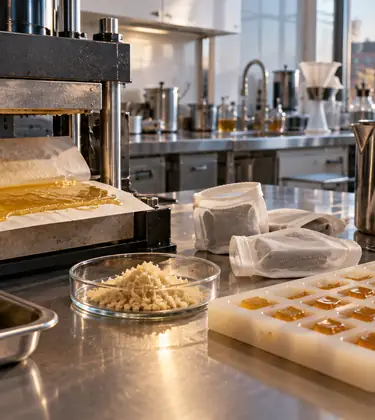
Rub a basil leaf between your fingers and you are smelling the plant ocimene was named after. Ocimene's own sweet, herbal note drifts out of flowers, out of leaves that insects are chewing, out of beehives and out of the resin of some cannabis.
Plants appear to use it to call pollinators and to switch on defenses against pests. Honeybee larvae use it to boss the hive around. For people, the research is close to empty, which has not stopped terpene charts from promising effects.
Basil gave ocimene its name
Terpenes are the aromatic compounds behind the smell of pine needles, lemon peel and cannabis buds. The ocimene terpene is one of the small ones, a monoterpene built from 10 carbon atoms and 16 hydrogen atoms. Its name comes from Ocimum, the basil genus, whose own name goes back to the Ancient Greek word for basil. Pure or mixed, ocimenes are oils with a pleasant odor, and they are used in perfumery for their sweet herbal scent.
The word ocimene covers a small family of molecules. Chemists count three forms, called isomers, meaning the same atoms arranged in slightly different ways. The differences come down to double bonds, stiff links between two carbon atoms that lock the molecule's shape at that point:
- Alpha-ocimene puts its isolated double bond, the one set apart from the other two, at the very end of the carbon chain.
- Trans-beta-ocimene moves that bond one step inward and is usually written (E)-β-ocimene in research papers.
- Cis-beta-ocimene, or (Z)-β-ocimene, has the same layout as the trans form and differs only in its shape around the central double bond.
In nature the forms often turn up as mixtures. And like myrcene, their better-known cousin, ocimenes are unstable in air, a detail that matters to anyone storing flower. Federal food rules also list ocimene among the synthetic flavoring substances that may be safely used in food, under conditions the rule spells out.
Plants send it out as an airborne signal
Ocimene evaporates easily, which makes it what botanists call a volatile, a compound that travels through the air. A 2017 review in the journal Molecules called β-ocimene a very common plant volatile, released in significant amounts from the leaves and flowers of many plant species, and sorted its work into two jobs:
- Calling pollinators. The compound shows up in the floral scents of species from most plant families, and the authors gathered evidence that it draws a wide range of pollinators. They also noted that they found no study testing how pollinators actually respond to it.
- Defending leaves. When insects feed on a plant, many species answer by releasing more β-ocimene from their leaves, and those emissions help set up tritrophic interactions, three-level relationships between a plant, the insect eating it and the predators or parasites that attack that insect.
A 2018 study in Frontiers in Plant Science caught the second job in action. Chinese cabbage treated with β-ocimene held back the weight gain and reproduction of the green peach aphid, a common garden pest. Given a choice, winged aphids preferred to settle on untreated plants. Aphidius gifuensis, a tiny parasitoid wasp that lays its eggs inside aphids, was drawn to the treated plants more strongly and landed on them more often.
Honeybee larvae use it to put workers to work
Inside a beehive, ocimene works as a pheromone, a chemical signal that changes how other members of the same species behave. Bee larvae, the white grubs growing in the wax cells, give off (E)-β-ocimene, the trans form. A 2010 study found that the youngest larvae, from newly hatched to 3 days old, produce the most of it relative to their body weight, and because it spreads easily through the air of the colony, it reaches the adults as a general signal from the young.
The signal does two things. It partially holds back ovary development in worker bees, the females that do the colony's labor. And in its presence, nest workers, the bees that tend the hive from inside, start to forage earlier in life, heading out to gather food sooner than they otherwise would. The researchers described the pheromone as the way the larvae express their nutritional needs to the workers. In other words, the babies send the adults out to get dinner.
Feeling lost on how to start? Try taking our quiz!
Start a QuizCannabis makes ocimene in its resin glands
Cannabis builds its terpenes where it builds its cannabinoids, in the glandular trichomes, the tiny resin glands that frost the female flowers. Enzymes called terpene synthases do the assembly, each one turning a common building block into a particular terpene or a small set of them.
A 2017 study of the hemp variety Finola identified nine of these enzymes in cannabis. Their products make up most of the terpenes in that variety's resin, including major compounds such as β-myrcene, (E)-β-ocimene, limonene, α-pinene, β-caryophyllene and α-humulene. Genes tied to terpene production were highly active in the trichomes compared with parts of the plant that make no resin.
The amount of ocimene in cannabis varies enormously from one cultivar, the scientific term for a strain, to the next. A 2019 genetic study that analyzed 475 samples, grouped into 240 cultivars, counted ocimene among the less abundant cannabis terpenes and found it ranging from undetectable in some cultivars to a major component in others. A 2017 study of 30 high-THC cultivars from a California dispensary found that trans-ocimene was the leading terpene in Strawberry Haze, followed by limonene.
On the nose, the ocimene aroma is hard to pick out, because it almost never shows up alone. A bud's smell is a blend of dozens of compounds, and a sweet, herbal lift can come from ocimene, from other terpenes or from all of them at once.
The unexamined day is a wasted opportunity. Reflect on what you did, what you learned, and how you can improve.
John Dewey
Keeping the sweetness from harvest to grinder
Genetics decide how many terpenes a plant can make, and the grower decides how many of them survive to the bowl. We picked the two strains below for sweet, herbal notes in ocimene's territory. Neither page names ocimene, and without a lab report nobody can promise it.
Frosted Zinn x 3 Bears OG Auto crosses Frosted Zinn Auto with 3 Bears OG Auto. Peppery aromas come first, then sweet and earthy scents and what its page calls distinctive herbal fragrances. On the palate, herbal spice notes lead and a pleasant sweetness follows. It reaches around 24 percent THC and runs 70 to 75 days from seed to harvest, a quick route to a sweet, herbal jar.
Durban Z crosses Durban Poison with Original Z. Its aroma opens on sweet lemon and citrus, with fruity candy notes and zesty herbal undertones. On the palate, pine and herbal freshness come through the middle alongside a subtle gas note, cannabis slang for a fuel-like smell. It reaches about 27 percent THC and flowers in 56 to 65 days.
Storage decides how much of that sweetness you keep. A 2020 study in Frontiers in Plant Science that tracked stored cannabis found that terpene levels dropped rapidly under every storage condition it tested. Temperatures below −20°C (−4°F) and grinding the flowers were the worst options, and the authors named whole flowers kept at 4°C (39°F) as the best. Keep buds whole and sealed, keep them cool and dark but out of the freezer, and grind only what you are about to use.
Ocimene effects have been tested on fungi and insects
Terpene charts often credit ocimene with uplifting or healing powers. The published research on ocimene effects is much narrower:
- Fungi in lab cultures. A 2015 study tested the essential oil of the plant Angelica major, an oil that was 30.4 percent cis-β-ocimene. The oil and its two main components, α-pinene and cis-β-ocimene, displayed low MICs against dermatophytes, the fungi behind athlete's foot and ringworm, and against Cryptococcus neoformans, a yeast that can infect the lungs and brain. An MIC, or minimum inhibitory concentration, is the smallest amount that stops a microbe from growing, so a low MIC means a little goes a long way. Of the three, α-pinene was the most active.
- Insects on a plant. The cabbage study above showed ocimene-treated plants slowing aphids down and drawing in the wasps that attack them, an effect on the plant's own defenses.
- People. We found no published study that has tested ocimene's effects in humans, whether smoked, vaped or eaten.
A menu that sells a strain as energizing or calming because of its ocimene is guessing. Until someone runs the human study, ocimene is a smell, and a pleasant one.
Sweet, herbal and mostly a mystery
Ocimene is a small, sweet-smelling terpene named after basil. Flowers seem to use it to call pollinators, damaged leaves release it to rally defenses, and honeybee larvae use it to send workers out for food. Cannabis makes it in its resin glands, in amounts that swing from none to plenty depending on the strain, and like the rest of a bud's terpenes it fades in storage, fastest once the flower is ground. Its effects in people remain untested.
Smell your buds, keep them whole and cool, and ask for a lab report before you believe a terpene chart. Barney's Farm has been developing premium cannabis genetics since the 1980s, with over 40 Cannabis Cup wins. Explore our full seed catalog and find strains bred for every climate and skill level.