Cannabis Sommeliers Are Real: Inside the Interpening Movement

Walk into any dispensary and the wall of jars reads like a wine list nobody bothered to edit. Hundreds of names, a THC number stamped on each, and almost no honest way to tell what any of it will do to you. The wine world solved this problem generations ago by training people whose entire job is to taste, smell, and tell you what you are holding. Cannabis is finally catching up.
The job has a name now, and a growing crowd of people are getting certified to do it. Some call themselves cannabis sommeliers. Others go by interpener or Ganjier. The credential is young, but the idea behind it is ancient, and the bar in the original profession is famously brutal: fewer than 300 people worldwide have ever earned the top Master Sommelier title. Cannabis is building its own version of that ladder, and building it fast.
What is a cannabis sommelier?
A cannabis sommelier is someone trained to judge cannabis the way a wine expert judges wine. They grade quality, catch defects, read aroma, and predict how a given flower will make you feel before anyone sparks it. The wine parallel is not loose. A sommelier is a trained professional who handles tasting, pairing, and service, usually in fine dining. A cannabis sommelier runs the same playbook with flower instead of grapes. They are not guessing from a strain name on a sticker. They are reading the plant in front of them.
Day to day, that means spotting a moldy or bug-ridden batch a budtender would miss, telling fresh flower from flower that has been sitting under a dispensary light for three months, and matching a customer to a chemistry that fits their evening instead of fighting it. It is part science, part trained instinct, and the people who do it well become the person everyone in the room defers to when the question is whether a flower is any good.
What does interpening actually mean?
Interpening is the method most cannabis sommeliers train in. The word is a mashup of “interpreting” and “terpenes,” coined by Max Montrose of the Trichome Institute. The premise is simple: an expert nose can read a flower and place it on a spectrum from sedative to stimulating, no lab report required.
And it is a real class you can sit in. When a Denver newspaper attended one, they described a four-hour session where dispensary managers, growers, and budtenders learn to pick up a flower and read its quality from smell, bud structure, and leaves. Pass the test at the end and you walk out certified. The Trichome Institute has run this program for years and trained thousands of people across the world.
Why the nose beats the indica vs sativa label
This is the part the science backs up cold. For decades, weed got sorted into two buckets: indica for sedation, sativa for energy. The problem is that the buckets do not hold water.
A 2021 study in the journal Nature Plants analyzed close to 300 samples and found that flower labeled indica and flower labeled sativa were genetically indistinct on a genome-wide scale. The labels do not track the DNA. What they loosely track is aroma, which is exactly what a trained nose is reading in the first place.
Strain names are not much more reliable. In one well-documented example, a variety called AK-47 won the Sativa Cup at the Cannabis Cup in 1999, then took the Indica Cup four years later. Same name, opposite category, same competition. The thing that actually predicts how a flower hits is its terpene profile, the aromatic chemistry an interpener trains to detect. Heavy myrcene tends to read sedating and body-heavy. Bright citrus terpenes tend to read uplifting. We went deep on why the same flower can flatten one person and energize another in our guide to why weed affects everyone differently. The short version: chemistry beats leaf shape every time.
Feeling lost on how to start? Try taking our quiz!
Start a QuizGanjier vs interpening: which certification is which?
Two names dominate the cannabis sommelier world, and people mix them up constantly. Here is the clean breakdown.
Interpening is the Trichome Institute program built by Max Montrose. It centers on reading a flower’s quality and likely effect by sight and smell, and it comes as a course, a book, and a certification. It is the fastest route for anyone who just wants to walk into a dispensary and read a jar with confidence.
Ganjier is the heavier credential, designed by an 18-member expert council alongside cannabis educator Green Flower. It covers the full picture from seed to service, including how to guide a customer, and it runs as multi-phase online study plus hands-on training in Humboldt County, California. It is aimed at pros building a career on the retail floor, in sales, or in cultivation.
Both borrow their structure straight from wine, beer, and cigar culture. Both train you to trust your own senses over the marketing printed on the jar. The main practical difference is depth and price. Interpening gets you reading flower fast, while the Ganjier path is a longer, pricier commitment built around service and career credibility.
The unexamined day is a wasted opportunity. Reflect on what you did, what you learned, and how you can improve.
John Dewey
How a sommelier reads a flower
Here is what actually happens when a trained palate picks up a bud.
Look first. The frosty resin glands, called trichomes, signal potency and freshness. A sommelier checks density, color, and whether the flower was grown and cured with any care. We broke down what these glands are and why they matter in trichomes explained.
Then smell. Aroma is the main event. A bright, citrus-forward nose usually points to an uplifting, daytime kind of high. A deep, earthy, fuel-heavy nose usually points toward relaxation and a heavier body effect.
Place it on the spectrum. Everything gets mapped from sedative to stimulating, which gives you a real prediction instead of a coin flip.
This is where decades of breeding meet a trained palate. Two of our own genetics sit at opposite ends of that spectrum and make the contrast easy to learn. Tangerine Dream leans bright and citrus, a limonene-forward profile that reads social and uplifting. Critical Kush sits at the far other end, earthy and pungent and dank over a pine base, the kind of nose that warns you a slow, heavy evening is coming. Smell the two side by side and the sedative-to-stimulating idea stops being theory and starts being obvious.
How to start interpening at home tonight
You do not need a certificate to start training your nose. You need reps.
Smell everything, on purpose. Coffee, citrus peel, pine, pepper, diesel, fresh herbs. You are building a scent library your brain can later match to flower.
Buy the same strain from two sources. Compare them blind. You will be shocked how different “identical” weed can smell and feel.
Keep notes. Aroma, look, density, the effect, and the time of day. Patterns show up faster than you expect.
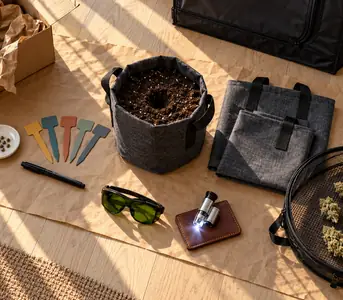
Get a loupe. A cheap jeweler’s magnifier shows you trichome color and ripeness that the naked eye misses entirely.
Trust your nose over the label. If the jar says sativa but it smells like a couch, believe the smell.
The original cannabis sommeliers were breeders
Long before anyone printed a certificate for this, the people reading flower hardest were the ones breeding it. Barney’s Farm has graded cannabis by eye and nose since 1986, because that skill is the whole job when you are selecting which plants get to make the next generation. More than 40 years of breeding and over 40 Cannabis Cup wins come down to the exact thing an interpener trains: knowing what a great plant looks like, smells like, and does.
It started with founder Derry sourcing landrace genetics through Afghanistan and the Himalayas, choosing by hand for the traits that hold up in the jar. The cannabis sommelier movement is the consumer side of that same instinct finally catching up. So train your nose. The sticker on the jar was never going to tell you the truth anyway.
Barney's Farm has been developing premium cannabis genetics since the 1980s, with over 40 Cannabis Cup wins. Explore our full seed catalog and find strains bred for every climate and skill level.