Why Does Weed Affect Everyone Differently?

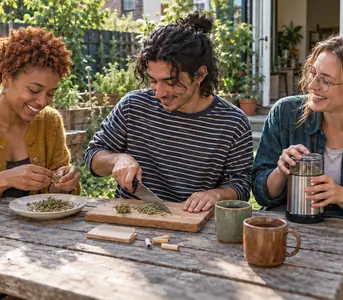
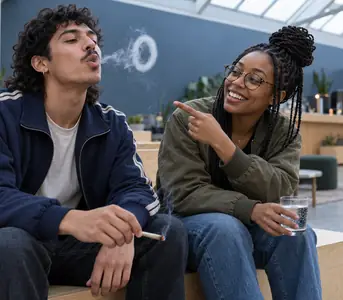
Pass a joint around a circle of five people and you get five different stories. One is cracking up at the ceiling fan. Another is dead silent, locked in a thought spiral about their tax return. Someone else swears they feel nothing. The flower is identical. The people aren't.
The reason same-strain, same-dose, wildly different reactions happen across cannabis culture has almost nothing to do with willpower and almost everything to do with biology. Here's what the science has figured out so far, and what cannabis breeders have been working with for decades.
Your endocannabinoid system is basically a fingerprint
Every human runs on an endocannabinoid system, a network of receptors and naturally produced compounds that helps regulate mood, appetite, sleep, pain, memory, and more. THC produces its signature effects by latching onto CB1 receptors in your brain. CBD interacts more indirectly but still routes through this same system.
The catch: no two endocannabinoid systems are wired the same way. Receptor density, enzyme activity, and baseline endocannabinoid levels vary from person to person. Someone with more sensitive CB1 receptors in certain brain regions feels THC faster and harder. Someone whose system runs quieter may barely register small doses.
Diet also shifts the dial. Endocannabinoids are built from omega-3 fatty acids, so if your diet runs light on those, your system runs less efficiently. That can mean stronger highs, but also more chance of anxiety or paranoia from the same joint someone else breezed through.
Worth remembering: the ECS was only discovered in the early 1990s. We're still in the early chapters of understanding what it does and how it varies. Most of what old heads figured out about weed through trial and error is just now getting lab confirmation.
Does genetics decide how high you get?
Short answer: partly, yes. A chunk of the adult population carries genetic variants that tune the ECS up or down from birth.
The most studied of these is a variant in the COMT gene, which helps clear dopamine from the brain. In one well-known study, carriers of a specific COMT variant showed worse working memory performance after receiving THC than people with the other version of the gene. Translation: the person next to you might feel sharp while you feel foggy, and neither of you chose that outcome.
Variants in the CNR1 and FAAH genes also shape things. These genes affect how your body produces and breaks down its own cannabinoids, which changes how much anxiety relief, euphoria, or edge you get from THC. It's one reason two friends with identical habits can end up on opposite ends of the "weed makes me chill" spectrum.
Why weed hits men and women differently
Hormones matter. A lot. Female rats are at least 30 percent more sensitive than males to the pain-relieving effects of THC, and build tolerance faster. Estrogen appears to amplify some THC effects, which is why many women report their high shifting across their menstrual cycle.
Human research backs this up. In a recent randomized controlled study, women reported stronger subjective psychoactive effects than men after a single 10 mg oral THC dose. Men, meanwhile, still run away with the munchies category.
Body composition plays in too. THC is fat-soluble, and differences in body fat percentage, metabolism rate, and even how deeply someone inhales all pull the experience sideways. Historically most cannabis research was run on male subjects, so dosing guidelines skewed in that direction. That gap is finally starting to close, but it's worth knowing about.
Feeling lost on how to start? Try taking our quiz!
Start a QuizTolerance is rewiring your receptors
Smoke every day for a year and then hand that same flower to a friend who hasn't touched weed since college, and the gap in effect will be wild. Not because one of you has better taste. Your brains are literally built differently now.
Regular cannabis use triggers CB1 receptor downregulation. Your body, sensing constant outside activation, dials back the number and sensitivity of its receptors to keep things balanced. The high gets shorter, flatter, harder to chase. Meanwhile the first-time smoker still has a full receptor battery and zero conditioning, so a couple of hits feel like launching into orbit.
The fix is a tolerance break. Even a few days off starts the reset. Two weeks can feel almost like being new again. Some seasoned smokers run quarterly T-breaks just to keep the experience sharp.
The unexamined day is a wasted opportunity. Reflect on what you did, what you learned, and how you can improve.
John Dewey
Why two strains send you to different planets
Here the question stops being about the consumer and starts being about the plant. A strain isn't one thing. It's a chemical profile with dozens of active compounds, and small shifts in that profile can push the felt experience from creative focus to couch lock to clear-headed social energy.
THC percentage is just the headline number. Underneath sits a terpene profile, a CBD and minor cannabinoid ratio, and the way those ingredients work together when they hit the ECS. Researchers call this the entourage effect, the idea that the full combination does something the isolated parts can't. The science on the exact mechanism is still being argued in the lab, but the felt experience is undeniable to anyone who has compared a myrcene-dominant indica to a limonene-forward sativa.
Tangerine Dream is a useful example of a citrus-bright, limonene-heavy profile: uplifting, social, talkative. Purple Punch sits at the opposite end, a myrcene-heavy hybrid that reads sweet on the palate and sinks you into the cushion. Same smoker, same night, completely different nights.
Terpenes each carry their own reputation. Myrcene tends toward sedation and body relaxation. Limonene leans bright and mood-lifting. Pinene can sharpen focus. Linalool, the terpene famous in lavender, pulls toward calm. Caryophyllene is the oddball that actually binds to CB2 receptors directly. The ratio of these in any given flower shapes the feel more than the sativa or indica stamp ever did.
This is what three decades of breeding work actually produces. At Barney's Farm we've spent those years stacking genetics, selecting for specific terpene expressions, and locking in consistency so the chemistry in the jar matches the name on the jar. It's also why two flowers both labeled "indica" can feel so different from each other. What matters is the full chemical signature, not the leaf shape on the seed tin.
Set, setting, and the day you're having
Biology isn't the whole equation. Cannabis amplifies whatever is already in the room and in your head. Smoke a strain at a backyard cookout with friends and you're probably going to end up laughing until your jaw hurts. Smoke that same flower alone at 2 a.m. after a rough day and it can feel paranoid and tight.
Sleep, food, hydration, caffeine, and stress levels all shift the baseline your body brings to the interaction. A big meal before edibles can push the peak back by an hour or more. Skipping food and drinking coffee all day before a dab is a different trip than one pull after dinner.
None of this is mystical. The ECS touches appetite, anxiety, blood pressure, and sleep, so whatever state those systems are already in colors whatever cannabis does next. First-time sessions in a new place with new people almost always run more intense than the same dose at home on the couch.
How to dial in your own experience
A lot of frustration with cannabis comes from treating it like a pill with one dose and one answer. It doesn't work like that. A few things worth keeping in your back pocket:
Start lower than you think. Especially with edibles, where onset can run 45 to 90 minutes. A 2.5 to 5 mg THC starting dose gives you plenty of information without the risk of overshooting.
Track what actually happens. Write down the strain, the method, the time, your mood going in, and what the next two hours looked like. Patterns show up fast. You'll also start recognizing which terpene profiles match which occasions.
Match the chemistry to the plan. Daytime focus calls for something different than bedtime. Terpene profile is a better predictor of effect than a strain's sativa or indica label.
Take breaks. Your receptors reset. Regular T-breaks restore the range of experience you had when cannabis was newer to you.
Trust the genetics you smoke. Consistency starts at the seed. Stable, well-bred lines give you a baseline you can actually learn from, grow after grow, jar after jar.
Cannabis affects everyone differently because everyone is genetically, hormonally, and situationally different from everyone else. The plant meets you where you are. The more you understand what you're bringing to the encounter, the more you're going to get out of it.
Barney's Farm has been developing premium cannabis genetics since the 1980s, with over 40 Cannabis Cup wins. Explore our full cannabis seed catalog and find strains bred for every climate and skill level.