
Trichomes Explained: What Those Crystal Hairs on Your Buds Actually Do
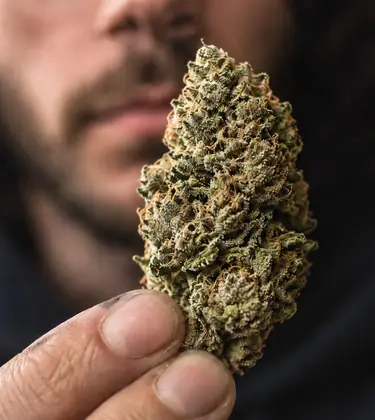
You twist open a fresh jar, hold a nug up to the light, and the whole thing glitters. Frost. Crystal. Diamond dust. Whatever you call it, that sticky sparkle is the entire reason you bought the flower in the first place. Strip those crystals off the bud and what is left does almost nothing. Those tiny hairs are doing all the work. They are called trichomes, and the female cannabis plant pours its life into producing them. Here is what they actually are, why your buds are coated in them, and what they do for the plant before you ever set fire to it.
What Are Trichomes on a Cannabis Plant?
The word trichome comes from the Greek trichoma, meaning growth of hair. Plenty of plants have them. Tomatoes, mint, hops, lavender, stinging nettles. Cannabis just happens to be the species that turned trichome production into an art form. Most plant trichomes are non-glandular, meaning they are basically tiny hairs with no secretory function. The ones on cannabis flowers are different. They are glandular trichomes, which means they are tiny chemical factories with stalks. Each one is a microscopic mushroom-shaped structure: a stem rising from the bud surface, topped with a sticky bulb that contains an internal cavity packed with resin.
That resin is where everything lives. Cannabinoids like THCA and CBDA, along with terpenes, are produced and stored inside the stalked glandular trichomes located on female cannabis flowers, which is why dispensaries grade flower partly on how heavily it is frosted. No frost, no resin. No resin, no real cannabinoid content. The sparkle is the product.
Why Are Cannabis Buds So Frosty Compared to the Rest of the Plant?
Trichomes show up across most of the cannabis plant, but they pile up most heavily in one specific place: the bracts, which are the small leaf-like structures that wrap each individual flower. Sugar leaves get coated. Fan leaves get a light dusting. Stems get almost nothing. The bracts are the jackpot. A 2025 review in the journal Plants concluded that bracts represent the most consistent sampling unit for cannabis trichome research thanks to their homogeneous trichome distribution and elevated cannabinoid concentration.
The biology behind this is simple once you think about reproduction. Female cannabis plants produce flowers hoping to be pollinated. The bracts are designed to capture pollen drifting on the air, and the resin glands evolved partly to trap that pollen and shield the developing seeds. No pollination in a sea of female plants, and the bracts just keep producing more and more resin in a kind of botanical hailstorm. That is why an unfertilized sinsemilla flower goes absolutely crystal-crazy in the last weeks of bloom. The plant is essentially begging for something that is never coming.
The Three Types of Cannabis Trichomes
When breeders and microscope nerds talk shop, they usually break cannabis trichomes into three categories.
Bulbous trichomes are the smallest, sitting at roughly 10 to 15 microns. You will not see them without serious magnification. They scatter across the whole plant surface and contribute a baseline of stickiness.
Capitate-sessile trichomes are mid-sized and look like tiny mushrooms growing flat against the plant. No real stalk, just a round head pressed against the leaf or bract. They produce a meaningful share of cannabinoids and dominate during the early stages of flowering.
Capitate-stalked trichomes are the ones you can actually see. They have a visible stem and a large bulbous head, ranging up to roughly 100 microns across, and they form the dense forest of crystal hairs that smokers care about. A 2020 study published in The Plant Journal by researchers at the University of British Columbia demonstrated that stalked cannabis trichomes develop from sessile-like precursors during floral maturation and carry a distinct blue autofluorescence that correlates with high cannabinoid levels. Translation: stalked trichomes are the ones doing the heavy lifting on potency.
Feeling lost on how to start? Try taking our quiz!
Start a QuizTrichome Function in Cannabis: What These Resin Glands Actually Do for the Plant
Here is the strange truth nobody wants to hear. The cannabinoids and terpenes you smoke are not there for you. They are defensive weapons.
For cannabis, the resin glands pull triple duty. They function as a chemical sunscreen, with the dense crystal layer absorbing and scattering UV-B before it cooks the bracts and the developing seeds inside. They function as a sticky trap and a deterrent: insects landing on a fresh flower get glued in place, and the terpene cocktail is bitter and toxic enough to convince most herbivores to look elsewhere for lunch. They also help regulate moisture by creating a partial barrier against evaporation, which matters more than people realize during heat stress.
So the high you chase is a side effect. THC evolved as a defensive metabolite to deter pests, and it survived selective breeding because humans turned out to be very into the side effect. The plant did not invite us. We crashed the party.
The unexamined day is a wasted opportunity. Reflect on what you did, what you learned, and how you can improve.
John Dewey
How to Read Trichomes for Harvest Timing
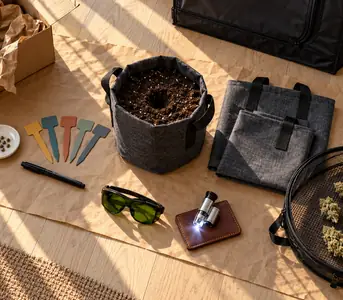
This is where decades of growing experience earn their keep, and it is one of the few cannabis skills that has not changed in 40 years. Pull out a jeweler's loupe, a pocket microscope, or even a clip-on phone macro lens and zoom in on the trichome heads. Three colors tell you everything.
Clear trichomes mean the resin is still developing. THC has not peaked. Harvesting now gives a thin, racy, sometimes anxious high that nobody really wants.
Cloudy or milky trichomes mean peak THC. The resin has matured and turned opaque. This is the window most growers target for a balanced, energetic, classically psychoactive smoke.
Amber trichomes mean THC has begun degrading into CBN, which produces a heavier, sleepier, couch-locked experience. Indica fans tend to chase a higher amber ratio. Sativa fans usually cut earlier.
Barney's Farm has been breeding cannabis in Amsterdam since 1986, and harvest timing is something we obsess over with every cultivar we release. Take LSD, our Skunk #1 and Mazar cross that earned third in the indica category at the 2008 High Times Cannabis Cup. It develops a thick coating of stalked trichomes that ripen unevenly across the cola. Pulling LSD when the upper buds show mixed cloudy and early amber heads delivers the hallmark psychedelic body high the strain is known for. Wait three days too long and you tip into a heavier sedative bend. The crystals are the timer, and learning to read them is what separates a competent grow from a great one.
Cannabis Crystals Explained: Why Frosty Buds Are Worth Paying For
"Crystals" is slang that has stuck around because the trichome heads catch light like sugar grains or tiny gems. They are not actually crystalline. They are spheres of plant resin sitting on top of glassy stalks. What people are responding to when they call a strain frosty is density: a higher count of mature stalked trichomes per square millimeter of bud surface.
Density matters because cannabinoid and terpenoid metabolites can represent up to 28% of the dry weight of female cannabis flowers in heavily selected modern cultivars. That is an absurd figure for a plant compound. Most medicinal plants produce active compounds at fractions of a percent. Cannabis went and built an entire specialized organ system to manufacture them in bulk.
If you collect trichomes that have broken off your flower, by the way, you have made kief. We covered that in detail in our guide to kief and what to do with it, so we will not repeat the whole thing here. The short version: kief is trichomes minus the rest of the plant. Same chemistry, much higher concentration.
Genetics decide most of the frost question. Some plants will never coat themselves no matter how perfectly you grow them. Others, like Pineapple Chunk, reliably throw out dense, crystal-coated buds that growers use as benchmark plants when dialing in a new room. That kind of resin output is not luck. It comes out of decades of selecting parent plants that already had heavy trichome production and crossing them with partners that brought structure, terpene complexity, and yield.
The Whole Point of the Plant
If you remember one thing from this article, remember that everything else cannabis does is in service of the trichomes. The leaves photosynthesize to feed them. The roots gather water and minerals to fuel them. The flower architecture exists to support them. When you grade a strain on aroma, potency, or visual appeal, you are grading its trichomes. The rest is plumbing. That is why serious breeders measure resin density before they measure almost anything else, and why a flower with anemic trichome production is a flower that failed at the only job that matters.
Barney's Farm has been developing premium cannabis genetics since the 1980s, with over 40 Cannabis Cup wins. Explore our full cannabis seed catalog and find strains bred for every climate and skill level.