
Why Is 420 Associated With Weed? The Real Story Behind Cannabis Culture's Favorite Number
Three digits. No context needed. Say "420" anywhere on the planet, and cannabis fans know exactly what you mean. But most people have no idea where the term actually came from. The real 420 origin story has nothing to do with police codes, chemical compounds, or Bob Dylan math. It starts with five teenagers, a hand-drawn treasure map, and a statue of Louis Pasteur.
Where Did 420 Come From?
Fall, 1971. San Rafael High School, Marin County, California. Five friends who called themselves the Waldos (named after the wall they hung out on) got their hands on a map. A friend's brother in the Coast Guard had been growing cannabis out on the Point Reyes Peninsula but got paranoid about getting caught. So he drew a map and told the kids they could have the crop.
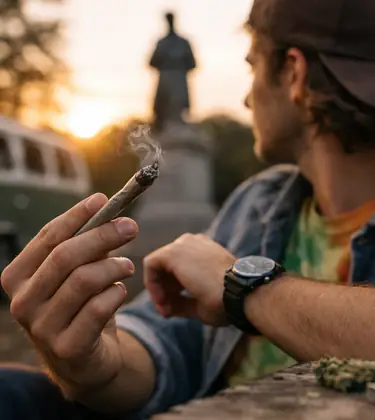
The Waldos picked a meeting time: 4:20 p.m., right after sports practice ended. The meeting spot: the statue of chemist Louis Pasteur on campus. Every afternoon, they'd gather at the statue, spark a joint, pile into a car, and drive out to hunt for the abandoned grow. They called the plan "4:20 Louis."
They never found the plants. Not once. But the code stuck. "4:20 Louis" got shortened to just "420," and soon it meant everything cannabis. "Got any 420?" "Are you 420?" "Let's 420." The Waldos kept postmarked letters and other documents from the 1970s referencing the term, later storing them in a bank vault to back up their claim.
The 420 Myths That Won't Die
Before we go further, let's kill some zombies. These origin stories have been floating around for decades, and every single one is false.
"420 is a police code for marijuana." Nope. California Penal Code Section 420 actually covers obstructing entry on public land. In Las Vegas, the police radio code 420 refers to homicide. Not exactly the mellow vibe people are imagining.
"There are 420 chemical compounds in cannabis." Scientists have identified well over 500 chemical compounds in the cannabis plant. The number keeps growing as research advances. This one was never close.
"It comes from Bob Dylan's 'Rainy Day Women #12 & 35' because 12 times 35 equals 420." Creative math, but this theory has been thoroughly debunked. There is zero connection between that song and the Waldos.
"April 20 is Hitler's birthday." It is. It's also the birthday of roughly 20 million other people. Any conspiracy connecting the two has never produced a single shred of evidence. Moving on.
How Did 420 Go From High School Slang to a Global Phenomenon?
This is where the story gets good. One of the Waldos, Dave Reddix, had a brother who was tight with Grateful Dead bassist Phil Lesh. Reddix ended up working as a roadie for the band, and the Waldos started hanging out backstage at Dead shows and rehearsals regularly. The term 420 spread through the Dead's inner circle like smoke through a ventilation shaft.
The Grateful Dead toured relentlessly through the '70s and '80s, and their fans (Deadheads) carried the slang across the country. Deadhead culture was already deeply intertwined with cannabis, so 420 slotted in perfectly. It was short, discreet, and instantly understood. By the late '80s, the term was embedded in the vocabulary of an entire subculture that stretched coast to coast.
Then came the flyer. On December 28, 1990, a group of Deadheads in Oakland handed out flyers at a concert inviting people to smoke "420" on April 20 at 4:20 p.m. A copy landed in the hands of Steve Bloom, a reporter for High Times magazine. High Times printed the flyer in 1991 and kept referencing the number. That was the tipping point. Within a few years, 420 had gone from underground slang to a globally recognized symbol of cannabis culture.
In 1998, High Times officially credited the Waldos as the originators. And in 2017, the Oxford English Dictionary added "420" as a formal entry, citing the Waldos' saved letters as the earliest recorded usage.
Feeling lost on how to start? Try taking our quiz!
Start a QuizWhat Does 420 Mean in Everyday Life?
Today, 420 operates on several levels at once. At its most basic, it's a time: 4:20 p.m. is when you spark up. It's a date: April 20 (4/20 in U.S. format) is the closest thing cannabis culture has to a national holiday. And it's a signal: when someone describes themselves as "420 friendly" on a dating profile, rental listing, or hostel page, they're telling you cannabis is welcome. The phrase has become a universal shorthand for openness to the plant, cutting across languages and borders.
The number has also wormed its way into places nobody expected. Colorado's Department of Transportation had to replace the Mile Marker 420 sign on I-70 east of Denver with one reading "419.99" because people kept stealing it. Idaho and Washington state did the same. In Minnesota, officials in Goodhue County changed "420 St" street signs to "42x St" to stop the theft.
Politicians have gotten in on the action too. California Senate Bill 420 was introduced in 2003 to regulate medical marijuana. In 2019, Oregon Representative Earl Blumenauer introduced H.R. 420, the Regulate Marijuana Like Alcohol Act. Even Elon Musk referenced the number when he tweeted about taking Tesla private at $420 per share.
The unexamined day is a wasted opportunity. Reflect on what you did, what you learned, and how you can improve.
John Dewey
420 and the Push for Legalization
What started as five kids looking for free weed has become a genuine force in cannabis advocacy. Every April 20, thousands gather at events like the Mile High 420 Festival in Denver and Hippie Hill in San Francisco's Golden Gate Park. These gatherings blend celebration with protest, especially in states where cannabis remains illegal.
The numbers show the cultural tide has already turned. A 2024 Pew Research Center survey of over 5,000 U.S. adults found that 88% support legalizing marijuana in some form, with 57% backing full recreational and medical legalization. Only 11% of Americans think cannabis should remain completely illegal. For context, when Gallup first asked this question in 1969, just 12% supported legalization.
Twenty-four states plus Washington D.C. have now legalized recreational cannabis, and over half the U.S. population lives in a state where adults can purchase weed legally. April 20 has evolved from a countercultural protest day into something closer to a victory lap. But legalization hasn't reached every corner of the country yet, and for many advocates, 420 remains an important day to push for federal reform and draw attention to people still serving time for cannabis offenses.
Why 420 Matters to Cannabis Lovers (And Why We Get It)
At Barney's Farm, we've been part of cannabis culture since before most people ever heard the term "420 friendly." Founded in Amsterdam over 30 years ago, we've spent decades developing genetics that people actually want to celebrate with. Over 40 Cannabis Cup wins and counting. Strains like Gorilla Z, Runtz Muffin, and Mimosa EVO didn't come from algorithms or market research. They came from obsessive breeding, real-world testing, and a genuine love for the plant that goes back to the earliest days of Dutch coffee shop culture.
That's what makes 420 resonate with us. The holiday works because it taps into something real: the connection between people and cannabis. Whether you're smoking a joint at 4:20 p.m. with your crew, growing a plant in your backyard for the first time, or cracking open a fresh pack of seeds for the season, 420 is the one day a year when the entire community is on the same page.
The Waldos never planned any of this. They were just five friends who wanted to find free weed and ended up creating a cultural shorthand that billions of people now recognize. Sometimes the best things in cannabis happen by accident. Ask any breeder who's stumbled onto a one-in-a-thousand phenotype.
So, Why Is 420 Associated With Weed?
Because in 1971, five California teenagers picked 4:20 p.m. as the time to meet after school, search for an abandoned cannabis crop, and smoke weed along the way. They never found the plants. But through their connection to the Grateful Dead, a fortuitous flyer at a Dead show, and High Times magazine, their private code became the most famous number in cannabis history. The Waldos themselves have since come forward publicly to confirm the story, and the evidence holds up under scrutiny.
Today, 420 is a time, a date, a greeting, a political statement, and a holiday all rolled into one. And if you know what it means, you're already part of the culture.
Barney's Farm has been developing premium cannabis genetics since the 1980s, with over 40 Cannabis Cup wins. Explore our full seed catalog and find strains bred for every climate and skill level.