
The Hippie Trail: How 1970s Backpackers Carried Afghan and Thai Genetics West
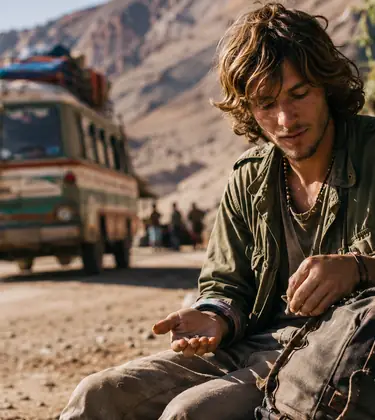
Before there were dispensaries, before every menu was stacked with hybrids, the genetics that built the modern cannabis world rode west in the bottom of a backpack. No labs. No breeders in white coats. Just a generation of broke twenty-somethings on beat-up buses, pockets full of seeds they picked up somewhere between Kabul and Kathmandu.
Two of those seed lines matter more than almost anything on your local shelf today. One came down out of the Afghan mountains as a squat, resin-caked indica. The other came up out of Southeast Asia as a towering, electric sativa. Here is how they got here, and how they are still growing.
What was the Hippie Trail?
The Hippie Trail was an overland budget route that ran from Europe across Asia through the 1960s and 1970s. Travelers started in Istanbul and pushed east through Tehran, then Herat, Kandahar and Kabul in Afghanistan, over the Khyber Pass into Pakistan, and on into India and Nepal. Some drove the whole way in vans held together with wire and hope. One double-decker bus made the run so many times it earned its own name.
Certain stops turned into legends. Istanbul had the Pudding Shop, where a bulletin board matched up strangers headed the same direction. Kabul had Chicken Street. Kathmandu had Freak Street, a stretch of road where cannabis was sold openly and legally. Cannabis was not the only reason people made the trip. But for a lot of them, it was near the top of the list.
This was a genuine mass movement, not a handful of wanderers. Waves of young Americans, Europeans and Australians spent months on the road, trading paperbacks and directions and cheap hash in the same hostels. They were chasing something the suburbs back home could not offer, and the countries they passed through happened to sit on some of the oldest and most potent cannabis genetics on the planet. That overlap is the reason this story exists at all.
How did the seeds actually get to America?
Here is the part most people never think about. Until the mid-1970s, almost all the cannabis smoked in the United States was imported, with barely any grown at home. The whole market ran on Mexican, Colombian, Afghan and Thai product carried across borders and oceans by hand.
Seeds came along for the ride. A brick of imported flower was full of them, and sooner or later somebody planted a handful to see what happened. Travelers on the trail took it a step further and brought seeds back on purpose, tucked into film canisters, taped inside false-bottom suitcases, sewn into the lining of a jacket. That was the raw material for everything that followed. Nobody standing in a customs line in 1974 knew they were carrying the future of an entire industry in a 35mm canister.
The Afghan half: Hindu Kush comes down the mountain
The plants growing in the valleys of the Hindu Kush had been shaped over centuries by farmers who selected for one thing above all else: resin, the sticky stuff you press into hash. Whole villages ran on it. Growers would rub the living flowers between their hands until the resin built up thick enough to scrape off and roll into balls of charas, a tradition older than any seed bank on earth. The result of all that selection was a short, stocky, fast-flowering indica caked in trichomes and built to survive a brutal mountain climate.
That profile turned out to be exactly what Western growers were missing. The short structure was easy to hide. The quick flowering meant a finished harvest before the cold set in. The heavy resin was what everyone wanted in the first place. Afghan landrace genetics became the backbone of indica breeding on two continents and seeded the entire Kush family you see everywhere now.
You can still grow the genuine article. Hindu Kush is a pure 100% indica landrace pulled straight from that mountain range, short and frosty, finishing in 55 to 65 days. It is about as close as you can get to what those first smuggled seeds produced when they hit Western soil.
Feeling lost on how to start? Try taking our quiz!
Start a QuizThe Thai half: Thai sticks and the surfers who ran them
The other stream came from Southeast Asia, and it moved on a completely different current. Thai sticks, grown by hill-tribe farmers in the northeast of Thailand, became the most sought-after weed in America, moved across the Pacific by a loose crew of surfers and smugglers. They stashed it in hollowed-out surfboards and false-bottomed luggage. Vietnam veterans who had smoked it overseas came home and helped light the demand.
By the early 1970s a Thai stick had a reputation on the West Coast the way a rare bottle has one now. The name came from the buds themselves, tied onto thin sticks with fiber and cured into something dense and glossy. To American smokers raised on seedy imported brick weed, it was a different species of experience, and people paid accordingly.
Thai genetics were the mirror image of Afghan. Tall, lanky, slow to finish, and wired for an energetic, heady, almost psychedelic high in place of a heavy body stone. The smugglers who ran it, surfers who called themselves scammers and financed years of chasing waves off a few good shipments, were as much a part of the legend as the weed. Taming that sativa fire into a plant a normal person could grow at home became a decades-long obsession for breeders.
Barney's Farm kept a piece of that puzzle alive. Laughing Buddha is built on our own preserved Thai landrace crossed with a Jamaican hybrid. It runs 80% sativa and still throws the sweet, tropical, up-in-the-clouds high those original Thai plants were famous for, on a plant short enough to actually manage.
The unexamined day is a wasted opportunity. Reflect on what you did, what you learned, and how you can improve.
John Dewey
Barney's Farm was on that trail too
This is not history we read about in a book. It is history we lived. In the early 1980s, before Barney's Farm was a name on a seed packet, founder Derry was already deep in the Himalayas. He spent years moving through Afghanistan, Pakistan and the surrounding mountains with a notebook and a plan, hunting the most potent, most resinous, most flavorful landrace plants he could find and working side by side with the farmers who had been breeding them for generations.
The seeds he carried back became the foundation of the genetic library we still breed from in Amsterdam today. That is the whole difference between a Hindu Kush that came off a spreadsheet and one that traces back to the actual soil it grew in. We went to the source. We watched the plants grow where they belonged, tasted the hash the locals were pressing, and spent the decades since stabilizing those lines so they would not fade out. Forty years later, that original landrace stock is still the taproot under everything in our catalog.
The trail closed, but the genetics stayed
The overland route did not last forever. In 1979 the Iranian Revolution and the Soviet invasion of Afghanistan slammed the trail shut for Western travelers, and Nepal had already outlawed the cannabis trade a few years before that. The golden age of the backpack smuggler was over almost overnight.
It no longer mattered. By then the seeds were already in the ground in California and in the breeding rooms of Amsterdam. The plants had escaped their homeland for good. Everything that came next, every Kush, every Haze, every heavy hybrid on a modern menu, was built on genetics that made that overland trip in the narrow window the trail was open.
Why any of this still matters
There is hard science behind the folklore now. A 2021 whole-genome study found that cannabis was first domesticated in East Asia thousands of years ago, and that drug-type cannabis only reached North America in the 1970s, by way of the Indian subcontinent. The timeline researchers pieced together in a lab is the exact route those backpackers walked in real time.
That old landrace material only gets more valuable as the years pass. Modern hybrids have been crossed and re-crossed so many times that the raw, stable, old-world genetics are getting genuinely hard to find. The plants that came off the Hippie Trail are the root of the whole family tree, and keeping them alive keeps the door open for whatever gets bred next.
The trail is gone. The buses rusted out decades ago and the borders closed. But the genetics those travelers carried are still alive, still growing, and still going in the ground every season. Plant a true landrace or a strain built on one, and you are growing a living piece of that journey.
Barney's Farm has been developing premium cannabis genetics since the 1980s, with over 40 Cannabis Cup wins. Explore our full seed catalog and find strains bred for every climate and skill level.