Temple Ball Hash: The Hand-Rolled Hash Style Explained
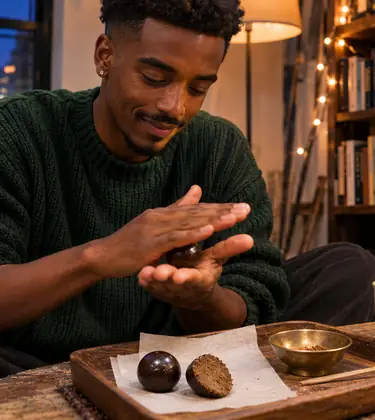
Most hash comes as a flat slab, a pressed puck or a sandy pile. A temple ball looks more like a polished stone, a dark, glossy sphere with a hard shell that cracks open to a soft, fragrant center. That shape comes from kneading resin by hand and leaving it to age, a method with roots in the Himalayas.
Temple ball hash has made a comeback among solventless hash makers, who now roll it from sieved or ice water hash. The process is simple, slow and very hands-on, and it rewards patience more than equipment.
Key takeaways
- A temple ball is hash kneaded by hand into a dense sphere, then aged until a firm shell forms.
- Travelers once bought potent hash from government-licensed shops on Kathmandu's Freak Street.
- Nepal closed those shops in 1973 under pressure from Washington's war on drugs.
- Kneading warms the resin and presses out air, which slows oxidation inside the ball.
- Bubble hash describes how resin is collected, while a temple ball describes how it is shaped and aged.
- A gram of EU resin typically held 12% to 29% THC in 2021, after average potency rose 191% from 2011.
Hand-rolled from the start
Ask a hash maker, "What is a temple ball?" and the answer starts with the hands. It is hash, traditionally charas, resin rubbed by hand from living plants, that has been warmed and kneaded until it turns soft, dark and glossy, then rolled into a tight ball and set aside to age. Over weeks, the outside oxidizes and hardens into a shell, while the inside stays pliable, sticky and lighter in color. Cut one open and the contrast between the two layers is the first thing you notice. Pressed hash gets its density from a machine, while a temple ball gets it from long minutes of hand work, which also blends the resin into one even texture.
Kneading does real work. Body heat softens the resin, folding presses out trapped air and moisture, and a smooth, round surface leaves less of the hash exposed to oxygen than a crumbly pile would. That is why well-made temple balls are prized for holding their aroma for months, and why the center often smells brighter than the shell.
From Kathmandu's Freak Street
The style is tied to Nepal, where cannabis and hand-rubbed hash were part of local tradition long before Western travelers arrived. In the hills, farmers rubbed the sticky flowers of living plants between their palms and scraped off the resin that built up, a method still used across the Himalayas. In the 1960s and early 1970s, the Hippie Trail brought thousands of backpackers overland to Kathmandu, where they bought potent hash from government-licensed stores on Freak Street, a lane named for its long-haired foreign visitors.
The name temple ball is usually traced to that era, when round, polished balls of hash were said to be sold near the city's temples. The story is hard to verify, but the shape stuck, and so did the reputation.
The trade ended abruptly. Washington's global war on drugs and its pressure on foreign governments prompted the closure of the capital's dispensaries in 1973, along with a cultivation ban that forced farmers to rip up their plants, AFP reported in The Himalayan Times. Nepal's parliament has debated legalization since a first motion in January 2020, and the government has studied the crop's medicinal and export potential.
Feeling lost on how to start? Try taking our quiz!
Start a QuizMaking temple ball hash, step by step
The method below shows how to make temple ball hash at home from resin you already have, and it works only with clean, high-grade material:
- Start with 5 to 10 grams of dry sift or ice water hash that is free of plant matter.
- Warm the resin gently in your palms or between parchment sheets on a warm, never hot, surface until it softens.
- Knead it like dough, folding and pressing for 10 to 20 minutes until it turns dark, glossy and even in color.
- Roll it firmly between your palms into a smooth ball, pressing out any air pockets or cracks.
- Wrap the ball loosely in parchment or set it in a small glass or wooden box.
- Age it in a cool, dark place for at least a few weeks, turning it now and then, until the outside forms a firm shell.
Clean hands or food-safe gloves keep skin oils and dirt out of the resin, and patience matters more than force, since overheated hash loses its terpenes and turns greasy. Making concentrates at home is legal only where your state allows it, so check the rules before you start. A first ball rarely comes out perfect. If it cracks while rolling, warm it a little more, and if it smears or sticks to your skin, let it rest and cool before you carry on.
The unexamined day is a wasted opportunity. Reflect on what you did, what you learned, and how you can improve.
John Dewey
Bubble hash and temple balls, side by side
The usual temple ball vs bubble hash debate mixes up two different things, a way of collecting resin and a way of finishing it. Three differences sort it out.
Where each one starts
Bubble hash is resin knocked off frozen or dried flower in ice water, caught in a set of mesh bags and dried into a sandy or crumbly powder. A temple ball can start from bubble hash, dry sift or hand-rubbed charas, since the kneading and aging happen after the resin is collected.
Texture and flavor
Fresh bubble hash is light, loose and bright, with sharp, fruity top notes that fade as it ages. A temple ball trades some of that brightness for depth, with a hard, dark shell, a soft center and flavors that drift toward spice, wood and incense as it matures.
Strength and storage
Neither style is stronger by definition, since potency comes from the resin itself. Europe's resin market shows how high that can climb: the EU drugs agency recorded a marked increase in the potency of cannabis resin between 2011 and 2021, with average THC up 191%, and a gram of resin typically held 12% to 29% THC in 2021. A temple ball's shell protects what is inside, while loose bubble hash needs a sealed container and cold storage to hold its quality, since it can sweat and darken within days at room temperature.
Resin-heavy genetics
Hand-rolling rewards resin that softens easily and smells deep and spicy, the traits that made mountain landraces famous. Hindu Kush, a pure landrace from the mountains between Afghanistan and Pakistan, where farmers grew it for hashish for centuries, is one of the best plants in our catalog for dry sift, ice water hash and rosin, and Afghan Hash Plant Auto, with roots in the landrace genetics of the Mazari Sharif region of northern Afghanistan, covers every surface in a thick blanket of trichomes and finishes 75 to 80 days from seed.
For hash, we harvest when most trichome heads have turned cloudy, dry the flower slowly and sift or wash soon after, because resin heads grow brittle and lose aroma with time. Either strain can supply the clean resin a first temple ball needs.
Aging and storing temple balls
A finished ball keeps improving if it is stored well. These habits protect it:
- Store the balls in glass or wood, since plastic bags trap moisture and static.
- Keep them in a cool, dark spot around 55°F to 65°F (13°C to 18°C), away from sunlight.
- Turn each ball every week or two during the first month so the shell forms evenly.
- Cut one open after a few weeks to check that the center stays soft and smells fresh.
Aging changes the high as well as the flavor. Over months, oxygen slowly turns some THC into CBN, a cannabinoid many users link with a sleepier feel, so a long-aged temple ball tends to feel calmer than fresh hash. Some hash makers age their balls for a year or more, the way others age cheese. Mold is the one real risk, and any white fuzz or musty smell means the ball goes in the trash.
Slow hash for patient hands
Temple balls are hash kneaded by hand, rolled tight and aged until a hard shell guards a soft, aromatic core, a style that traces back to Kathmandu before Nepal closed its hash shops in 1973. Making one takes clean resin, warm hands and weeks of patience, and the result holds its aroma longer than loose hash. Start small, store it cool and dark, and cut one open now and then to watch it age.
Barney's Farm has been developing premium cannabis genetics since the 1980s, with over 40 Cannabis Cup wins. Explore our full seed catalog and find strains bred for every climate and skill level.