Home Rosin Presses: How Solventless Hash Is Actually Made
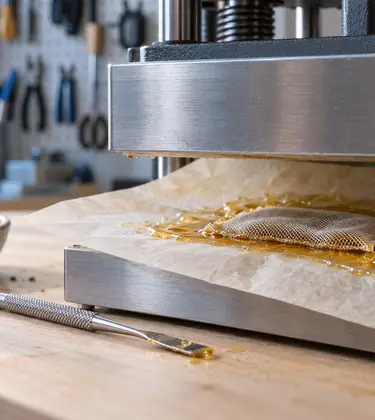
Squeeze a bud between two hot plates and a few drops of golden oil run out onto the paper. That oil is rosin, and making it takes no butane, no alcohol and no lab.
Home pressing started with hair straighteners about a decade ago. Dedicated presses have since taken over, and rosin pressed from washed hash now sells as a premium concentrate.
Key takeaways
- Rosin is cannabis resin squeezed out with heat and pressure, and no solvent touches it.
- Flower rosin comes straight from buds, while hash rosin and live rosin are pressed from trichomes separated first.
- Live rosin starts with plants frozen fresh at harvest instead of dried and cured ones.
- A pneumatic rosin press can work at lower heat than a hair straightener, which keeps more terpenes.
- Resin-heavy strains with large trichome heads give more rosin per press.
- Several states ban butane extraction at home, and Virginia bars making any concentrate from home-grown plants.
Rosin tech, from hair straightener to press
Pressing rosin at home is a young hobby. In August 2015, VICE reported that the hair straightener method only really began taking off among hashish connoisseurs a few months ago. The site credited an Instagram grower known as Soilgrown, who stumbled on the technique while pressing hash at home.
Growers call the method rosin tech. A 2018 study in Drug and Alcohol Dependence described it as applying moderate heat and constant pressure to marijuana flowers, and it tracked 8,389 tweets about rosin posted from 2015 to 2017. Of the tweets the researchers coded, 44.2% were media posts promoting rosin as a safer, solventless method. The share of users tweeting about it was up to seven times higher in states that allowed recreational cannabis than in states where cannabis was illegal.
The straightener had limits. A 2021 review in the Journal of Cannabis Research notes that rosin can be made with a hair straightener for recreational use, but such tools cannot reach high pressure at low temperatures, so they keep fewer terpenes. A pneumatic rosin press can work cooler and hold on to more of them, according to the review, and some of these presses reach 137.8 MPa, about 20,000 psi.
Flower, hash or live rosin
Each kind of rosin is named for what goes between the plates. Flower rosin is pressed straight from dried buds, which makes it the easiest kind to try. Hash rosin starts with trichomes separated first, either sifted dry or washed out in ice water and dried as bubble hash. Kief from a dry sieve already runs at roughly 35% to 50% THC, according to the 2021 review, so the press starts with much more resin than a whole bud holds.
That head start shows up in the yield. In VICE's 2015 report, Jeff Church, co-owner of Thinc Pure, put the return at 15% or more for top-quality buds and 70% or more for hash.
Live rosin is hash rosin made from plants frozen fresh at harvest. The Detroit Metro Times explained in July 2026 that the frozen plants are washed in near-freezing water to separate the trichomes, and those resin glands are collected as hash, then pressed with heat and pressure into a thick, sticky concentrate. The same piece put Michigan prices at $10 to $75 a gram.
So the hash rosin vs. live rosin difference comes down to the plants, dried and cured for one and frozen fresh for the other. Side by side, the three kinds compare like this:
| Type | Pressed from | Plants used | Prep before pressing |
|---|---|---|---|
| Flower rosin | Dried buds | Dried and cured | None |
| Hash rosin | Dry sift or bubble hash | Dried and cured | Sifting or washing, then drying |
| Live rosin | Bubble hash | Frozen fresh at harvest | Washing in ice water, then drying |
| Type | Flower rosin | Hash rosin | Live rosin |
|---|---|---|---|
| Pressed from | Dried buds | Dry sift or bubble hash | Bubble hash |
| Plants used | Dried and cured | Dried and cured | Frozen fresh at harvest |
| Prep before pressing | None | Sifting or washing, then drying | Washing in ice water, then drying |
Feeling lost on how to start? Try taking our quiz!
Start a QuizPicking a rosin press
Home presses differ mainly in how they build force:
- Manual presses use a hand crank or a lever, which keeps them cheap and quiet but limits the force.
- Hydraulic presses build far more pressure with a pump, much like a car jack.
- Pneumatic presses run on an air compressor and let you set the pressure with a dial.
- Electric presses use a motor and need no pump or compressor.
Plate size matters as much as the force rating. The same force spread over bigger plates puts less pressure on each square inch of the bag, so small batches suit small plates. Separate heat controls for the top and bottom plates and a thermometer you can trust make the results easier to repeat.
The unexamined day is a wasted opportunity. Reflect on what you did, what you learned, and how you can improve.
John Dewey
Starting material that presses well
Rosin can only be as good as what goes into the bag. Large resin glands matter most, because big, stalked trichomes hold more oil and are easier to catch in a filter. Across our washing collection, a good ice water return is 4% or more of the starting weight, and top performers push toward 7%.
Two picks from that collection:
- AK-47, a Mexican, Colombian, Thai and Afghan cross at 26% THC, finishes in 8 to 9 weeks with dense, resinous buds and a citrus, earthy aroma.
- Gelato 45, a Sunset Sherbet and Thin Mint Girl Scout Cookies cross at up to 30% THC, builds a golden coat of sticky trichomes as it ripens and smells of mint-chocolate ice cream.
Handle the harvest gently and keep it cool, since ripe trichome heads snap off easily. For live rosin, freeze the plants on the day you cut them.
Making rosin at home, step by step
Learning how to make rosin takes a press, a few supplies and some patience. In our experience, these steps give a clean first press:
- Dry the material properly, because wet buds or hash turn to steam between hot plates.
- Pack it into a mesh filter bag, with a finer mesh for hash than for flower.
- Fold the bag inside a sheet of parchment paper and preheat the plates, running them cooler for hash than for buds.
- Press slowly, raising the pressure step by step until the oil stops spreading.
- Lift the top sheet once the rosin cools a little, pull the bag away and scrape the oil together with a dab tool.
- Store the finished rosin airtight in the fridge or freezer.
Low heat matters again when you dab it. A thick-walled quartz banger holds a steady temperature, so a cooler dab still melts all the way and keeps its flavor.
State laws on home extraction
Solvents are the main reason states regulate home extraction. VICE's 2015 report set the straightener method against butane hash oil, which has been linked to fires and explosions.
California's adult-use law does not permit anyone to manufacture concentrated cannabis using a volatile solvent without a license. Virginia goes further, and its home-grow law says a person shall not manufacture marijuana concentrate from home-cultivated marijuana. The state's code counts resin from trichomes as a concentrate, so pressing rosin from homegrown plants is not allowed there.
Rules in five states show the range:
| State | What the law says about home extraction |
|---|---|
| California | No volatile solvents, such as butane, without a license |
| Colorado | Unlicensed extraction with butane, propane or a similar solvent is a level 2 drug felony |
| Michigan | No butane or similar solvent extraction at home, in public or in a vehicle |
| Oregon | Adults may make up to 16 ounces of concentrates per household, but solvent extracts must come from a licensed shop |
| Virginia | No concentrates of any kind from home-grown plants |
| State | California | Colorado | Michigan | Oregon | Virginia |
|---|---|---|---|---|---|
| What the law says about home extraction | No volatile solvents, such as butane, without a license | Unlicensed extraction with butane, propane or a similar solvent is a level 2 drug felony | No butane or similar solvent extraction at home, in public or in a vehicle | Adults may make up to 16 ounces of concentrates per household, but solvent extracts must come from a licensed shop | No concentrates of any kind from home-grown plants |
Colorado's ban covers any liquid or gas with a flash point at or below 100°F, including butane, propane and diethyl ether, and leaves out alcohol and ethanol. Oregon's definitions show the same logic. A concentrate there can come from a mechanical extraction process, while an extract uses a hydrocarbon solvent such as butane, hexane or propane.
Legal pressing still deserves care. The plates run hot enough to burn skin, and a hydraulic or pneumatic press closes with great force, so keep your fingers clear.
Squeeze, scrape and store
Rosin is resin squeezed out of cannabis with heat and pressure. Flower rosin is the simplest start, while hash rosin and live rosin take more prep and begin with trichomes alone. A pneumatic rosin press works cooler than a straightener and keeps more of the terpenes. Resin-heavy strains give more rosin per press, and state law decides whether you can press at home at all, so check the rules where you live.
Start with resin-heavy buds and cool plates. Barney's Farm has been developing premium cannabis genetics since the 1980s, with over 40 Cannabis Cup wins. Explore our full seed catalog and find strains bred for every climate and skill level.