Is Weed a Gateway Drug? What Decades of Research Actually Show
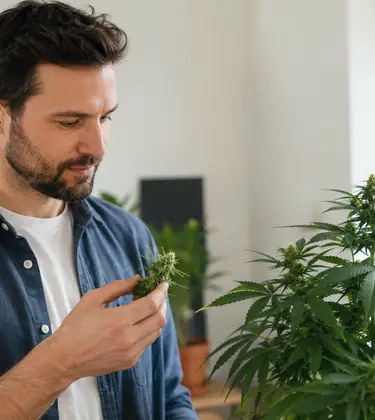
“Gateway drug.” You have heard it your whole life. Try weed once and you are supposedly one bad night away from a needle in an alley. The line got drilled into health-class slideshows, campaign speeches, DARE assemblies, and a thousand family arguments for fifty years straight.
Here is the awkward part. The science never backed it up. Researchers have been poking at this idea since the 1970s, and the harder they look, the weaker it gets. Below is what the evidence shows, where the myth came from, and why it still refuses to die.
Where did the “gateway drug” idea come from?
The phrase grew out of mid-century drug panic. Harry Anslinger, the first boss of the Federal Bureau of Narcotics, spent the 1930s telling Americans that cannabis turned ordinary people violent and insane. Reefer Madness and a wave of copycat films hammered it in. Fear, not data, set the tone early.
The modern version landed in 1975, when sociologist Denise Kandel noticed that people who used hard drugs had almost always tried alcohol, tobacco, and weed first. That observation hardened into the “stepping-stone” theory, and by the Reagan-era drug war it was treated as settled fact. The idea became a cornerstone of American drug policy for decades after that.
Catch the problem already baked in. Kandel found an order, not a cause. Those two things are not the same, and the entire gateway debate lives or dies on the gap between them.
Does using marijuana actually lead to harder drugs?
For the overwhelming majority of people, no. Most people who use cannabis never move on to harder substances. They smoke for a while, get older, slow down, or quit. The dramatic spiral into hard drugs is the rare exception, not the path.
The “weed first” pattern is real, but it explains itself once you stop and think. Cannabis has been the most common illegal drug in America for generations. So naturally, almost anyone who later tries cocaine or heroin tried weed before that. They also drank coffee, soda, and beer first. Sequence does not prove the first thing caused the last.
Run the same logic on anything common and it falls apart fast. Nearly every heroin user also drank milk as a baby and rode a bike as a kid. Nobody calls a tricycle a gateway vehicle. When a behavior is widespread enough, it shows up first in almost everyone's history, including the histories of people who later make bad choices. That is a statistics quirk, not a cause.
What does the research really say?
This is where the theory comes apart under a microscope. Scientists generally split the gateway claim into three pieces: sequencing (weed usually comes before harder drugs), association (weed users are statistically more likely to try them), and causation (the weed itself triggers the move). The first two hold up fine. The third, the only one that matters, does not.
A federal review of 23 separate studies found no clear evidence that cannabis causes later hard-drug use. The results were mixed across the board, and the authors flatly stated that no causal link could be claimed.
Researchers at RAND pushed even harder. They built a statistical model of how people start using drugs and showed that the same “weed leads to hard drugs” numbers can be reproduced with no gateway effect at all. The pattern fell out naturally from one simple fact: some people are just more inclined to try drugs, period. No special cannabis magic required.
Feeling lost on how to start? Try taking our quiz!
Start a QuizIf weed isn't the gateway, what is?
Scientists call the better explanation the common liability model. In plain English: some people are more likely to use any drug, for reasons that have nothing to do with cannabis. The same underlying traits push them toward weed and toward harder stuff at the same time.
The usual drivers:
Genetics. Risk-taking and addiction tendencies run in families, and twin studies point heavily toward shared genes over any one substance.
Environment. Poverty, trauma, and easy access to drugs all raise the odds long before weed enters the picture.
Social circle. Spend time around people who use, and you are more likely to use too.
Personality. Sensation-seekers tend to try more of everything, drugs included.
Under this model the weed is a symptom, not the engine. And here is the line the old slideshows always skipped: alcohol and nicotine are usually the real first stops, often years before anyone touches cannabis. We broke that down separately in our piece on why alcohol is the actual gateway.
The unexamined day is a wasted opportunity. Reflect on what you did, what you learned, and how you can improve.
John Dewey
What does the newest data tell us about legalization?
If the gateway theory held, the legalization wave should have produced a whole generation of teenage drug casualties. Twenty-four states now allow adult recreational sales. So what happened to the kids who grew up surrounded by legal dispensaries?
The exact opposite of the prediction. In 2024, teen abstention from marijuana, alcohol, and nicotine hit some of the highest levels on record, with roughly 80 percent of 10th graders and 67 percent of 12th graders reporting none of the three in the past month. NIDA's own director called the trend unprecedented.
Read that again. Legal weed spread across the country, and teen use fell to multi-decade lows. A gateway that swings shut as the door opens wider is not much of a gateway.
The part nobody mentions: prohibition built the gate
Here is the angle that gets buried under the fearmongering. For most of the last century, weed was illegal, so buying it meant standing in front of someone who was already breaking the law. That same someone usually had other things for sale. The gateway, when it ever existed, was never the plant. It was the corner the plant got sold on.
Pull cannabis out of the shadows and that connection snaps clean. A legal, regulated, or home-grown supply does not come bundled with a side menu of cocaine and pills. This is the entire case for growing your own. You know the genetics, you know what went into the soil, and the only thing in the jar is the thing you planted. No mystery, no middleman, no gate.
Picking the right seed is where it starts. A grower who wants a reliable, low-drama plant can begin with something like Pineapple Chunk, a stable, mold-resistant indica hybrid that forgives beginner mistakes and finishes fast. Someone trading the nightly drink for something mellower might reach for Critical Kush, a heavy late-evening indica bred for winding down. Either way, your supply chain begins and ends inside your own tent.
Forty years of breeding at Barney's Farm has been aimed at exactly that. Clean, known, stable genetics you control from seed to harvest, so the only thing you are putting in your body is cannabis you grew yourself.
Why won't the gateway myth die?
If the research is this lopsided, why is the idea still everywhere? A few reasons keep it on life support.
It is intuitive. The sequence is real, and a tidy “one leads to the next” story is easier to repeat than a paragraph about shared genetic and environmental risk. It is also politically useful. For decades the gateway claim gave lawmakers a clean justification for harsh penalties and locked-down policy, so there was little appetite to retire it. And it is sticky by design, drilled into a couple of generations through school programs and public-service ads that valued a scary message over an accurate one.
None of that makes it true. It just makes it familiar, and familiar is not the same as correct.
So, is weed a gateway drug?
The honest answer the data keeps giving: no. People who end up using harder drugs almost always used cannabis earlier, sure, but they used legal substances earlier still, and the thing actually driving the progression is a tangle of genes, environment, and circumstance. The plant is along for the ride.
The gateway theory has lasted this long because it made a clean, scary story for the drug war, not because it survived the lab. Fifty years of evidence have had every chance to prove it right. They keep doing the opposite. The gate was always the law, and once you grow your own, there is no gate left to walk through.
Barney's Farm has been developing premium cannabis genetics since the 1980s, with over 40 Cannabis Cup wins. Explore our full seed catalog and find strains bred for every climate and skill level.