Cannabis and Jury Duty: Can a Weed Case Get You Struck?
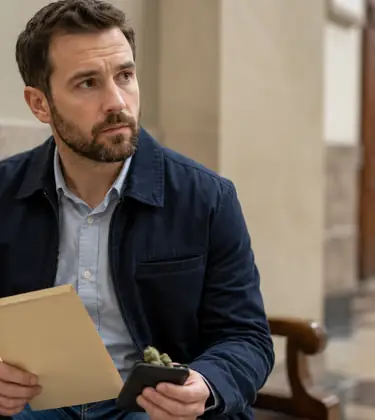
In December 2010, a courthouse in Missoula, Montana ran out of jurors.
The defendant was a man named Touray Cornell, charged over roughly one sixteenth of an ounce of marijuana. Under two grams. During jury selection, the pool made it clear that a large share of them would not convict anybody over that quantity, no matter what the law said.
The judge, Dusty Deschamps, later described the moment plainly. He thought he might not be able to seat a jury at all. A deputy county attorney called it a mutiny. The defense called it bizarre. During a recess, the two sides cut a plea deal, and Cornell entered an Alford plea rather than go to trial.
Nearly all of the 27 people in that pool had signalled they were out. The case never reached them.
Deschamps' comment afterward has aged well: he expected it to become increasingly difficult to seat juries in marijuana cases.
Does using cannabis disqualify you from jury duty?
No. Not federally, not in any state.
Federal jury qualification rules disqualify you if you have a pending charge for, or a conviction of, a crime punishable by more than one year in prison and your civil rights have not been restored. A misdemeanor possession conviction does not disqualify you. Current legal cannabis use does not appear anywhere in the criteria.
Some states have loosened the felony rule further. California, for example, allows people with felony convictions who are off supervision to serve.
So if you are sitting there wondering whether the state knows you have a dispensary account: it does not care, and it would not matter if it did.
What actually gets you struck
There are two different mechanisms and people mix them up constantly.
A strike for cause happens when a juror cannot be impartial or cannot follow the law as instructed. Unlimited number of these, decided by the judge.
A peremptory strike lets each side remove a limited number of jurors without giving a reason, subject to constitutional limits on race and sex.
Admitting you use cannabis is not, by itself, cause. Saying "I could never convict anyone of a marijuana charge" absolutely is. That is a textbook cause strike, and you will be excused within about ninety seconds.
The more common outcome is subtler. A juror who says "I've used cannabis, I think it should be legal, but I can follow the instructions the court gives me" usually survives a cause challenge, and then the prosecution spends a peremptory on them anyway. Defense attorneys are aware of this dynamic, and trial practice guides advise rehabilitating pro-legalization jurors on the record before the state burns a strike.
One warning that matters. Deliberately concealing your views to get onto a jury is a bad idea with real consequences. Voir dire is conducted under oath. Concealment can expose you to contempt or perjury, and under a longstanding Supreme Court standard it can also void the verdict you helped produce, which means the trial happens again.
Can you be a juror while high?
Legally, this got answered in a way that surprises almost everyone.
In a 1987 case, the Supreme Court dealt with a jury where members had drunk beer at lunch, four had smoked marijuana during the trial, and two had used cocaine. The Court held that federal evidence rules bar juror testimony to impeach a verdict, and that juror drug use is not an "outside influence" that creates an exception.
The verdict stood.
The Court's reasoning was that the safeguard against an impaired juror is voir dire, plus observation during trial, not a post-verdict inquiry. In other words, the system's answer to "what if a juror is high" is that somebody should have caught it earlier.
Judges do catch it sometimes. In a 2023 trial in New York, the judge told jurors directly that he would not accept anyone who had used marijuana before coming to court, and an alternate was discharged.
Practical answer: do not show up impaired. You will probably not be caught, and if you are, you will be removed, and if you are not removed the verdict will survive anyway. None of that makes it a good idea.
Feeling lost on how to start? Try taking our quiz!
Start a QuizJury nullification, described accurately
This is where a lot of internet writing goes badly wrong, so here it is carefully.
A jury that acquits cannot be overruled. The verdict is final, double jeopardy attaches, and no court can look inside the deliberation. That is the mechanical fact that makes nullification possible.
But it is a power, not a right. Courts have said so consistently. The 1895 case Sparf v. United States established that juries must take the law from the judge. In 1972, United States v. Dougherty held there is no entitlement to a nullification instruction, describing it as a power that exists without being a right.
Attorneys may not argue for it. Judges may instruct against it, though there are limits. In a federal marijuana dispensary prosecution, a trial judge told jurors that there is no such thing as valid jury nullification and that they would violate their oath by bringing a verdict contrary to the law. The Ninth Circuit held those instructions went too far, while also stating flatly that there is no right to nullification. Erroneous, but harmless.
Judges can also remove a juror mid-trial for refusing to apply the law, but the Second Circuit set a very high bar: removal requires proof beyond all doubt, and an ambiguous record is not enough.
The unexamined day is a wasted opportunity. Reflect on what you did, what you learned, and how you can improve.
John Dewey
Handing out pamphlets about it
People have been prosecuted for advocating nullification outside courthouses. Both of the well-known cases ended in favour of the pamphleteer.
A federal case in New York was dismissed in April 2012, with the judge holding the jury tampering statute did not cover generalized advocacy.
In Michigan, a man named Keith Wood was convicted of jury tampering for handing out nullification pamphlets outside a courthouse in 2015. The Michigan Supreme Court reversed the conviction in July 2020, reasoning that people merely summoned for jury service are not yet jurors within the meaning of the statute.
Why this comes up less than it used to
The simplest reason cannabis juries are a smaller issue in 2026 is that there are far fewer cannabis trials.
FBI figures for 2024 recorded 204,036 marijuana arrests, of which 187,792 were for possession. That is still more than a fifth of all drug arrests in the country, which is a lot. But it is down from roughly 870,000 in 2007.
Public opinion moved too. Gallup polling in late 2025 put support for legalization at about 64 percent, with a partisan split running from 85 percent among Democrats to 40 percent among Republicans.
A jury pool drawn from a population where two out of three people support legalization is a hard pool to convict from, and prosecutors know it. That is a large part of why low-level cases get pleaded or dropped rather than tried.
The 2026 wrinkle
The federal rescheduling that took effect on April 28, 2026 moved FDA-approved marijuana products and marijuana under a state medical license to Schedule III. Everything else, including unlicensed operators and adult-use-only product, stayed Schedule I.
Federal trafficking prosecutions of unlicensed operators continue exactly as before.
Which arguably widens the sympathy gap rather than closing it. A juror can now buy cannabis legally in their own state, from a business the federal government has moved to Schedule III, and then be asked to convict somebody under Schedule I for the same plant. That contrast is going to be sitting silently in a lot of jury rooms.
What forty years of breeding has to do with a courtroom
We have been breeding cannabis in Amsterdam since 1986, which means we spent decades producing something that was legal to sell in one country and a felony to possess a few hours away by plane.
The lesson from that stretch is the same one the Missoula jury pool demonstrated: laws about cannabis have consistently been enforced against a public that stopped agreeing with them long before the statutes changed. Legislatures move last. Juries, prosecutors and ordinary people move first, and the gap between those two is where an enormous amount of unnecessary damage got done.
The plants themselves outlasted all of it, and a few of them are direct artifacts of that era.
Acapulco Gold is the most famous name in American cannabis folklore, a Central American landrace that came north during the 1960s and became shorthand for quality decades before anyone was testing anything. Ours is a 70/30 sativa at 26 percent THC, 60 to 70 days in flower with a harvest in the second to third week of October, 600 to 700g per square meter indoors and around 1,500g per plant outdoors. It is a Cup winner and it is a piece of the history that produced all those arrest statistics.
LSD is the other one, named for an era rather than an ingredient. Skunk #1 crossed with Mazar-I-Sharif, 30 percent THC, 70/30 indica, 60 to 65 days flowering with an early October harvest and around 800g per plant. We describe it as hardy, mold and disease resistant and very easy to grow, which is a combination that keeps it in the catalogue year after year.
Seeds ship as collectible souvenirs, and germination is entirely a question of your own jurisdiction.
The short version
Smoking weed does not disqualify you from jury duty. Saying you would never convict does. Lying about it under oath is a genuinely bad idea with real legal exposure.
Jury nullification is a power the system tolerates without endorsing, and courts will not let anyone argue for it in front of you. And a jury pool in Missoula figured out in 2010 what took legislatures another decade to act on, which is roughly how this has always worked.
Barney's Farm has been developing premium cannabis genetics since the 1980s, with over 40 Cannabis Cup wins. Explore our full seed catalog and find strains bred for every climate and skill level.