How Feminized Seeds Are Actually Made: The Breeding Science Explained
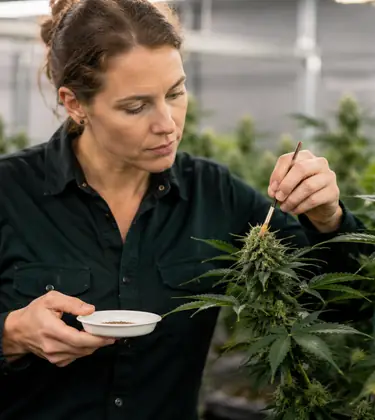
Drop a regular cannabis seed in soil and you are flipping a coin. About half come up male, and male plants do not grow the buds anyone is after. They throw pollen, seed your whole crop, and wreck a harvest if you miss one in the corner of the tent. Feminized seeds fix that math. Plant one and you get a female nearly every time. No daily hunt for stray males, no wasted weeks, no panic when something starts looking suspicious in week four.
So how do you make a seed that only grows girls? The short version is that breeders trick a female plant into producing pollen. The longer version is more interesting, and it runs on real plant science. Here is how it works.
What makes a cannabis seed male or female?
Cannabis sorts its sex the same way people do, with a pair of chromosomes. A female plant carries two X chromosomes (XX), while a male carries one X and one Y (XY). The Y is the part that builds a male. No Y, no male.
When a normal male pollinates a female, his pollen carries either an X or a Y, roughly half and half. That is why regular seeds land close to a 50/50 split between sexes. The whole feminized idea comes down to one move: get pollen that carries no Y at all. If every pollen grain only brings an X, every seed ends up XX. Every seed grows female.
How do breeders make feminized seeds?
You cannot pull X-only pollen off a male, because a male always has that Y to hand down. So breeders skip the male entirely. They take a female, a strong one with everything they want locked inside it, and force her to grow male flowers instead of buds.
A female plant has no Y chromosome anywhere in her body. When she is pushed into making pollen, that pollen can only carry X. Growers call her a reversed female, and the pollen she makes is reversed pollen. Dust that reversed pollen onto another female and the seeds that follow are all XX. Those are feminized seeds.
This keeps the genetics tight. Both parents are female, often the same prized plant pollinating itself, so the seeds run very close to the mother. For a breeder chasing one exact flavor, structure, or potency, that control is the whole reason to bother. When a plant pollinates itself this way, the first batch of seeds gets labeled S1, short for the first selfed generation, and those S1 seeds are the backbone of a lot of feminized lines on the market.
What is silver thiosulfate, and why does it work?
A female will not grow male flowers on her own, at least not on command. She needs a push, and the cleanest push is a chemical called silver thiosulfate, usually shortened to STS.
Plants run a lot of their development on a hormone called ethylene, including the decision about which flowers to grow. STS blocks ethylene from doing its job. Cut that signal in a female and she changes course, building pollen sacs where dense buds would normally form. The silver is the active part, and it is what flips the switch from female flowers to male ones.
Breeders mix STS from silver nitrate and sodium thiosulfate, then spray it on the plant. A single foliar dose of around 3 mM STS, applied during the vegetative stage and sprayed over the whole plant until it runs off, reliably triggers the male flowers a breeder needs. Soaking the entire plant beats dabbing it only on the growing tips.
You will also hear about colloidal silver, which works on the same ethylene principle, plus older tricks like gibberellic acid or simply stressing a plant until it panics into making pollen. STS is the one most serious breeders reach for, because it is consistent and it does the job without leaving the plant a mess. It is also worth saying plainly: STS is not something you smoke. Any plant matter sprayed with it gets used for breeding only, never for buds you intend to consume, which is why the reversed mother and the seed-bearing female are kept on separate jobs.
Feeling lost on how to start? Try taking our quiz!
Start a QuizThe feminized seed process, step by step
Strip out the chemistry and the workflow is short:
Pick the mother. Everything starts with one strong female. Whatever traits she carries, good and bad, get handed down, so she has to earn the spot.
Reverse her. Spray the chosen plant with STS early, before or right as flowering kicks in. Over the next couple of weeks she starts forming pollen sacs instead of buds.
Collect the pollen. Once the sacs open, that reversed pollen carries only X chromosomes. Breeders gather it carefully and keep it bone dry until they need it.
Pollinate a second female. Dust the pollen onto another flowering female. She never gets sprayed herself, she just receives the pollen.
Grow out the seeds. The pollinated plant ripens her flowers, fills them with seeds, and those seeds finish in a few weeks. Every one of them is feminized.
Simple on paper. Doing it cleanly, batch after batch, with seeds that actually grow into the plant they promise, is where decades of practice separate a real seed bank from someone spraying silver in a closet.
The unexamined day is a wasted opportunity. Reflect on what you did, what you learned, and how you can improve.
John Dewey
Are feminized seeds 100% female?
Close, but be honest about it. Studies put the success rate around 95%, not a flat 100. A well-bred feminized line throws female plants the overwhelming majority of the time, but biology always leaves a thin sliver of room for surprises.
The bigger risk is stress. Push any cannabis plant hard enough with heat, light leaks, bad timing, or rough handling, and it can grow a few male flowers as a survival move. That happens with regular plants too, but feminized growers notice it more because they are expecting a clean female. Stable genetics drag that risk way down. Sloppy genetics push it up. This is exactly why where your seeds come from matters more than the label on the pack.
What breeders are figuring out right now
Feminized seeds have been standard for years, but the science under them is still moving. Recent reviews describe feminized seeds simply as seeds with no Y chromosome, and researchers are still mapping exactly how cannabis decides its sex in the first place.
One live debate is genetic diversity. Breeding female to female, generation after generation, can slowly narrow the gene pool, since the Y chromosome carries genes that breeders stop drawing from. The fix is not complicated: good breeders bring in fresh genetics and keep their breeding stock varied instead of self-pollinating the same plant forever. It is a real consideration for anyone building strains meant to last, and worth knowing about, not a reason to walk away from feminized seeds.
How Barney's Farm makes its feminized seeds
Barney's Farm has been doing this since the early 1990s, back when feminized seeds were barely on the map. Founder Derry started by hauling landrace genetics out of the Himalayas, and the farm has spent more than 40 years refining how it stabilizes a strain. More than 40 Cannabis Cup wins say the method holds up.
The expertise has nothing to do with the spray bottle. Anyone can buy STS. The skill is in choosing the right mother, locking traits in across generations of careful selection, and testing until a seed grows the same plant every single time you run it. That stability is the actual product. A seed that germinates fast, comes up female, and finishes the way the pack says it will is the result of years of selection work most growers never see, and it is the difference you feel the first time you run a stable line next to a sketchy one.
Take Pineapple Chunk, one of the farm's most dependable feminized strains. It was built by crossing Sweet Pineapple with Cheese and Skunk #1, then bred down into something vigorous, mold-resistant, and stable enough that growers have leaned on it for years. Or look at Wedding Cake, a modern feminized flagship pushing 28% THC, refined from the original Pink Cookies line into an indica-heavy plant that wraps up in about eight weeks. Both come up female run after run, because the genetics behind them were earned slowly, not rushed.
The takeaway
There is no magic to feminized seeds. They run on a smart use of plant biology: take a female with no Y to give, make her produce X-only pollen, and grow seeds that skip the coin flip. The chemistry is solid, the research keeps sharpening, and the gap between a great feminized seed and a frustrating one comes down to the breeding behind it. Start with stable genetics and you start with a plant that already knows what it wants to be.
Barney's Farm has been developing premium cannabis genetics since the 1980s, with over 40 Cannabis Cup wins. Explore our full seed catalog and find strains bred for every climate and skill level.