Homemade Bongs and Apple Pipes: What Works and What's Toxic
Almost everyone who smokes weed has seen a pipe built in an emergency: a soda can with holes poked in it, a plastic bottle with a socket from a wrench set jammed in its side, a highlighter with the ink pulled out. A homemade bong can work. Plenty of them also put things into your lungs that have nothing to do with cannabis.
The rule is short. Whatever touches the flame, or sits right next to it, has to survive that heat without breaking down. Fruit and glass pass. Most of what is lying around the garage does not.
Heat decides what is safe
A bowl sits under a flame for every hit. Torch lighters can burn hotter than 1,100 °C (2,010 °F), according to Wikipedia's entry on lighters, and the materials below start breaking down at a fraction of that. The chamber farther from the flame stays much cooler, so the bowl and the parts around it are where materials matter most.
Soda cans are the classic mistake. A drink can is made primarily of an aluminum exterior with an epoxy resin or polymer coated interior, and that epoxy may contain bisphenol A, or BPA. A 1985 study of a common BPA-based epoxy resin found that heating it to 280 °C (536 °F) released acrolein, a harsh irritant, along with acetone and allyl alcohol, and that above 340 °C (644 °F) it broke down further. The outside of the can carries paint and ink. The National Capital Poison Center adds that heating soda cans to smoke cannabis may increase how much aluminum you inhale.
Hardware-store metal and plastic pipe
The plumbing aisle is the other trap. Galvanized pipe and zinc-plated fittings are coated with zinc, and heated zinc gives off zinc oxide fumes. Breathing them causes metal fume fever, an illness primarily caused by inhalation of zinc oxide, with flu-like fever, chills, nausea and headache. Welders know it well, which is why galvanized metal must be stripped of its coating before welding or burning.
Other common parts have their own problems. Chrome-plated sockets, a favorite bowl for bottle bongs, usually carry their chrome over a layer of nickel. Brass often contains about 2 percent lead to make it easier to machine, one more reason a brass fitting does not belong under a flame. PVC, the white plastic pipe, starts to break down near 250 °C (482 °F) and gives off hydrogen chloride when it burns. Keep these away from the bowl and the flame:
- Soda and beer cans, inside and out.
- Galvanized pipe, zinc-plated fittings and chrome sockets.
- PVC pipe, garden hose and other plastic tubing.
- Painted, varnished or glued wood.
- Pens, markers and highlighter bodies.
- Aluminum foil stretched over a bowl.
Plastic bottles and bucket bongs
A plastic bottle bong is meant to keep the flame away from the bottle. But PET, the plastic in soda and water bottles, starts to soften at just 67 to 81 °C (153 to 178 °F), so a lighter or a hot bowl held close can warp it. A 1994 study of PET breaking down under heat found it released formaldehyde and acetaldehyde, and the National Capital Poison Center warns that smoking cannabis through plastic bongs may increase the risk of severe lung injury from plastic byproducts.
Gravity bongs, also called bucket bongs, add the size of the hit to the plastic problem, and our guide to gravity bongs explains why they hit so hard. Forcing big pulls through homemade gear has its own risks. In a 2001 case report, a 19-year-old occasional smoker developed air leaks in the chest and around the spinal cord after four or five deep, forced breaths through a homemade apparatus resembling a narrow outlet bong with 2 piled compartments. The doctors pointed to extreme negative pressure in the chest from inhaling hard against resistance.
Feeling lost on how to start? Try taking our quiz!
Start a QuizCarving an apple pipe step by step
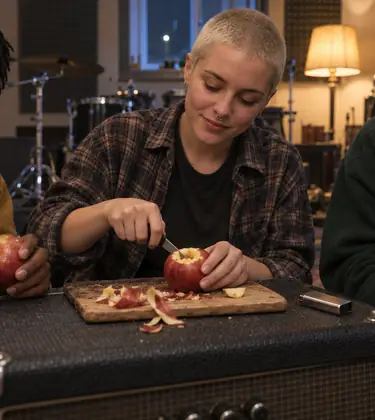
If you need a pipe tonight, an apple pipe is the best homemade option we know. Fruit is food and mostly water, so it chars slowly instead of catching fire, and you can compost it afterward. Plant pipes have a long history, too. Corncob pipes, long made for tobacco, are cheap and good at absorbing heat and moisture, according to Wikipedia's entry on tobacco pipes. Learning how to make a pipe from an apple takes five minutes and a few kitchen tools:
- Pick a firm apple, pull out the stem and wipe the skin clean.
- Carve a small bowl in the top with a paring knife, about as deep as a fingertip.
- Push a metal skewer or a clean chopstick in from the side, halfway down, until it meets the bottom of the bowl. That channel is your mouthpiece.
- Add a carb, a small extra hole you cover and uncover with a finger, by pushing the skewer in from the other side to meet the same channel.
- Clear the channels by blowing through them, then pack a small pinch of flower.
- Light only the corner of the bowl, and compost or toss the apple after one session.
Skip the foil, since a deep enough bowl holds the flower on its own, and skip pen barrels for the channel. In a pipe this simple, the flower does all the work. Apple Fritter, an Animal Cookies and Sour Apple cross, is the obvious match: its page says the apple comes through first on the palate, followed by an earthy, faintly cheesy finish, with a calm, happy body relaxation that leaves room for conversation or music. It reaches 30 percent THC in 65 to 70 days of flowering, so one small bowl is plenty.
For an evening apple, Northern Lights, from a Thai landrace and Afghani, opens on sweet citrus over earth and pine, settles in smoothly and turns sedative as it goes, at 26 percent THC in 55 to 60 days.
The unexamined day is a wasted opportunity. Reflect on what you did, what you learned, and how you can improve.
John Dewey
Glass bottle bongs done right
If you want to know how to make a bong that won't add fumes of its own, make every part near the flame out of glass and buy the one part that is hard to make. Head shops, the stores that sell smoking gear, carry cheap bowls and downstems made of borosilicate glass. The downstem is the tube that carries smoke down under the water. Borosilicate is more resistant to cracking from significant changes in temperature, handling jumps of about 166 °C (330 °F), while ordinary soda-lime glass, the kind in bottles and jars, can take only about a 40 °C (100 °F) change. That is why a bottle can be the base but not the bowl.
For the base, use a sturdy glass bottle or jar. Drilling glass takes a diamond hole saw, water to keep the bit cool and eye protection, so the easier route is a two-hole silicone stopper in the bottle's neck: one hole holds the downstem, and a short glass tube in the other becomes the mouthpiece. Silicone rubber handles temperatures from −55 to 300 °C (−70 to 570 °F), which is fine for a stopper but not for a bowl under a lighter. A DIY bong built this way smokes like a store-bought one. Change the water after every session, and clean the glass with isopropyl alcohol and coarse salt before resin builds up.
Don't expect the water to make it healthy. A 2000 study by NORML and MAPS found that water pipes filter out more THC than tar, so smokers end up taking in more tar to reach the same high.
Homemade still counts as paraphernalia
Building your own does not change how the law sees it. Texas makes it a Class C misdemeanor to use or possess drug paraphernalia with intent to inhale a controlled substance, and nothing in that rule exempts a pipe you made yourself, so an apple used as a pipe can count. Federal paraphernalia law targets selling and shipping. Some states with legal cannabis carve out an exception, and Colorado's definition of drug paraphernalia excludes marijuana accessories defined in its constitution. In California, adults 21 and over may possess, transport, purchase, obtain, use, manufacture or give away cannabis accessories, so making your own is legal there. Check your state's rules before you carve.
Fruit and glass, never cans
A homemade bong or apple pipe is only as safe as the material closest to the flame. Soda cans bring epoxy linings and paint, hardware-store fittings bring zinc, nickel and lead, and PVC and plastic bottles break down or warp with heat. An apple pipe with a carved bowl and a skewer channel works for one session, and a glass bottle with a borosilicate bowl and downstem makes a DIY bong worth keeping. Neither one makes the smoke itself safe, and in states like Texas a homemade pipe is still paraphernalia.
Carve the apple and leave the can in the recycling. Barney's Farm has been developing premium cannabis genetics since the 1980s, with over 40 Cannabis Cup wins. Explore our full seed catalog and find strains bred for every climate and skill level.