Drug Dogs in Legal States: Why Police K9s Are Being Retired
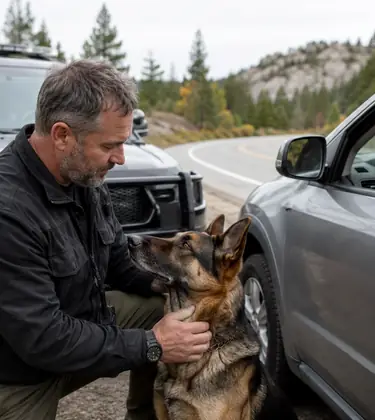
For decades, a dog's nose could end your road trip. One sniff, one sit, and an officer suddenly had the green light to tear your car apart. That era is closing fast. Across the country, police departments are pulling their marijuana-trained K9s off the street and handing them an early pension.
Legal weed broke the drug dog. The reason is part chemistry, part courtroom math, and it is playing out in state after state. Here is how, where, and what it means.
Why are police dogs being retired in legal weed states?
Start with a fact most people never think about: a drug dog cannot tell you what it smells. It is trained to give one signal, usually a sit or a scratch, whether it hits on marijuana, cocaine, heroin, or meth. The handler sees the sit. The handler does not get a label.
When weed was illegal everywhere, that worked fine. A sit meant a crime, full stop. Once a state legalizes cannabis, the logic collapses. If a dog alerts on a car, the officer no longer knows whether it found a few grams of legal flower or a pound of something still banned. The alert stops being proof of anything.
And here is the part departments can't engineer around: you cannot un-train a dog. Once a K9 locks the smell of marijuana in as a target odor, that wiring is permanent. Ohio K9 evaluators have compared it to asking a person to forget the alphabet. So a "legacy" dog that learned weed years ago becomes a courtroom liability the day legalization lands, because any search it triggers can be picked apart by a defense attorney. They have figured this out, and they raise it every chance they get.
We cover the search-and-seizure side of this in detail in our guide on whether cops can search your car over the smell of weed.
Which states have retired their drug dogs?
The retirements started years ago and keep rolling as more states flip.
Virginia was one of the loudest early cases. As the state moved to legalize possession in 2021, state police retired 13 K9s at once, while smaller departments pensioned off one or two dogs each and bought replacements trained to ignore cannabis.
Ohio is the biggest wave yet. After voters legalized recreational use, lawmakers estimated that nearly 400 marijuana-trained police dogs would need to be replaced, and floated a bill offering departments up to $20,000 per dog to cover buying and training a fresh one. That is serious money for a small-town budget, and it explains why the switch has been slow and grumbly in a lot of places.
The pattern shows up everywhere legalization arrives. Maryland departments pushed dogs into early retirement after its 2023 law and spent the next two years rebuilding their K9 units from scratch. Colorado and New Mexico went through the same reshuffle. A tool that defined drug policing for forty years is being quietly decommissioned, one nose at a time.
Money is the sticking point. A trained replacement dog runs anywhere from roughly $7,500 to $16,000 before you count the eight to twelve weeks of handler certification on top. Small departments lean on grants, local donations, and nonprofit K9 funds to fill the gap, which is why some agencies saw it coming and quietly swapped in cannabis-free dogs ahead of the law, while others got caught flat.
Can drug dogs still smell weed?
Yes. That is exactly the problem. Retiring these dogs has nothing to do with a broken nose. Their noses work fine. They work too well.
A dog's sense of smell runs orders of magnitude past ours. A trained K9 can pull cannabis out of a sealed bag inside a locked trunk. What it cannot do is pass a chemistry exam. Hemp and high-THC cannabis come from the same plant and carry the same core aroma compounds, the terpenes. To a dog's nose, legal hemp flower and illegal weed register as the same thing, because in every way a nose cares about, they basically are.
The 2018 Farm Bill legalized hemp nationwide. Once legal hemp flooded gas stations and smoke shops, "the dog smelled cannabis" stopped being the same as "the dog smelled a crime." The dog isn't failing. The category it was trained to detect just stopped being illegal.
Crime labs have driven the point home. When agencies tested their own K9s against legal hemp samples, the dogs sat on them the same way they sit on high-THC weed, because the plants smell identical. That single result is the whole case for retiring the legacy units.
Feeling lost on how to start? Try taking our quiz!
Start a QuizAre drug dog alerts even reliable?
Here is where it gets uncomfortable for the people who still swear by K9 units. Even before legalization, the reliability of drug dogs was shaky.
In a well-known study out of UC Davis, researchers ran experienced dog-and-handler teams through search areas that held no drugs or explosives at all. The teams falsely alerted more than 200 times, and the false alerts spiked in the exact spots where handlers had been told to expect something. The dogs were reading their humans. A handler who believes there are drugs in a car, consciously or not, telegraphs that belief down the leash, and the dog obliges with a sit.
Stack that on top of legalization and you get a double problem: a dog possibly responding to its handler's hunch, alerting on a substance that may be perfectly legal, was for decades enough to justify ripping apart a vehicle on the shoulder of a highway. Courts are finally catching up. In early 2025, a Florida appeals court ruled that a drug dog's alert alone can no longer justify searching a car, since the dog could just as easily be hitting on legal hemp or medical marijuana.
The unexamined day is a wasted opportunity. Reflect on what you did, what you learned, and how you can improve.
John Dewey
What decades of breeding for smell taught us about the nose
We have opinions about aroma, because we have spent almost forty years chasing it.
Barney's Farm started in Amsterdam in 1986, and a huge part of the craft has always been terpenes: the volatile compounds that give each strain its signature loud, funky, unmistakable smell. Those same compounds are what a drug dog is trained to lock onto. The irony is thick. Breeders spent generations making cannabis smell as bold and distinctive as possible, and law enforcement spent those same decades teaching dogs to hunt that exact bouquet.
Take Pineapple Chunk, a cross of Skunk #1 and Cheese that lands with a pungent, skunky punch wrapped in tropical sweetness. Or Blue Cheese, whose aged-cheese funk is heavy enough to announce itself across a room. These are the aromas dogs were built to chase. Now that the plant behind them is legal for adults across most of the country, that finely tuned nose has nothing legitimate to point at. The genetics didn't change. The law did.
What the drug dog shift means for you
A few things worth keeping straight if you live in a legal or medical state:
The dog can still smell your stash. Legalization didn't dull any noses. A K9 will still alert on legal flower in your glovebox. The difference is what that alert is allowed to justify.
An alert isn't automatic probable cause anymore. In a growing list of states, a marijuana-trained dog's alert on its own no longer clears the bar for a warrantless search. The rules vary by state, so read the specifics for where you live.
Legacy dogs are the weak link. Departments still running older dogs trained on weed are the ones most exposed to challenges, which is exactly why so many are being retired.
What happens to retired police dogs?
The good news is that this is a soft landing for the animals. Retired K9s almost always go home with their handlers, who often adopt their old partners for a token fee and let them ride out their years as pets. The dog still sits every time it catches a whiff of weed on a walk. Nobody gets searched over it. It is the most wholesome part of an otherwise expensive, awkward transition for police departments.
The dogs are fine. The policy is the thing scrambling to keep up.
The bigger picture
A drug dog was never a truth machine. It was a tool built for a world where cannabis was contraband everywhere, and that world is shrinking state by state. When possessing the plant is legal, a nose that can't tell legal from illegal, wired to a category that keeps getting smaller, stops being useful for making arrests. The retirements are just the paperwork catching up to reality.
The plant moved faster than the rulebook. It usually does. And somewhere out there a very good dog is asleep on a couch, still convinced it is the best narc in the county, blissfully unaware it got outrun by a change in the law.
Barney's Farm has been developing premium cannabis genetics since the 1980s, with over 40 Cannabis Cup wins. Explore our full seed catalog and find strains bred for every climate and skill level.