Do Cannabis Seeds Get Seized by Customs? Everything You Need to Know
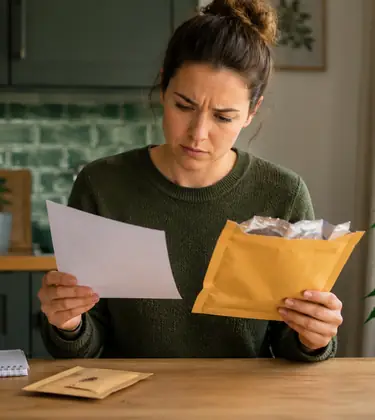
A padded envelope leaves Europe. Tracking updates for a few days, then freezes on the same line for two weeks. What finally shows up is not the seeds. It is a letter with a federal seal on it.
That letter is where a lot of American growers find out that a seed order crossing an international border runs through a completely different rulebook than one shipped inside the country. Two rulebooks, actually, and a package has to satisfy both.
Do cannabis seeds get seized by customs?
Yes, international shipments do get stopped. U.S. Customs and Border Protection screens inbound international mail and parcels, and cannabis seeds land in the overlap between drug law and agricultural quarantine law. Clearing one does not clear the other.
On the drug side, CBP states plainly that marijuana remains illegal under federal law no matter what individual states have legalized, and that agricultural material headed for planting gets its own separate inspection. Officers at the port make the call.
Nobody publishes a clean number on how many seed packages get pulled each year. CBP reports seizures by drug weight and by commodity category, not by "cannabis seed," so any blog quoting you a percentage made it up. What is documented is the machinery, and the machinery is worth understanding before you click buy.
Why does CBP stop seed packages in the first place?
Agriculture, more often than drugs. Any seed intended for planting counts as propagative plant material, and that category has been regulated hard since long before anyone argued about THC. Invasive weeds and plant pathogens ride in on seed shipments, so the paperwork requirements are strict and unglamorous.
Hemp seed coming into the United States from most countries has to travel with a phytosanitary certificate from the exporting country's national plant protection organization, and gets inspected by CBP at the first port of entry. Larger shipments need a PPQ 587 import permit from USDA on top of that.
A hobby grower ordering ten seeds from a foreign website has none of that. No certificate, no permit, no importer of record. The shipment can be refused entry on purely agricultural grounds without anyone ever debating cannabinoid content.
USDA does run a Small Lots of Seed program built for exactly this scale of shipment, capped at fifty seeds of one taxon per packet, but it still requires an approved permit obtained in advance and the application can take weeks to process. Almost nobody buying a three-pack online has one. The seeds arrive as an undeclared agricultural import, which is the fastest way to get a parcel pulled out of the stream.
Didn't the DEA say cannabis seeds count as legal hemp?
It did. In January 2022, Terrence Boos of the DEA's Drug and Chemical Evaluation Section wrote that seeds with a delta-9 THC concentration of no more than 0.3 percent meet the federal definition of hemp and are not controlled under the Controlled Substances Act, regardless of what the parent plant was.
That letter built the modern American seed market. Seed banks started shipping openly between states and the domestic legal risk dropped close to zero. Growers reasonably assumed it settled everything.
There is a second wrinkle. The 2022 position rested on delta-9 content measured in the seed itself, which is essentially nothing in any cannabis seed. That is a chemistry argument, and chemistry arguments only hold as long as the statute keeps asking that particular question.
It did not settle importation. A DEA opinion on control status under the CSA is not a customs admissibility ruling, and it does nothing about the agricultural requirements above. Those are separate agencies applying separate statutes. An officer holding your envelope is not obligated to read the DEA's mail.
Feeling lost on how to start? Try taking our quiz!
Start a QuizWhat changes for seeds on November 12, 2026?
Congress rewrote the statutory definition of hemp in Public Law 119-37, Division B, Section 781, the appropriations package that ended the 2025 shutdown. The new definition measures total THC including THCA rather than delta-9 alone, and specifically pulls viable seeds from plants exceeding the 0.3 percent threshold out of the hemp category. It takes effect a year after enactment.
Read that twice. Classification stops depending on what is in the seed and starts depending on what the mother plant tested at. A seed with zero measurable THC can sit outside the hemp definition because of its parentage. Repeal bills and delay bills are moving through Congress, and none of them has landed yet.
We broke down what this means for buying seeds inside the United States in our guide to buying cannabis seeds online in 2026. For imports the summary is shorter. An argument that was already thin at the border gets thinner.
The unexamined day is a wasted opportunity. Reflect on what you did, what you learned, and how you can improve.
John Dewey
What does a customs letter about cannabis seeds actually mean?
The first thing to work out is which kind of letter you have, because detention and seizure are not the same event.
- A detention notice means CBP is holding the parcel while officers examine it or wait on documentation. It can still be released.
- A notice of seizure means the property has been taken and a federal forfeiture process has started. The notice lists a case number, the legal authority claimed, and a deadline to respond.
Plenty of people get neither letter. A package can simply stop moving, and the silence is its own answer. Foreign sellers advertising guaranteed delivery or stealth packaging are making a promise they have no power to keep, because the decision belongs to an officer they will never meet. Any guarantee attached to an international seed order is a refund policy wearing a costume.
Ignoring a seizure notice generally results in the property being forfeited by default. Responding is possible, and the notice itself explains the routes, but those routes are procedural and time-limited. A federal forfeiture notice is a legal document, and a customs attorney is a better source than a forum thread.
Worth knowing about the mail channel too. Since 2021, USPS rules have prohibited hemp and hemp-based products, including CBD, in mailings to international destinations. The postal route out of the country is closed by policy, which pushes international seed traffic onto private carriers with their own screening.
How Barney's Farm gets seeds to American growers
Here is the part nobody wants to admit out loud: the entire customs problem disappears if the package never crosses a border.
Barney's Farm started in Amsterdam in 1986. Before that, Derry spent the 1980s working landrace populations through Afghanistan, Pakistan, Nepal and the Himalayan foothills, hauling genetics back by hand at a time when there was no legal framework anywhere and no such thing as a phytosanitary certificate for what he was carrying. Those collecting trips are the reason the catalog looks the way it does forty years and forty-plus Cannabis Cup wins later.
The lesson from that era stuck. Genetics that have to sneak across borders are genetics at risk. So US orders are handled from a US distribution center in California, processed within 48 hours, and dispatched as ordinary domestic parcels. No port of entry, no phytosanitary certificate, no officer deciding whether an envelope from overseas is admissible.
Every strain page also carries a hemp seed certificate of analysis, which is the lab documentation behind the classification rather than a marketing claim. Seeds are sold strictly as souvenirs and for storage and genetic preservation, and germination law varies by state.
If you want a direct line back to the landrace work, Critical Kush is the one. Critical Mass crossed with Barney's own OG Kush, with Afghani and Hindu Kush sitting a few generations back in the family tree, 26 percent THC, done flowering in 55 to 60 days. For something built entirely in the Amsterdam lab, Pineapple Chunk pulls Pineapple into Skunk #1 and Cheese, hits 28 percent, and shrugs off mold well enough that first-timers finish it.
So what should you actually do about ordering seeds?
Buying from a seller who ships domestically removes the customs question completely. That is the whole answer, and it is boring, and it works.
If you order from overseas anyway, understand what you are accepting. The parcel is subject to inspection, it can be refused on agricultural grounds alone, and the outcome sits with an officer at a port rather than with any legal argument you have read online. The money is at risk and the letter is a real possibility.
Then keep November 12, 2026 in your calendar. The hemp definition is being rewritten, Congress is still fighting about it, and the version of the rules you memorized last year may not be the version that applies next season. Anyone telling you the situation is fully settled right now is selling something.
Barney’s Farm has been developing premium cannabis genetics since 1986, with more than 40 Cannabis Cup wins. Explore our full cannabis seed catalog and find the genetics that fit how you actually medicate.