Can You Still Buy Cannabis Seeds Online in 2026? Here's What Changed
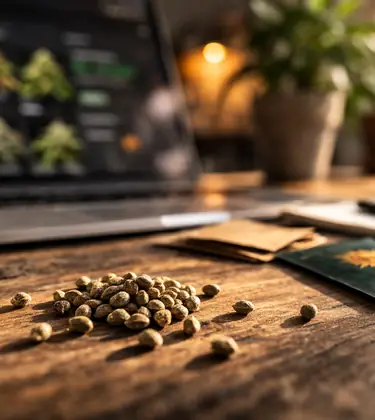
The short answer: yes, for now. But the window is narrower than it was a year ago, and if you haven't been paying attention to what happened in November 2025, you need to catch up fast. Federal law just shifted under everyone's feet, and the cannabis seed market is scrambling to figure out what comes next.
What Actually Happened in November 2025
While most people were focused on the government shutdown drama, something nasty got buried in the spending bill that reopened federal agencies. Section 781 of the FY2026 Agriculture Appropriations Act, signed into law on November 12, 2025, rewrote the federal definition of hemp. The new language explicitly excludes viable seeds from cannabis plants that exceed 0.3% total THC (including THCA) from the legal definition of hemp.
That matters because, for years, the 2018 Farm Bill was the legal backbone of the entire online seed market. Cannabis seeds contain virtually zero THC on their own, so they qualified as hemp under that old definition. Seed banks shipped openly through USPS, FedEx, and UPS. The legal risk was close to nonexistent.
Section 781 flips the classification method. Instead of testing the seed itself, seeds are now classified based on the THC content of the mother plant they came from. A seed with zero measurable THC can be federally illegal if it carries genetics from a high-THC cultivar. That covers the vast majority of cannabis seeds that growers actually want.
The saving grace: there's a 365-day grace period. The new definition doesn't take effect until November 12, 2026. So right now, in March 2026, seeds are still shipping under the old framework. But the countdown is running.
The Rescheduling Question (And Why People Are Confused)
You've probably seen headlines about marijuana being rescheduled. Let's be precise about what happened and what didn't.
On December 18, 2025, President Trump signed an executive order directing the Attorney General to complete the process of moving marijuana from Schedule I to Schedule III under the Controlled Substances Act. That process started under Biden in 2024 when the DOJ proposed the reclassification. But as NPR reported, the executive order itself doesn't change marijuana's classification. Cannabis is still Schedule I right now. The DEA's rulemaking process remains stalled due to an interlocutory appeal over allegations of agency bias, and no timeline for completion exists.
So when people ask are marijuana seeds legal at the federal level, the honest answer is complicated. Under the current grace period, the 2018 Farm Bill framework still applies to seeds. After November 2026, seeds from high-THC genetics become controlled substances under whatever schedule marijuana sits in at that point. And even if rescheduling to Schedule III happens by then, Schedule III substances are still controlled. You'd still need authorization to ship them across state lines.
State Law Is Where It Gets Real
Federal law sets the ceiling, but state law is where daily life happens. And the state-level picture for cannabis seeds has been steadily improving for years.
According to Wikipedia's continuously updated tracker, 24 states plus D.C. have legalized recreational cannabis, and 40 states allow medical use in some form. Around 27 states currently permit home cultivation, though plant limits and rules vary wildly. California caps you at six plants per residence. Michigan allows twelve. Montana lets you grow two mature plants and two seedlings. Colorado permits six per adult, max twelve per household, with only three flowering at a time.
If you're in a state with legal recreational cannabis and home grow provisions, ordering weed seeds online is legal and straightforward under current law. You buy them, they show up, you plant them. The federal grace period protects the shipment, and state law protects what you do with them after that.
If you're in a medical-only state, check whether your program includes home cultivation. Some do, some restrict you to dispensary purchases only. And if you're in one of the remaining prohibition states (Idaho, Kansas, Wyoming, South Carolina), seeds are a harder sell legally, even though enforcement against individual buyers has historically been nonexistent.
For international customers ordering from the Netherlands, Spain, or the UK, seeds have always carried some customs seizure risk. That hasn't changed.
Feeling lost on how to start? Try taking our quiz!
Start a QuizWhat Barney's Farm Knows After Four Decades

We've been breeding cannabis genetics since 1986. That's nearly 40 years of watching this plant move from back-alley trades to a global industry. And the last five years have brought more change than the previous thirty combined.
The breeding process that goes into a stable, reliable seed is something most buyers never see. Each strain we release goes through years of development: selecting parent plants from hundreds of candidates, backcrossing over multiple generations to lock in desirable traits, then testing across different environments to confirm that the genetics perform consistently whether you're growing in a closet in London or a greenhouse in California. When we list a cannabinoid or terpene profile for a strain, those numbers come from lab testing across multiple grow cycles, not guesswork.
Customer expectations have evolved in lockstep. Ten years ago, people picked seeds by name and vibes. Today, growers come to us with precise specifications. They want strains that finish in eight weeks, produce above 25% THC, and thrive in specific climates. Or they're looking for CBD-dominant genetics that won't produce a heavy psychoactive effect. The precision of modern breeding makes those requests realistic, not aspirational.
One thing we can say with certainty: the quality of genetics available today is light-years ahead of what existed even a decade ago. That's partly due to improved breeding techniques, partly to better growing data, and partly to breakthroughs in genomic science.
The unexamined day is a wasted opportunity. Reflect on what you did, what you learned, and how you can improve.
John Dewey
The Science Catching Up to the Plant
In May 2025, researchers published the most comprehensive cannabis pangenome to date in Nature, built from 193 individual genomes. The study mapped both sets of chromosomes in the plant for the first time and revealed genetic variation potentially 20 times greater than what's found in humans. The research identified domesticated cannabinoid synthesis genes within a surprisingly wild genetic background, providing new targets for breeding more consistent and useful cultivars.
This type of research was practically impossible when cannabis sat on Schedule I with the tightest research restrictions. Even with the current stall in rescheduling, the momentum behind cannabis genomics keeps building. For breeders, this data is gold. It allows us to understand at the molecular level why certain crosses produce the results they do, and to make more informed decisions about which genetics to combine.
At Barney's Farm, genetic research informs every cross we develop. When we release a new strain, the cannabinoid and terpene profiles we publish are based on laboratory analysis across multiple grow cycles. The pangenome study and others like it are pushing the entire industry toward a future where breeding decisions are driven by data, not luck.
Buying Seeds Online Right Now: What to Know
The practical advice for March 2026 is simple. If you've been thinking about stocking up on genetics, the next eight months are your window. After November 12, 2026, interstate shipping of high-THC cannabis seeds becomes legally risky under federal law. In-state purchases from licensed dispensaries and nurseries will likely continue in legal states, but the wide-open online marketplace may contract significantly.
Here's what matters when choosing a seed bank. Track record over marketing, every time. A breeder operating for decades has accountability that a pop-up brand launched last year does not. Look for documented genetics with verifiable lineage information and consistent results reported by actual growers.
Know what you're buying. Feminized seeds eliminate the need to identify and remove male plants. Autoflowers finish fast and forgive beginner mistakes. Regular seeds give you the full genetic spectrum and are essential if you want to breed your own crosses. Pick the type that matches your setup and goals before you get distracted by strain names.
Shipping discretion is standard at any reputable seed bank. Plain packaging, no cannabis imagery, no attention drawn. If your supplier doesn't offer this, find one that does.
Payment has gotten easier across the board. More processors are working with cannabis-adjacent businesses than at any point in history. Credit cards, bank transfers, and cryptocurrency are all common options. The days of mailing cash in a birthday card are mercifully behind us.
What Comes Next
The November 2026 deadline is the one everyone in this industry is watching. If Section 781 goes into effect without amendment, the interstate cannabis seed market as it currently exists will need to restructure. That likely means state-level sales through licensed outlets, international shipments (with their inherent customs risk), or alternative propagation methods. Some legal analysts have pointed out that tissue cultures and clones may still qualify as hemp under the new wording, since the legislation specifically targets "viable seeds."
Legal challenges to Section 781 are expected. The 2026 midterm elections could shift the political landscape. And if the DEA ever finishes the Schedule III rulemaking, the interaction between rescheduling and the new hemp definition will create fresh legal territory that nobody has mapped yet.
As the Congressional Research Service noted, even if rescheduling is completed, moving marijuana to Schedule III would not bring the existing state-legal cannabis industry into compliance with federal controlled substances law. The legal puzzle has more pieces than most people realize.
For growers, the practical takeaway is this: seeds are available right now, from established breeders with decades of experience, shipped to your door through legal channels. That may not be the case eight months from now. If you've been waiting for the right time to secure the genetics you want, you're looking at it.
Grow smart. Grow legal. And don't wait until the door closes to walk through it.
Barney's Farm has been developing premium cannabis genetics since the 1980s, with over 40 Cannabis Cup wins. Explore our full seed catalog and find strains bred for every climate and skill level.