Cannabis Zines, Comics and the Underground Print Scene
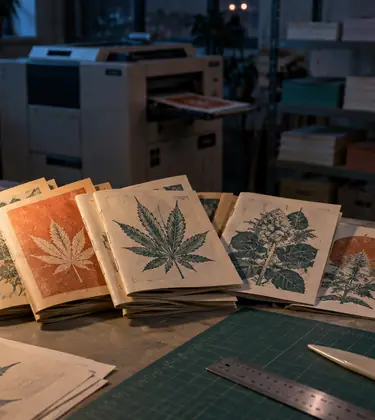
Long before cannabis had influencers, it had paper. Comics about getting stoned were sold next to the pipes, grow guides went through printing after printing, and magazines carried ads that federal agents later used to choose raid targets.
That print scene never fully went away. Today it lives on in cannabis zines, small-press comics and heavy art books, partly for the same reason it started: the mainstream channels still do not want cannabis on them.
Comix were sold next to the pipes
Underground comix, the counterculture's own comic books, grew out of the late 1960s, and they showed what mainstream comics could not. They depicted content forbidden by the Comics Code Authority, including explicit drug use, which kept them off ordinary newsstands.
Zap Comix set the pattern. Robert Crumb's title premiered in early 1968, and the first issue was sold on the streets of Haight-Ashbury out of a baby stroller. The scene that followed had its strongest success in the United States between 1968 and 1975, with titles initially distributed primarily through head shops, and many covers imitated LSD-inspired posters to catch the eye of the same customers. We have written about how head shops survived the drug war, and for a few years they were also the comic shops of the counterculture.
That dependence ended the first wave. In 1973 the Supreme Court's Miller v. California ruling let local communities set their own obscenity standards, and in the mid-1970s many places outlawed the sale of drug paraphernalia. The distribution network for the comix dried up with it, leaving mail order as the only commercial outlet.
The Freak Brothers made weed the whole plot
The weed comics most people have heard of started in a Texas underground paper. Gilbert Shelton's Fabulous Furry Freak Brothers are a fictional trio of stoner characters whose lives revolve around finding and enjoying drugs, marijuana above all, while staying one step ahead of the police. The timeline of classic stoner comics runs longer than most people expect:
- 1968: Zap Comix appears in San Francisco, and the Freak Brothers debut in The Rag in Austin that May.
- 1971: The first Freak Brothers collection goes to print, and it has stayed in print ever since.
- 1970s: Rand Holmes draws Harold Hedd for Vancouver's Georgia Straight, a strip The Globe and Mail later called "riddled with pot references, long-haired hippies and free love."
- 2021: The Freak Brothers return as an animated series on Tubi.
Stoner comics worked because they were written by the people living the joke. The cops are slow, the stash is always in danger, and nobody learns a lesson.
Strain names still borrow from the comics
From where we sit, cannabis print culture is part of seed history. Before websites, catalogs and magazine ads were how genetics found growers. Strain names still borrow from pop culture, comics included, and two of ours would sit comfortably next to a stack of them.
- Bruce Banner is the obvious pick for a drawing night. It is named after the iconic comic book hero's alter ego, and the name suits a strain that transforms from a gentle presence into a mightily potent force: a 32 percent THC cross of Strawberry Diesel and OG Kush with buds in green and purple, accented by fiery orange pistils. Its effect is described as one that ignites creativity and uplifts mood, which is about what you want while inking panels.
- Laughing Buddha suits the other half of a comics night, the long, sociable stretch of reading, passing issues around and laughing at the same panels twice. It is a Thai and Jamaican sativa at 24 percent THC, listed as creative, focused and giggly, with a primarily cerebral high that enhances focus and mental clarity. At 70 to 75 days of indoor flowering, it rewards the same patience as a print run.
Feeling lost on how to start? Try taking our quiz!
Start a QuizGrow guides and magazines built an underground press
Underground cannabis publishing was never only comics. Tom Forçade, who ran the Underground Press Syndicate for years, founded High Times in 1974, and by 1987 the Audit Bureau of Circulation put it at 500,000 copies an issue, rivaling Rolling Stone. Grow books sold steadily too. Mel Frank and Ed Rosenthal's indoor grower's guide was one of the high-volume sellers of the 1970s for its publisher, And/Or Press, and Jack Herer self-published The Emperor Wears No Clothes in 1985, a book that then stayed in print for 35 years.
The ads mattered as much as the articles, because they told readers where to buy lights, gear and seeds. They also told the DEA. Operation Green Merchant, a nationwide investigation targeting businesses advertising specialized horticultural equipment, went through the ads in High Times and Sinsemilla Tips and used UPS delivery records to trace buyers. On October 26, 1989, agents raided garden and hydroponics stores in 46 states, and the operation as a whole, which ran from 1988 to 1992, produced 1,698 arrests. Its three key targets were two magazines and a Dutch seed bank that had advertised in High Times.
The unexamined day is a wasted opportunity. Reflect on what you did, what you learned, and how you can improve.
John Dewey
Federal law still reads the ads
That history explains a rule that still shapes cannabis print. Federal law makes it a crime to place in any newspaper, magazine, handbill, or other publications, any written advertisement with the purpose of illegally buying or selling a Schedule I substance, which is where adult-use marijuana still sits even after state-licensed medical cannabis moved to Schedule III in April 2026. The same section draws a line every zine maker should know:
- Illegal: a written ad that seeks or offers to receive, buy or distribute a Schedule I substance, including an ad for a catalog of them.
- Legal: material that merely advocates the use of a substance, or advocates a position or practice, without proposing an actual transaction.
- Risky in practice: the mail. In 2015 the Postal Service warned Oregon newspapers that mailing material with marijuana advertising was a felony, The Oregonian reported, and the state's newspaper association strongly discouraged members from taking the ads.
So a zine can praise a strain, draw a leaf on every page and argue for legalization. Selling weed in the back pages is where the trouble starts.
Print came back because the feeds pushed weed out
Cannabis zines are having a second life, and part of the reason is online. When Twitter opened up to cannabis advertising in 2023, Forbes noted that most social media platforms specifically ban content related to the federally illegal substance. A platform can delete an account in an afternoon. A stapled zine on a shelf stays where it is.
Most zines are still made by one person or a few friends, photocopied or run through a risograph, a stencil printer that became popular with artists in the 2010s for exactly this kind of zine and comic work. Making one can take a single weekend:
- Fold letter-size sheets in half and plan the pages in multiples of four.
- Draw or paste up every page at full size, then photocopy it or book time at a riso studio.
- Staple along the fold with a long-reach stapler.
- Keep the back page for art and credits, never prices or offers.
At the glossier end, Broccoli, a magazine created by women who love weed, as MoMA PS1 described it, got a full afternoon of flowers and cannabis culture at the museum in 2019. Cannabis art books have moved onto the coffee table in the same years. Chronicle Books published Green: A Field Guide to Marijuana in 2015, photographer Erik Christiansen's portraits of strains made with cannabis researcher Dan Michaels, and in 2014 Fantagraphics collected the complete Zap Comix in a six-volume hardcover box set. Even High Times is back on paper: financial trouble stopped the magazine in 2024, and publication resumed in 2026.
Paper keeps what the feed deletes
Cannabis culture has always found its way onto paper when other channels closed. Underground comix rode the head shops until paraphernalia bans shut that route down, the Freak Brothers never went out of print, and the magazines of the underground press carried ads that were later turned against them.
The rules that shaped that history still apply. Print can celebrate cannabis, argue for it and draw it on every page, but it cannot advertise it for sale, and that line is exactly where today's zine makers and art book publishers work. Barney's Farm has been developing premium cannabis genetics since the 1980s, with over 40 Cannabis Cup wins. Explore our full seed catalog and find strains bred for every climate and skill level.