Head Shop History: How Counterculture Retail Survived the Drug War
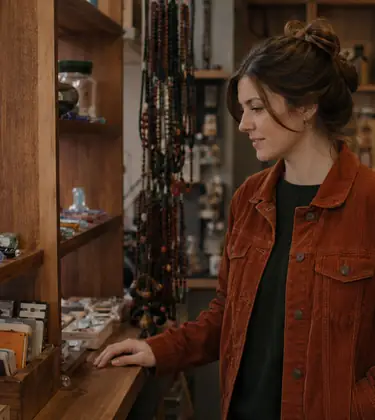
Ron and Jay Thelin opened a metaphysical book and trinket shop at 1535 Haight Street on 3 January 1966. It is generally credited as the first head shop in America, and the brothers never called it one.
The name arrived four months later, from a store on East Ninth Street in New York that Jeff Glick opened and simply called Head Shop. The word for the category came from the second entrant, which is a fitting start for a retail sector that would spend the next sixty years being defined by other people.
Where the first head shop sat in the culture
The Psychedelic Shop was a bookstore with incense, beads and paraphernalia, sitting in the neighborhood that was about to become the center of American counterculture. The Birmingham Balloon Company opened in Denton, Texas the same year. The model spread fast because it needed almost nothing: a lease, a countercultural clientele and merchandise nobody else would carry.
The merchandise was half of what those shops moved. The other half was information. A name like Acapulco Gold travelled through this network before it travelled anywhere else, a Mexican sativa that became American shorthand for quality decades before anyone could legally sell it.
The word itself was older than the stores. A head had meant a drug user since at least the 1930s, so a head shop was simply a shop for heads, which is exactly the plain reading and exactly the reading that would later cause the industry so much trouble.
By the end of the 1970s the category was enormous. The Washington Post put the count at 15,000 to 20,000 shops in 1979 with annual sales approaching three billion dollars, and TIME reported more than 15,000 in 1980. You will also see 30,000 quoted; that figure traces to a single academic estimate that hedges itself, so the contemporaneous reporting is the safer number.
The paraphernalia laws that reshaped the category
The legal counterattack came in two waves, and neither was aimed at drugs. In 1979 the DEA drafted a Model Drug Paraphernalia Act for states to adopt. Within three years, twenty-one states had passed versions of it. This was regulation by template, the same mechanism that would later standardize dispensary floor plans.
The constitutional test came in March 1982, when the Supreme Court upheld a Hoffman Estates ordinance regulating items "designed or marketed for use with illegal cannabis or drugs" by 8 to 0. The reasoning mattered more than the result: economic regulation gets a looser vagueness standard, because businesses can be expected to read the law before acting.
Federal law followed in 1986 with the Mail Order Drug Paraphernalia Control Act, written specifically to close the interstate mail-order route. It survives today as 21 U.S.C. 863, which makes it unlawful to sell or offer for sale drug paraphernalia, to move it through interstate commerce, or to import or export it, with up to three years in prison and forfeiture of the items involved.
Head shop vs. smoke shop, and why the sign does not save you
Neither term appears in federal law. The distinction people draw between them comes from one subsection, 863(f)(2), which exempts items "traditionally intended for use with tobacco products, including any pipe, paper, or accessory."
That exemption is the entire basis of the tobacco-use-only posture, and the courts closed it in 1994. In Posters 'N' Things v. United States the Supreme Court upheld the federal statute and read the phrase primarily intended for use as an objective test about an item's likely use, not a question of what the seller says. The Justice Department has stated the consequence in plain language: selling paraphernalia primarily intended or designed for drug use is illegal regardless of whether the seller advises their customers that it is for tobacco use only.
The statute even lists what a court may weigh: advertising, how the item is displayed, the ratio of these sales to the store's other business, and expert testimony. All the things a store does to look like a smoke shop are the things that get examined.
A Philadelphia jury put it more bluntly in 2017. The defense was that everything was displayed for tobacco use and every purchase came with a free bag of tobacco. The prosecutor's answer was that nobody smokes tobacco out of a three-foot bong.
Feeling lost on how to start? Try taking our quiz!
Start a QuizOperation Pipe Dreams
On 24 February 2003 the federal government ran the largest paraphernalia sweep in its history, and got most of its press from a comedian. The numbers as announced:
- 27 individuals charged, across 17 separate indictments
- 45 businesses with their inventories seized
- Approximately 2,000 federal, state and local officers involved
A parallel operation in the Southern District of Iowa, Operation Headhunter, ran the same day. Including the regional takedowns, the Justice Department reported 35 indictments charging 55 people nationwide, and closed its announcement with the line that eleven illicit dot coms were now dot gone.
Tommy Chong received nine months in federal prison and a $20,000 fine in September 2003 for selling bongs through his company. He was the only defendant without a prior conviction to receive a jail sentence.
Two things about that fact are worth sitting with. The maximum penalty per count was three years, so nine months was not extraordinary in itself. And the case that made the operation famous was the one where the government picked the most recognizable name available.
You will often read that the operation cost more than twelve million dollars. That figure comes from a trade paper and a documentary about the defendant, not from any government source, so it is worth attributing rather than asserting.
The unexamined day is a wasted opportunity. Reflect on what you did, what you learned, and how you can improve.
John Dewey
What legalization actually did to the head shop
It did not kill the category. It split it. Licensed dispensaries absorbed the product side, and in medical states they frequently double as head shops. Meanwhile the storefront multiplied. New York is the clearest case: the city shut down nearly 1,400 unlicensed shops and seized more than $95 million in products from May 2024 onward, against 160 legal adult-use dispensaries open across the five boroughs by April 2025.
Nine shops closed for every one that opened legally. That ratio is the real state of American smoke shop retail, and it looks less like the end of a category than a return to the conditions it was born in.
Meanwhile, the specialty retail count rose rather than fell. Peer-reviewed work tracking American tobacco retailers between 2000 and 2017 found a net 12 percent increase overall, including growth in tobacco specialty shops, across two decades when smoking itself declined.
What survived the whole thing
Something did survive four decades of paraphernalia law, and it was not a product line. It was a supply chain built on things the government could not classify.
Seeds occupied that space for a long time, sold as souvenirs and collectibles, described in catalogs that carefully avoided saying what they were for. Genetics moved through the same informal networks the shops did, and the varieties that came through are still in circulation. Skunk #1 is the clearest survivor of them, one of the first genuinely stabilized hybrids and the plant most modern commercial genetics still traces back to.
Derry started collecting landraces in the 1980s, in the same years the Model Act was spreading state to state, and the collecting was possible for exactly the reason head shops stayed open: what the law could reach was the object, never the knowledge behind it. A seed is a bad thing to prohibit and a very good thing to keep.
Sixty years of being renamed
The head shop was invented by two brothers who never used the term, named by a competitor, sized at 15,000 stores by the press that wanted it regulated, standardized by a DEA template, narrowed by a unanimous Supreme Court, and finally raided on national television with a stoner comedian as the headline.
It is still here. The sign now says smoke shop, the product mix has shifted, and in most states the actual cannabis has moved next door into a licensed store with a locked case. What has not changed is the basic dynamic: a retail category defined by what it is not allowed to say out loud.
Barney's Farm has been developing premium cannabis genetics since the 1980s, with over 40 Cannabis Cup wins. Explore our full seed catalog and find strains bred for every climate and skill level.