Cannabis Seeds vs Clones: Which Way Should You Start Your Grow?
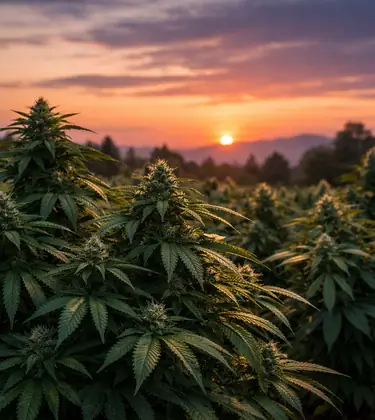
Every grower faces the same fork in the road before a single leaf unfurls: do you pop a seed or root a clone? Both paths end at harvest, but the journey between here and there looks wildly different depending on which one you pick.
Whether you call them clones, cuttings, or snips, the terminology changes from grower to grower. The plant doesn't care what you call it. What matters is understanding the mechanics behind each method so you can make a decision based on your setup, your goals, and your experience level.
What Are Cannabis Clones and How Do They Work?
A clone is a cutting taken from a living cannabis plant, typically a branch snipped from a healthy mother during the vegetative stage. That cutting gets placed into a rooting medium, treated with a hormone, and within a week or two, it pushes out its own roots and becomes an independent plant. Cannabis root production from cuttings can take anywhere from 5 to 21 days depending on conditions.
Because the clone shares identical DNA with the mother plant, you already know what you're getting. Same growth pattern, same cannabinoid profile, same terpene expression. That predictability is gold for commercial growers where uniformity matters across hundreds of plants.
The catch? Clones inherit whatever the mother carried, good and bad. If the mother had a pest problem or a hidden virus like hop latent viroid (HLVd), the clone carries that too. No fresh start.
Should I Grow From Seed or Clone as a Beginner?
If you're just getting started, seeds are almost always the easier entry point. You can order them online, they ship discreetly, and you don't need to know another grower to get your hands on quality genetics. In 2022, the DEA confirmed that cannabis seeds containing less than 0.3% THC qualify as hemp under federal law, which means seed banks can legally ship across state lines. That accessibility alone makes seeds the default starting point for most home growers.
Feminized seeds eliminate the guesswork. Modern feminized seeds from reputable breeders produce female plants roughly 99% of the time. No wasted weeks growing out males, no risk of accidental pollination. For a first-timer, that simplicity is a big deal.
Clones need a source. Getting clones means knowing a grower who will share cuttings or finding a reputable nursery that sells them. For many beginners, especially in states with newer cannabis programs, seeds are simply more accessible.
At Barney's Farm, we've spent over 30 years breeding genetics that perform for growers at every level. Our feminized seed catalogue is built on decades of selective breeding, meaning even a first-time grower gets predictable, high-quality results without needing to maintain mother plants.
Clone Root System vs Taproot: What Happens Underground
This is where the conversation gets real. When a seed germinates, the very first structure to emerge is the taproot. A taproot is the primary root of a plant's root system, growing vertically downward, and cannabis follows this pattern perfectly. That taproot drives deep into the soil, anchors the plant, and branches into a network of secondary and tertiary roots that pull water and nutrients from a wide area.
Clones don't develop a taproot. They push out adventitious roots from the stem, creating a fibrous lateral root system. These roots handle nutrient uptake fine, but they don't anchor the plant the same way and they don't reach as deep.
This underground difference shows up above ground. Seed-grown plants develop thicker stems, stronger branches, and a sturdier overall structure. When heavy buds start forming during flower, that structural integrity pays off. Clone-grown plants are more likely to need support staking because their root system can't provide the same anchor strength.
Feeling lost on how to start? Try taking our quiz!
Start a QuizDoes Growing From Seed or Clone Affect Yield?
The short answer: yes, and it usually favors seeds. The taproot advantage feeds directly into yield. A deeper, more developed root system pulls more nutrients and supports heavier flower production. Home growers consistently document significant yield differences between seed-grown and clone-grown plants of the same strain under identical conditions.
Seeds and vigor. Seedlings carry what breeders call "hybrid vigor," a natural boost in growth energy from sexual reproduction and genetic recombination. That diversity often produces plants that grow faster and stronger than clones of the same lineage.
Clones and consistency. Where clones win on yield is in predictability. Running 50 identical clones in a commercial facility lets you dial every input to match exactly what that genetic line needs. Same feed schedule, same light distance, same training response across the entire canopy. That uniformity lets operations maximize output per square foot.
The unexamined day is a wasted opportunity. Reflect on what you did, what you learned, and how you can improve.
John Dewey
Feminized Seeds vs Clones: Which Guarantees Females?
Both methods can guarantee female plants. Clones taken from a female mother will always be female. Feminized seeds use specialized breeding techniques to produce females at a rate of 99% or higher. Regular seeds produce a roughly 50/50 male-female split.
So for growers who want to avoid males, both feminized seeds and clones do the job. The real question is what else comes with each choice. Feminized seeds give you the female guarantee plus the taproot, genetic freshness, and the ability to pheno-hunt for standout individuals. Clones give you the female guarantee plus exact replication and a faster start.
At Barney's Farm, every feminized seed represents decades of stabilization work. When you grow out a pack of our Runtz Muffin you're not rolling dice on random genetics. Each seed carries a tightly defined genetic profile honed through years of selective breeding, so even though individual seeds express slight variations, the overall quality stays locked in.
How Long Does It Take to Grow From Seed vs Clone?
Clones are often marketed as the faster path to harvest, and there's truth to that. A rooted clone skips the germination and seedling phases, saving one to three weeks. But rooting a clone takes 7 to 21 days on its own. Factor that in and the time gap shrinks fast. With autoflowering strains, the difference nearly disappears since autos go seed to harvest in 8 to 10 weeks regardless.
Cannabis Seeds or Clones for Home Growing?
Home cultivation is expanding fast across the US. Roughly 7% of US adults reported growing cannabis at home, with significantly higher rates in states that allow adult-use cultivation. As more states legalize home grow, that number keeps climbing.
For home growers working with limited plant counts (most states cap it at 6 to 12 plants), seeds make the most sense. You get to explore different strains each cycle, you don't need space for mother plants, and you can store unused seeds for years. A pack of quality genetics from a trusted seed bank gives you options without the overhead of maintaining a cloning setup.
Clones make more sense when you've already found a specific plant you love and want to replicate it. Grow from seed, find your favorite phenotype, keep it as a mother, clone from there. That's where both methods work together rather than competing.
When Are Clones the Better Choice?
Commercial uniformity. If you're running a licensed facility and need every plant to behave identically, clones are the standard. Identical genetics mean identical nutrient needs, canopy height, and harvest timing.
Preserving a standout phenotype. Found a once-in-a-lifetime plant? Clone it. Seeds from that same line will express variation. Only cloning preserves that exact individual.
Medical consistency. Patients who depend on a specific cannabinoid ratio need their medicine to be the same every time. Clones deliver that level of chemical consistency in a way seeds can't match.
Seeds vs Clones: The Bottom Line
If you're growing at home, growing for the first time, or just want the strongest plants with the biggest harvest, start from seed. You get the taproot, the vigor, the genetic freshness, and a catalogue of genetics that would take a lifetime to explore.
If you're scaling up, chasing a specific phenotype, or need medical-grade consistency, clones are the tool for that job.
The smartest growers don't pick one side forever. They start from seed, identify their best plants, clone the standouts, and keep the cycle going. Seeds for exploration, clones for replication. That's how you build a garden that keeps getting better.
Barney's Farm has been developing premium cannabis genetics since the 1980s, with over 40 Cannabis Cup wins. Explore our full seed catalog and find strains bred for every climate and skill level.