Cannabis and Night Vision: Contrast, Glare and Driving After Dark
There is an old story that cannabis helps you see in the dark. It comes from fishermen, it has one tiny experiment behind it, and it still gets repeated as if it settled the question.
The newer research points the other way. Contrast, glare and halos all get worse after smoking, and those are exactly the things that matter when headlights come at you on a dark road.
Cannabis night vision started as a fishermen's story
The cannabis night vision story starts in the Caribbean. Earlier reports had documented better night vision among Jamaican fishermen after they took a crude tincture of herbal cannabis, and a 2004 case study set out to test it. Researchers gave one volunteer THC in the lab and tested three people in Morocco before and after smoking kif, a mix of sifted cannabis and tobacco, and improvements in night vision measures were noted after THC or cannabis.
The legend rests mostly on those fishermen's reports and this study of four people, three of whom were smoking tobacco along with the cannabis. The authors called it a case study themselves and asked for further testing. A 2026 survey of 95 cannabis users in Morocco kept the belief alive, with a third saying their night vision improved, but that was self-report with no test of whether they actually saw better, and three quarters of the same users reported red eyes.
Red eyes are the least of it
Weed and eyesight meet in several places at once:
- Red eyes, from congested blood vessels on the surface of the eye.
- Lower pressure inside the eye, which lasts only three to four hours, according to the American Glaucoma Society. That is one reason the society does not recommend cannabis for glaucoma: it would have to be smoked every three hours to keep the pressure down.
- Smaller pupils in the dark. A 2021 study from the University of Granada measured a 5.2 percent drop in pupil diameter under night-level light after smoking, and a smaller pupil lets in less light.
- Slower signals from the retina in regular users, in at least one study.
That last finding comes from a 2018 study of 53 regular users and 29 controls, which found delayed ganglion and bipolar cell responses in cannabis users. The authors read it as a delay in visual information traveling from the retina to the brain, with the caveat that tobacco and alcohol use differed between the two groups. A 2022 study of 40 regular users in treatment went further and concluded that reducing cannabis use could restore retinal function.
Contrast and halos get worse
Contrast sensitivity is the ability to pick out a gray shape against a slightly different gray, like a pedestrian in dark clothes at dusk, and it is where the research on THC and contrast sensitivity is clearest. The Granada team tested 31 cannabis users before and after smoking and found that smoking cannabis has significant adverse effects on all the visual parameters analyzed, including contrast sensitivity, halos around lights and straylight, the light scattered inside the eye that makes glare feel blinding. Straylight rose by about 9 percent.
The users noticed. About two thirds said smoking cannabis impairs their vision, and 74 percent felt it affected their night vision and diminished their ability to drive at night. An earlier simulator study from the same group found contrast sensitivity fell 8.3 percent after THC and that keeping the car in its lane got harder, although that drive took place in daylight.
Contrast matters on a dark road more than a standard eye test suggests. A 2022 night-driving simulator study of 15 older drivers, with no cannabis involved, found that contrast sensitivity predicts night-time hazard detection in a way that the standard high-contrast eye chart does not.
Feeling lost on how to start? Try taking our quiz!
Start a QuizGrow rooms have a night shift, too
Growers have their own night vision problem, seen from the plant's side. Photoperiod cannabis flowers when its nights are long and unbroken, so anyone working a flowering room during lights-off uses a dim green work light, which disturbs the plants far less than white light, and fixes light leaks before they stress the crop. A photoperiod strain such as Jelly Cake, a Biscotti and Sunset Sherbet cross that flowers in 56 to 63 days and is especially suitable for evening relaxation or preparing for sleep, needs that routine. An autoflower such as Afghan Hash Plant Auto does not: it completes its full cycle in 75 to 80 days from seed with no changes to the light schedule, which makes it the easier choice for anyone whose dark period is hard to keep dark.
The unexamined day is a wasted opportunity. Reflect on what you did, what you learned, and how you can improve.
John Dewey
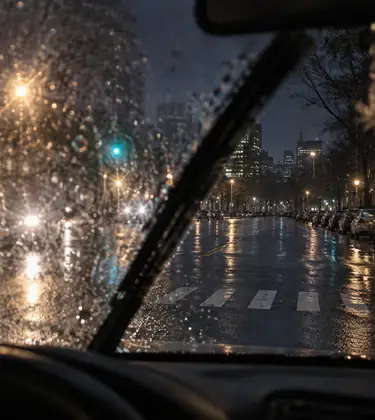
Glare takes longer to fade
Oncoming headlights are a glare test you take every time a car passes on a dark road. Your eyes adapt to darkness by leaning on the rod cells of the retina, which are far more sensitive than the cone cells used in daylight, and every bright flash sets part of that adjustment back. The recovery, the moment your eyes readjust after the lights go by, is what cannabis slows down. A 1978 double-blind study of 10 people found that the time course of light adaptation after intense light exposure is significantly delayed by alcohol, marijuana, and a combined dose of alcohol and marijuana. The marijuana effect grew with the dose, and both drugs slowed recovery for at least two hours.
Put that together with smaller pupils, more halos and weaker contrast, and the headlight moment gets longer and blurrier at exactly the point where a driver needs to see the edge of the road.
Night driving is where it all adds up
So, does weed affect vision? Yes, in several measurable ways, and on a road at night they all point the same direction. We could not find a controlled study of night driving impairment in cannabis users specifically, but the daytime evidence is strong. A 2021 review of 80 publications found that most driving-related skills recover within about five hours of inhaling 20 mg of THC, and concluded that people should wait at least five hours following inhaled cannabis use before performing safety-sensitive tasks. Edibles may take longer.
Regular users showed less impairment than occasional users in that review, which is less, not none. For frequent users, the morning after looks better. A 2026 simulator study of 65 people who smoked four to seven days a week found no significant driving impairment 12 to 15 hours after their last use, compared with a control group, and its authors added that blood and oral fluid THC levels may not track driving behavior. That is the next morning, though, not the same night. In a 2015 simulator study, cannabis and alcohol simply added up: 5 micrograms of THC per liter of blood plus a 0.05 breath alcohol reading produced as much lane weaving as a 0.08 reading alone. And a blood test will not settle it, because a 2022 review concluded that blood and oral fluid THC levels are relatively poor indicators of impairment. We have covered how long to wait before driving in more detail. Before any drive after dark:
- Wait at least five hours after smoking or vaping, and longer after edibles.
- Skip the drink, because cannabis and alcohol add up.
- Do not go by how clear the road looks. Two thirds of the users in the Granada study noticed their vision was worse, which means a third did not.
- If the night is for getting high, plan the ride home before the first session, or stay put.
The legend does not survive the headlights
The idea that cannabis sharpens night vision rests on fishermen's reports and a case study of four people, three of them smoking tobacco with it. The controlled studies since then found worse contrast, more halos and straylight, smaller pupils in the dark and slower recovery from glare, the exact combination that makes a dark road harder to read.
None of that is a reason to skip a good night in. It is a reason to keep the night in, or to wait until the high is long gone before you drive. Barney's Farm has been developing premium cannabis genetics since the 1980s, with over 40 Cannabis Cup wins. Explore our full seed catalog and find strains bred for every climate and skill level.