Cannabis in Prison: Legal Outside, Contraband Inside
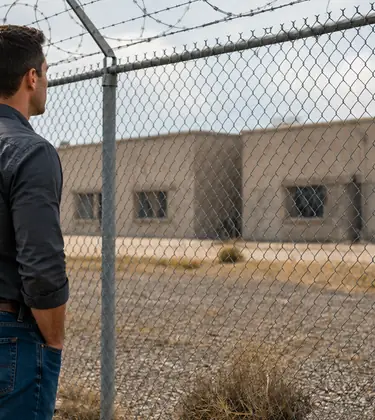
A man can walk into a California dispensary, buy an ounce legally, and be back in his living room within the hour. Two miles away, behind a fence, another man holding a fraction of that amount is committing a felony that can add years to his sentence.
Same state, same substance, same year. The line is the wall.
This guide covers how that gap survives legalization, what happens to people who test positive inside, and why synthetic cannabinoids sprayed onto paper became the most dangerous drug problem in American corrections.
Legalization stops at the gate
When California passed Proposition 64, the text carved out an exception for laws about smoking or ingesting cannabis in prison. The state's Supreme Court read that carve-out in 2021 and held, five to two, that possessing cannabis in prison remains a felony.
The relevant statutes carry two, three or four years for bringing a controlled substance into a penal institution, and sixteen months to three years for possessing one there. The court's reasoning was blunt. It found it implausible that voters legalizing recreational cannabis understood themselves to be legalizing it inside state prisons.
Every legal state has some version of this. Pennsylvania wrote the prohibition directly into its 2016 medical cannabis act, barring possession or use in any state or county correctional facility, even for cardholders.
The result is a category of person the law does not really have an answer for: a registered medical patient who is incarcerated, whose prescription becomes contraband at the moment of intake.
The medical patient nobody planned for
That paradox is not hypothetical, and it grows every year. More than three dozen states run medical cannabis programs, and registered patients are booked into jails every day on charges that have nothing to do with cannabis. On intake, a legally recommended treatment for their epilepsy, chronic pain or chemotherapy nausea becomes a felony they cannot possess.
There is no substitution pathway. Prison formularies do not stock cannabis, correctional physicians cannot prescribe it, and the federal position makes any facility that tried it a target. A patient stabilised on cannabis outside is taken off it without a taper and without an alternative, and the clinical consequence is treated as an administrative fact. Legal scholars have argued this amounts to deliberate indifference to a serious medical need under the Eighth Amendment. No court has accepted the argument.
Federal law draws the same line, with a discount
At the federal level, contraband in prison is covered by its own statute, and cannabis sits in a lower tier than everything else in Schedule I. Bringing marijuana into a federal facility carries up to five years. Bringing most other Schedule I or II drugs carries up to ten.
That distinction, five instead of ten, is one of the very few places where federal law has ever treated cannabis as meaningfully different from heroin. It exists inside prison policy, which is not where anyone would have expected to find it.
Feeling lost on how to start? Try taking our quiz!
Start a QuizHow inmate drug testing actually works
Federal Bureau of Prisons rules are more specific than most people assume. Testing must be performed on at least 50% of inmates involved in community activities, with the frequency set by the warden, plus random monthly sampling drawn from each institution's general population.
The collection procedure leaves little room. An inmate has two hours to produce a sample. Staff maintain direct visual supervision throughout and offer eight ounces of water at the start of the window. Failing to produce within two hours triggers an incident report. Refusing outright triggers one immediately, with no waiting period.
A confirmed positive that cannot be justified means another incident report, and incident reports feed into everything: housing classification, job assignments, visitation privileges, halfway house eligibility, good conduct time. A positive cannabis test does not just mean a reprimand. It can move a release date.
Two features of cannabis testing make it disproportionately punishing in this setting. THC metabolites are fat soluble and linger for weeks in a regular user, so a single result can reflect use from well before the sample was taken. And the standard panel measures the metabolite, not impairment, so nothing about the number distinguishes someone who used an hour ago from someone who used a fortnight ago. In a system where the test result is the finding of fact, that distinction never gets made.
The same logic follows people out of the gate. Cannabis use is a standard condition violation on probation and parole in most jurisdictions, including in states where the substance is legal for everyone not under supervision.
The unexamined day is a wasted opportunity. Reflect on what you did, what you learned, and how you can improve.
John Dewey
Why K2 took over
Here is the part that explains the last decade of American prison drug policy. Synthetic cannabinoids are not cannabis. They are laboratory compounds designed to bind the same receptor, and they were adopted inside prisons for one overriding reason: routine drug panels do not detect them. A substance that beats the test beats the incident report, which beats the lost release date.
The chemistry that makes them invisible also makes them lethal. Forensic researchers analysed 45 death cases from correctional facilities tested between August 2023 and March 2025, and found the compound 5F-ADB in 80% of them. A second synthetic, MDMB-4en-PINACA, appeared in 31%.
The potency comparison in that analysis is the number worth sitting with. 5F-ADB binds at 0.59 nanomolar. MDMB-4en-PINACA binds at 2.47. Delta-9 THC, the actual psychoactive compound in cannabis, binds at 269. These substances are hundreds of times more active at the receptor than the thing they were built to imitate, and unlike THC they are full agonists, meaning there is no ceiling on the response.
The researchers note that correctional deaths from synthetic cannabinoids remain underreported.
The paper problem
Because synthetics are liquids before they are anything else, they can be sprayed onto paper, dried, and mailed. A sheet of ordinary letter paper becomes a delivery system that survives visual inspection.
Contraband data shows what this has done to the economics. Oklahoma's Department of Corrections seized 261 pounds of cannabis valued at just over $1.65 million during 2025, alongside 27 pounds of K2 valued at more than $2.75 million. Twenty-seven pounds of synthetic was worth more inside than forty-eight pounds of methamphetamine. The department moved to digital mail in September 2024 and banned paper products facility-wide in September 2025.
That response has become the national default. Most American prisoners can no longer receive physical mail directly. Letters are scanned or photocopied by contractors, and the originals shredded or destroyed, including in several systems legal mail from attorneys.
The evidence that the mail bans are not working
This is where the policy gets uncomfortable, and where reporting has been more useful than official statements.
An analysis of mail restrictions across US corrections found that at least 78% of prisoners are now barred from receiving physical mail directly, with the market split between a handful of private vendors. The same reporting collected what the systems themselves measured.
Florida found that mail-introduced contraband amounted to just over 1% of the total it seized annually. Pennsylvania found that 0.7% of incoming mail was drug-tainted before it started scanning. Missouri's monthly overdose count rose from 34 to almost 39 after it contracted out mail processing in 2022. Wisconsin recorded more drug-on-paper incidents in 2024 than in 2021, the year scanning began.
Mail was never the main channel. Staff, visitors and drones account for far more. Oklahoma's own 2025 arrest figures make the point: of 83 people arrested for smuggling attempts, 42 were visitors and 14 were department staff.
What a plant is, and what a chemical is not
We want to say something here that sits slightly outside the policy argument.
The entire synthetic cannabinoid problem exists because a molecule was reverse-engineered to hit a receptor, without any of the context that receptor evolved alongside. Cannabis contains over a hundred cannabinoids and several hundred terpenes, interacting in ways that moderate each other. THC is a partial agonist, which is the technical reason there is a ceiling on what it does to you. That ceiling is not a design achievement. It is simply what the plant is.
What we do as breeders is work within that. Selecting a line means choosing among expressions the plant already produces, generation after generation, until a trait comes true from seed. It is slow, bounded by biology, and the ceiling stays where biology put it. Nothing in that process can produce a compound hundreds of times more active at the receptor, because nothing in the plant is.
The genetics we keep coming back to make that point better than an argument does. Hindu Kush is a pure landrace from the mountain range it is named after, unhybridised, finishing in 55 to 65 days at around 80 to 120 cm indoors, and it has been doing more or less the same thing to people for a very long time. Skunk #1 is the other end of the story, an Afghan crossed with Acapulco Gold and Colombian Gold in the 1970s, and the single most important hybrid ever made, because most of what came after descends from it.
Neither of those was invented. Both were found, crossed and stabilised. That is a different activity from spraying a novel compound onto notepaper.
The short version
Cannabis in prison is contraband everywhere in the United States, including in states where it is legal outside. California's Supreme Court confirmed it remains a felony after full legalization, and federal law treats it as prison contraband with a five year maximum.
Testing is frequent, observed and consequential, and a positive result can affect a release date. Synthetic cannabinoids filled the space precisely because they defeat the test, and they are killing people at a rate that is still not fully counted.
The policy response has been to cut off the mail. Every system that measured the result found the mail was never the main route in.
Barney's Farm has been developing premium cannabis genetics since the 1980s, with over 40 Cannabis Cup wins. Explore our full seed catalog and find strains bred for every climate and skill level.