Cannabis Drinks Are Exploding: The Brands and Science Behind THC Beverages
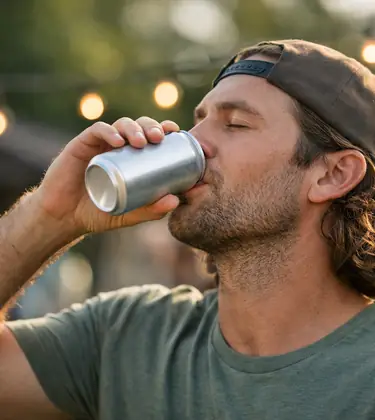
Walk into a liquor store in Minnesota, Texas, or Florida right now and you'll find THC seltzers stacked next to the craft beer. Head to a backyard barbecue in Brooklyn and there's a solid chance someone brought a four-pack of cannabis-infused sparkling water instead of IPAs. The weed drink trend isn't coming. It arrived. And it brought flavor options, precise dosing, and zero hangovers with it.
THC drinks in 2026 represent one of the fastest-growing segments in the entire cannabis space. Seltzers, tonics, mocktails, teas, lemonades, even THC-infused spirit replacers have flooded retail shelves across more than 20 states. The technology got better, the taste improved dramatically, and a massive cultural shift away from alcohol created the perfect opening for cannabis beverages to step in.
Why Are THC Drinks Blowing Up in 2026?
A few forces collided at once. First, Americans are drinking less booze than at any point in modern history. A 2025 Gallup poll found that only 54% of Americans say they drink alcohol, the lowest number Gallup has recorded since it started asking the question in 1939. Among adults aged 18 to 34, that figure dropped to 50%. The health-conscious, sober-curious generation wants something for the party that doesn't wreck them the next morning.
Second, the 2018 Farm Bill accidentally created a massive market. By legalizing hemp products containing less than 0.3% delta-9 THC by dry weight, Congress opened the door for companies to produce intoxicating THC beverages derived from hemp and sell them in mainstream retail. A 12-ounce seltzer with 5mg or even 10mg of THC could technically meet that threshold. The result: THC drinks started popping up at Target, Total Wine, Circle K, and grocery chains in states where recreational cannabis remained illegal.
Third, the products actually taste good now. Early cannabis beverages had that unmistakable hempy bitterness that made most people wince. Today's formulations use advanced emulsification and natural flavor profiles that rival any craft seltzer on the market. Blood orange, mango chili, elderflower, watermelon limeade. These aren't novelty items anymore. They're legitimate competitors on the drink shelf.
How Do Cannabis Beverages Actually Work?
The breakthrough behind modern THC drinks is a technology called nanoemulsion. If you've ever tried to mix oil and water, you know they separate instantly. THC is fat-soluble by nature, which means it resists blending with water-based liquids. That's exactly the problem nanoemulsion solves.
The process works by breaking THC oil into incredibly tiny droplets, typically 20 to 200 nanometers in size. A nanoemulsion is a stable mixture where nano-sized droplets of one liquid are dispersed evenly throughout another, using surfactants and high-pressure processing to keep everything suspended. The technique has roots in the pharmaceutical industry, where it's been used for decades to improve drug absorption.
For cannabis beverages, this matters because of bioavailability. Traditional edibles have to pass through your digestive system and liver before THC hits your bloodstream. That process, called first-pass metabolism, converts THC into 11-hydroxy-THC, which is more potent but takes 60 to 90 minutes to kick in. Nanoemulsified THC bypasses much of that process. The tiny particles get absorbed through your stomach lining and mucous membranes far more efficiently.
Onset time: Most nano-formulated THC drinks produce noticeable effects within 10 to 20 minutes. That's a huge deal. You can pace yourself like you would with a beer or a glass of wine, adjusting your intake in real time instead of waiting an hour and hoping you didn't overdo it.
Duration: Effects from THC beverages typically last 2 to 4 hours, shorter than traditional edibles but long enough for a night out or a chill evening at home. The experience tends to feel lighter and more manageable, closer to a smooth buzz than the deep body high of a potent brownie.
Which THC Seltzer Brands Are Dominating Right Now?
The cannabis beverage landscape has consolidated fast. A year ago, there were nearly 150 brands competing. Now the top 10 control roughly 64% of the market, and a handful of names keep showing up in every cooler and on every retail shelf.
Crescent 9 out of New Orleans leads the pack. They're the number-one selling THC beverage in U.S. grocery stores, liquor stores, and convenience stores, confirmed by NielsenIQ tracking data. Their 50mg cans serve experienced consumers, while lower-dose options cater to newcomers. Distribution spans 7,000+ retail accounts across 21 states.
Cann pioneered the low-dose social tonic category and helped bring THC drinks into mainstream consciousness. Their 5mg THC / 10mg CBD blend delivers a mellow, approachable experience that resonates with the wine-replacement crowd.
Wynk, backed by a major cannabis operator, pushes sessionable seltzers with 2.5mg and 5mg options. Clean flavor profiles and a focus on the social drinking occasion make them a go-to at house parties and outdoor events.
The functional angle is gaining ground too. Brands are combining THC with adaptogens like lion's mane mushroom and ashwagandha, or pairing cannabinoids with L-theanine for a calmer, more focused buzz. The category is evolving quickly, and the brands winning right now are the ones nailing both the experience and the taste.
Feeling lost on how to start? Try taking our quiz!
Start a QuizAre Weed Drinks Actually Replacing Alcohol?
According to NPR's reporting on the Gallup data, only 50% of Americans aged 18 to 34 now report drinking alcohol, and for the first time, a majority of all Americans (53%) believe even moderate drinking is bad for their health. That's a seismic shift from a decade ago, when most people considered a glass of wine harmless or even beneficial.
THC beverages are capitalizing on this gap. For a growing number of consumers, a 5mg THC seltzer at a cookout fills the same social role as a light beer, minus the bloating, the calories, and the Sunday morning regret. The ritual stays intact. You crack a can, you sip, you loosen up. The substance changed, but the occasion didn't.
Researchers are paying attention too. A 2025 study at Brown University tested 157 adults in a simulated bar environment and found that participants who consumed THC drank roughly 19 to 27% less alcohol than those given a placebo. They also waited longer before reaching for their first drink. Whether this translates to long-term substitution is still an open question, but the early data points in one direction.
The unexamined day is a wasted opportunity. Reflect on what you did, what you learned, and how you can improve.
John Dewey
What Does New Federal Regulation Mean for THC Drinks?
Here's where it gets complicated. In November 2025, Congress closed the Farm Bill loophole that made most hemp-derived THC products possible. New federal rules cap THC in hemp products at just 0.4 milligrams per container, a threshold so low it would effectively eliminate the vast majority of THC beverages currently on the market. The change takes full effect in November 2026.
The alcohol industry pushed hard for this. Beer institutes and spirits trade groups lobbied heavily over the summer of 2025, arguing that unregulated THC products were eating into their market share without facing the same taxes or oversight. Senator Mitch McConnell championed the provision, which was tucked into a federal spending bill.
The hemp industry is fighting back. Two Oregon senators introduced the Cannabinoid Safety and Regulation Act, which would replace the outright ban with a regulated framework allowing up to 10mg of THC per beverage container, plus a federal age minimum of 21 and mandatory third-party testing. Whether that bill gains traction before the November 2026 deadline remains uncertain.
For consumers and brands alike, 2026 is a pivotal year. The demand for THC drinks isn't going away. If federal regulation kills the hemp-derived market, state-licensed dispensary channels and emerging state frameworks will likely absorb much of that energy. The genie is out of the bottle.
Why Cannabis Genetics Matter for THC Beverages
Most conversations about THC drinks focus on the end product: the can, the flavor, the milligrams. But what rarely gets discussed is what happens upstream. The quality of the cannabis that goes into a beverage starts with genetics, and that's where decades of breeding experience makes a tangible difference.
At Barney's Farm, we've spent over 30 years developing cannabis strains with specific cannabinoid and terpene profiles. That expertise applies directly to the beverage space. Terpenes like myrcene, limonene, and linalool do more than create aroma in flower. They influence how a drink tastes, how the effects feel, and how the overall experience lands. A seltzer made with extract from a high-limonene strain will have a naturally citrusy character and a more energetic, uplifting buzz. One built around a myrcene-heavy cultivar will trend toward relaxation and earthy depth.
Strain selection matters at the source. Beverage manufacturers sourcing from well-bred, stable genetics get more consistent cannabinoid ratios batch to batch. That consistency translates directly into reliable dosing for the consumer. When you crack open a can and expect 5mg of THC with a specific terpene profile, the genetics of the plant that produced that extract are doing the heavy lifting behind the scenes.
Full-spectrum formulations depend on plant quality. The best THC beverages on the market aren't made with pure isolate alone. They use full-spectrum or broad-spectrum extracts that preserve the plant's natural cannabinoid and terpene ensemble. That ensemble is shaped entirely by genetics. A strain like Runtz Muffin or Mimosa EVO, for example, carries a complex terpene profile that would contribute something distinctive and layered to a beverage formulation. Isolate gives you THC. Quality genetics give you an experience.
As the THC beverage market matures, the brands that win will be the ones paying attention to what goes into the extract, not just what goes on the label. That's true for growers, extractors, and anyone formulating drinks. Forty-plus Cannabis Cup wins taught us that the best end product always starts with the best seed. The same principle holds whether you're rolling a joint or cracking a seltzer.
Barney's Farm has been developing premium cannabis genetics since the 1980s, with over 40 Cannabis Cup wins. Explore our full seed catalog and find strains bred for every climate and skill level.