Cannabis and the NCAA: What College Athletes Can and Can't Use
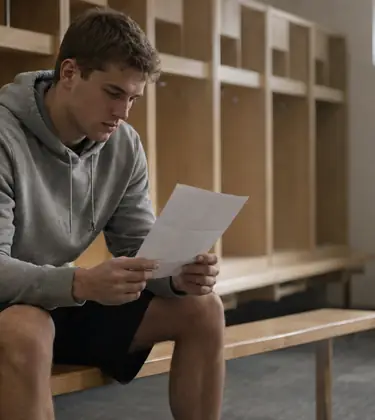
In June 2024 the NCAA stopped treating cannabis as a doping matter. It removed cannabinoids from the banned list, ended testing for them at championships, and cancelled penalties athletes were already serving.
That is the headline every athlete heard. The part they did not hear is that the NCAA was never the only body testing them, and in many programs it was not even the strictest one.
This guide covers what actually changed, what did not, why an Olympic athlete faces the opposite rule, and what the NCAA's own data says about who is using.
The NCAA stopped, your school did not
The NCAA no longer tests for cannabis. Your school probably still does. Conference and institutional drug programs operate independently of the NCAA, they run during the regular season, and some of them impose penalties up to permanent dismissal and loss of a scholarship.
What the NCAA did
The Division I Council voted to remove cannabinoids from the banned drug class for championships and postseason participation in football, effective immediately on June 25, 2024. Divisions II and III had adopted the same change two months earlier.
The reasoning was narrow and worth quoting exactly. Council chair Josh Whitman said the NCAA drug testing program is intended to focus on integrity of competition, and cannabis products do not provide a competitive advantage.
The change was retroactive. Any penalties then being served for a positive cannabinoid test were discontinued.
That was the end of a long retreat. As recently as the 2023-24 season the banned list still carried a class of cannabinoids covering marijuana, synthetic cannabinoids and Delta-8 THC, and the association had already raised its positive-test threshold twice, most recently to the same 150 nanograms per milliliter the World Anti-Doping Agency still uses.
The medical committee that recommended abolition was blunter than the Council. Its stated objectives, published when it made the recommendation, included acknowledging the ineffectiveness of existing policy, meaning banning, testing and penalizing, and moving toward harm reduction instead of punishment.
The part nobody reads
Here is where athletes get caught, and it is entirely predictable once you see the structure. NCAA testing covers championships and postseason. The regular season belongs to schools and conferences, which run their own programs under their own rules.
Grand Valley State University in Michigan, where recreational cannabis has been legal since 2018, updated its athletics drug policy in June 2025 to say so directly: THC has been removed from the NCAA banned substance, per the consensus opinion that cannabis is not a performance-enhancing drug, however, GVSU student-athletes may still be tested for the presence of THC through suspicion-based testing.
Its sanctions escalate to a 25 percent suspension, then 50 percent, then permanent dismissal from athletics with athletic aid cancelled.
The University of Illinois goes further in a different direction, stating that its threshold for marijuana testing could be at lower levels than the NCAA's, and that head coaches may impose additional sanctions where team rules provide for them. Illinois is where the Division I Council chair quoted above is athletic director.
Some schools did follow the NCAA. Kansas now tests THC for health screening purposes only, with no sanctions attached. NC State does the same, while noting that the student code of conduct and state law still apply.
Two athletes in the same conference can face completely different consequences for the same test result. That is the actual state of the rules.
Feeling lost on how to start? Try taking our quiz!
Start a QuizState legality does not help you
The intuition that a legal state protects a legal-age athlete fails for a reason most people never encounter.
The same Grand Valley State policy spells it out: regardless of Michigan's law, the Drug Free Schools and Communities Act requires campuses to follow federal guidelines, meaning that marijuana use and possession remains illegal on the college campus.
Universities take federal funding. Federal funding carries federal drug-free campus obligations. State law does not reach into that arrangement, which is why schools in fully legal states run testing programs that would look at home in a prohibition state.
The unexamined day is a wasted opportunity. Reflect on what you did, what you learned, and how you can improve.
John Dewey
The Olympic rule runs the other way
The contrast with international sport is sharp enough to be worth understanding, because plenty of college athletes are subject to both.
The World Anti-Doping Agency still bans cannabis. Its rule is that THC is prohibited in competition only, and only when the urinary concentration exceeds a threshold of 150 ng/mL, the same number the NCAA used before abolishing its own.
WADA reviewed the ban in 2022 and kept it. The stated reason was not performance enhancement. Its ethics advisers continue to consider cannabis use, at this time, to be against the spirit of sport.
Read those two positions together. The NCAA dropped cannabis because it does not enhance performance. WADA kept it while agreeing that it does not.
Sha'Carri Richardson is what that costs in practice. Her sample exceeded the threshold, USADA accepted that her use occurred out of competition and was unrelated to sport performance, reduced her suspension to one month after she completed counseling, and disqualified her Olympic Trials result anyway.
CBD is the one exception on the international side, exempted since 2019. Every other cannabinoid remains prohibited in competition, and strict liability means a contaminated CBD product is still the athlete's problem.
What the NCAA's own numbers show
The association surveys its athletes, and the results explain why the policy was failing. Self-reported cannabis use in the past year sat at roughly 26 percent in the most recent study, which is about where it has been for fifteen years. Division III ran highest at 30.1 percent, against 23.0 in Division I.
The number that matters most for policy is geographic. Use was highest among athletes attending college in a state where cannabis is fully legal, at 43 percent, against 35 percent in medical-only states and 28 percent where it remains illegal, according to the association's own January 2024 substance use study.
Worth being honest about what nobody yet knows: that survey predates the rule change, and no data exists on whether removing the ban altered usage at all.
Forty-three percent is also, incidentally, a description of our customer base. Gary Payton carries a Hall of Fame guard's name for a reason, Y Griega crossed with Snowman, a 55% sativa at 27% THC, 65 to 70 days at 80 to 110 cm with 600 to 700 grams a square meter, diesel and spicy herbs over sweet berries.
One newer finding complicates the NCAA's own reasoning. A 2026 study of eighteen Division I football players who had tested positive for THC found roughly 20 percent slower reaction speed at baseline against their own values after twelve months of verified abstinence. It is a small study without a control group, so treat it lightly. But cannabis not enhancing performance and cannabis not affecting performance are different claims, and the NCAA only established the first.
What a seed company should say to a college athlete
Very little, and we would rather be straight about it than pretend otherwise. If you compete at any level with a testing program, our seeds are not for you until that is over. Not because of a moral position, but because THC metabolites are fat-soluble and clear slowly, the detection window for a regular user runs weeks, and no product, timing trick or dilution strategy reliably beats a lab. People sell those strategies. They do not work.
The genuine audience for this article is everyone else on campus, and the useful thing we can tell them is that home growing is legal for adults in most fully legal states, which is exactly where the NCAA found 43 percent usage. Knowing what you have and where it came from is worth more than any of it.
Two things are worth separating here:
- While you compete. Assume you are tested, assume the window is weeks, not days, and treat every detox product on the market as the marketing it is.
- After you finish. Watermelon Z Auto is where most people start, 70 to 75 days from seed at 90 to 110 cm and 26% THC, watermelon over sweet berries, and forgiving enough that a first grow usually works.
The right time matters as much as the right plant, and for anyone still on a roster, the right time is later.
What an athlete needs to know
The NCAA removed cannabinoids from its banned drug classes in April 2024 for Divisions II and III and June 2024 for Division I, ended championship testing for them, and cancelled penalties already being served, on the stated basis that cannabis is not performance-enhancing.
Schools and conferences run separate programs covering the regular season. Grand Valley State still tests and escalates to permanent dismissal with loss of aid; Illinois may use a lower threshold than the NCAA did; Kansas and NC State test without sanctioning. State legality is irrelevant, because the Drug Free Schools and Communities Act binds campuses to federal rules.
WADA still bans cannabis in competition above 150 ng/mL, not on performance grounds but on spirit-of-sport grounds, which is how Sha'Carri Richardson lost an Olympic qualifying result over out-of-competition use. Roughly a quarter of NCAA athletes report using, rising to 43 percent in fully legal states.
Barney's Farm has been developing premium cannabis genetics since the 1980s, with over 40 Cannabis Cup wins. Explore our full seed catalog and find strains bred for every climate and skill level.