Cannabis And Board Sports: Skate, Surf And Snow
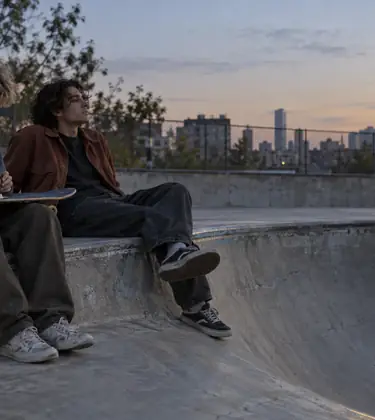
Three sports came out of the same place. Surfers built skateboards to ride when the ocean went flat, skaters and surfers built snowboarding when the mountains would not have them, and all three spent decades being told they were not real sports by people who ran real sports.
All three are now in the Olympics. All three are drug tested. And the substance most associated with their culture is banned during competition in every one of them, by a rule that turns out to be much stranger and much narrower than most riders think.
Nagano, and the medal that came back
The defining case happened before any of this was settled. Ross Rebagliati won the first Olympic snowboarding gold in the men's giant slalom at Nagano on 8 February 1998, and lost it three days later. His sample came back at 17.8 ng/mL of THC metabolites, slightly over the 15 ng/mL threshold the International Ski Federation was using at the time. The IOC executive board voted 3 to 2 to disqualify him on 11 February.
On 13 February he got the medal back. The Court of Arbitration for Sport found that the IOC could only treat marijuana as doping where it had an agreement with the relevant international federation to do so, and no such agreement existed. Marijuana was on the ski federation's list and not on the IOC's, and the Olympics answered to the IOC. He kept the gold on a technicality about which rulebook applied, which is a very 1998 way to resolve a very 1998 argument.
The lasting effect was reputational. The first time most of the world heard about Olympic snowboarding, it heard about it alongside a positive cannabis test.
Surf to skate to snow
Surfing and weed were paired long before either had an industry, and the link between cannabis and skateboarding came directly out of that.
Hawaiians cultivated pakalolo as early as the 1840s, according to The Inertia's history of the subject, which makes the link older than surfing's export to the mainland. Surf culture carried it to California through the 1950s and 60s. Skateboarding was invented by surfers and inherited the whole package, culture and chemistry together. Snowboarding, arriving a decade later and banned from most mountains until the 1990s, picked it up from skating.
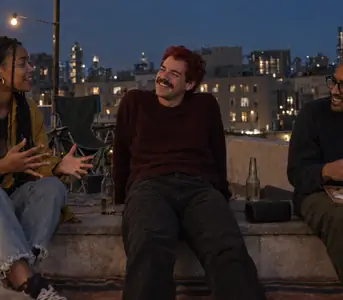
What these three share is a structural position more than a habit. Each one began as an activity that existing institutions refused to recognise, each built its own media, its own contests and its own commercial world, and each one developed the habits of a group that was not being watched. Skate culture and weed grew up in the same unsupervised space.
That world is now being sponsored, which changes things in ways the riders did not ask for. We have written about cannabis sponsorship arriving in American sport, and the pattern there holds here too: smaller properties move first because they have less to lose.
Skateboarding met the drug test in Tokyo
Olympic status came with a testing regime attached, and action sports marijuana culture ran straight into it. Sports Illustrated put the collision plainly in January 2019, writing that the chief stereotype about skateboarders is that they are also stoners, and that this was going to have to change now that skateboarding is an Olympic sport. The occasion was what appeared to be the first suspension of an American skateboarder for THC, six months later cut to three. The rule itself is narrower than the reputation suggests. Cannabinoids sit in section S8 of the World Anti-Doping Agency list, and:
- They are prohibited in competition only. Out-of-competition use is not an anti-doping violation.
- Delta-9 THC is the only cannabinoid for which there is a urinary threshold, and it is set at 150 ng/mL, ten times the number Rebagliati exceeded.
- CBD was exempted in 2019 and is not prohibited at all.
- Since 2021 a positive that the athlete can show came from out-of-competition use unrelated to performance carries three months, reduced to one month after an approved treatment programme.
WADA reviewed the status of cannabis in 2022 after requests from a handful of anti-doping bodies and left it exactly where it was, on the grounds that it meets the Code's criteria on health risk and the spirit of sport. The threshold, raised from 15 to 150 ng/mL in 2013, was set high enough that a modern in-competition positive points to a heavy or very recent user, not to someone who smoked a joint the previous month.
Feeling lost on how to start? Try taking our quiz!
Start a QuizFederal land is the other rulebook
Snowboarding has a second legal problem that has nothing to do with doping, and almost nobody thinks about it until a ranger appears. A 2023 piece in the ski publication SnowBrains points out that cannabis remains federally illegal and nearly 60% of ski resorts in the United States are located on National Forest land, which means consumption at most American ski resorts is still illegal even in states where it is fully legal at street level. The lift line is in Colorado. The mountain is federal.
Snowboarding cannabis culture therefore operates in a peculiar space, entirely normalised socially, entirely tolerated in practice, and technically a federal matter the whole time. The same behaviour carries very different exposure depending on which of the three sports you are doing it in:
- On the mountain, most American resorts operate on National Forest land under a federal permit, so state legalization does not reach the lift line.
- At the skatepark, the rules are state and municipal, which in a legal state usually means public consumption ordinances instead of federal law.
- In the water, the beach is typically state or local land, with the same public consumption rules and rather less chance of anyone noticing.
The unexamined day is a wasted opportunity. Reflect on what you did, what you learned, and how you can improve.
John Dewey
Does it actually help you ride?
The honest answer here is less satisfying than either side wants. A 2021 review in Sports Medicine looking specifically at cannabis and athletic performance concluded that investigations of whole cannabis and THC have generally shown either null or detrimental effects on exercise performance in strength and aerobic activities, while noting that studies rigorous enough to settle the question in athletes are simply missing. A separate 2020 systematic review on chronic cannabis use and exercise found no evidence of an ergogenic or ergolytic effect, from a grand total of four qualifying studies.
Riders broadly agree. Snowboard Magazine asked more than 60 professional snowboarders anonymously in 2023 whether weed is performance enhancing in snowboarding, and the large majority said no, with the most common objection being that it kills motivation instead of that it dulls reflexes.
That objection is about the plant you picked as much as the plant in general. Tropicana Cookies Auto is 60 percent sativa at 27 percent THC and its own page describes it opening with creative energy into a bright, happy headspace, which is a different experience from a heavy indica and a different answer to the motivation question.
So the fair summary runs like this. Nobody has shown cannabis makes you ride better. Nobody has properly shown how much it makes you ride worse, because the studies do not exist. What is not in doubt is that board sports involve reading terrain at speed with consequences measured in bones, and that is a poor setting for guessing.
Growing for people who ride
The seed side of this is more practical than the culture side. It comes down to whether a rider is reaching for something before a session or after one.
The two things people ask us for around active use are opposites, and choosing badly is how a good afternoon turns into a nap in the car park. One is bright and clear headed for daylight hours. The other has real weight and is meant for afterwards, when the point is a body that has taken a beating and not a session still to come.
The second job is what the majority of athlete cannabis use is actually for. The Athlete PEACE survey of more than 1,200 active athletes found that most users reported using it for pain, and most of those reported relief. The real use case is recovery, and it is the one the anti-doping rules were never written to address.
For that end of the day, something like Purple Punch Auto at 80 percent indica is doing a completely different job, and its own page sells it on de-stressing after a long day. Four decades of breeding have taught us that the mistake is almost never potency. It is reaching for the evening plant at ten in the morning.
Still banned, still everywhere
Three sports that grew up outside the institutions are now inside them, and the price of admission was a testing regime built for a different kind of sport. The rules are narrower than their reputation, in competition only, with a threshold ten times what ended Rebagliati's week in 1998, and a one to three month sanction instead of years.
None of that has changed the culture, and none of it was ever going to. The association between board sports and cannabis is sixty years old, it came from surfing before skateboarding existed, and it survived being criminalised, ridiculed and drug tested. What the last decade added is paperwork. Barney's Farm has been developing premium cannabis genetics since the 1980s, with over 40 Cannabis Cup wins. Explore our full seed catalog and find strains bred for every climate and skill level.