The Cannabis Cup: Inside Weed's Most Prestigious Award and How It's Actually Won
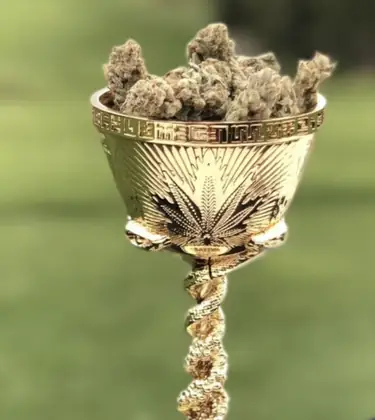
Every serious smoker has seen the words “Cannabis Cup winner” stamped on a jar, a seed pack, or a coffeeshop menu. It is the closest thing weed has to an Oscar. Win one and your strain wears a permanent halo. Ask most people how you actually take one home, though, and the answers get vague fast. Who does the judging? What are they grading? And does the trophy still carry the weight it did in 1995?
Barney’s Farm has collected more than 40 of these trophies since the 1980s, so we have watched the whole thing change from the inside. Here is where the Cannabis Cup came from, how it really gets judged, and what it actually takes to win one.
Where Did the Cannabis Cup Come From?
The High Times Cannabis Cup started in Amsterdam in 1988, founded by High Times editor Steven Hager. The first one was tiny. A few seed companies entered, roughly two dozen people turned up, and Skunk #1 walked away with the original trophy. Hager borrowed the idea from the harvest festivals he had seen in 1970s California, where growers showed up with their best buds and a winner got picked.
Amsterdam was the natural home for it. The city’s tolerance policy let people gather, sample, and score weed in the open without fear of arrest, which was close to impossible anywhere else on the planet back then. For years the Cup ran every November, welded to the coffeeshop scene, and grew from a back-room gathering into a festival pulling in thousands of visitors from around the world.
It picked up traditions along the way, including a Counterculture Hall of Fame that began inducting cannabis figures in 1997. Then in 2010, Dutch police raided the Amsterdam venue, and that same year High Times staged its first Cup on US soil and launched a separate Medical Cannabis Cup in San Francisco. The contest had outgrown the city that built it, and American legalization gave it somewhere new to land.
From there the Cup turned into a touring roadshow. As states flipped to legal recreational or medical markets, High Times planted competitions in Denver, Los Angeles, Detroit, Oklahoma City, and beyond. The Amsterdam original wrapped up its run in 2014 after 27 straight years, and the center of gravity moved firmly to the States.
How Is the Cannabis Cup Actually Judged?
This is the part that has changed the most, and the part most people get wrong.
For most of its history, the Cup ran on expert panels. A rotating crew of around 30 industry insiders, journalists, and known connoisseurs would sample the entries and score them. In the Amsterdam years, a lot of that tasting happened straight off coffeeshop menus, which was every bit as loose as it sounds.
In 2020, with live events shut down, High Times flipped the format and launched the People’s Choice Edition. Instead of a closed panel, the contest started selling Judge Kits to the public. Each kit is a backpack stuffed with blind, numbered samples from every brand in a category, a physical scorecard, and a code for an online judging portal. A single flower kit can hold close to 28 one-gram samples, a full ounce broken into bite-sized tests.
Judges grade each entry on a handful of core traits:
Aesthetics: how the flower or product looks, including trichome coverage and overall bag appeal.
Aroma: the smell, both in the jar and after grinding.
Taste: flavor on the inhale and exhale (for edibles, taste takes the place of burn quality).
Effects: the actual experience, from the first ten minutes to the comedown.
Overall quality: the gut-level verdict that pulls the rest together.
Each trait gets a score on a simple one-to-five scale, with a blank section on the card for written impressions. Brands now treat that pile of consumer feedback as free market research, a read on how real smokers react to a product before it goes wide. Judges usually get around 60 days to work through a kit, enough time to give each sample its own day and a clean palate. By the 2025 New York Cup, High Times had gone fully consumer-judged, scoring entries on aesthetics, aroma, taste, effects, and overall quality. Hundreds of regular smokers now weigh in per category instead of a small panel deciding behind closed doors. More noses on every entry, far less mystery about who picked the winner.
Does Winning a Cannabis Cup Actually Mean Anything?
Yes and no, and any breeder who tells you otherwise is selling something.
A Cup win can still launch a brand overnight. White Widow, Super Silver Haze, and a long list of others became household names off the back of a single trophy. First place moves seeds, fills coffeeshops, and trails a strain around for decades.
The contest has always carried a credibility question, though. Brands pay to enter their products. In the People’s Choice era, the judges pay for the privilege of voting too, buying Judge Kits that can run into the hundreds of dollars before anyone scores a single gram. Critics have argued for years that a competition funded by the people competing in it is easy to tilt, and back in Amsterdam some entrants suspected rivals were buying strong weed off a coffeeshop shelf and entering it as their own.
So read “Cannabis Cup winner” as a real signal with an asterisk attached. It means a strain impressed a room full of people who knew what they were tasting. It does not mean the thing went through a lab. Sharp buyers respect the trophy, check the genetics, and still trust their own nose.
Feeling lost on how to start? Try taking our quiz!
Start a QuizWhich Strains Made History at the Cannabis Cup?
Run down the list of winners and you get a timeline of what cannabis cared about in each era.
White Widow (1995): Green House Seeds took the trophy and reset what the entire scene expected from resin coverage. After that win, every breeder in Amsterdam was chasing trichome density. We broke down that whole messy origin story in our White Widow history piece.
Super Silver Haze (late 1990s): the sativa benchmark that proved a long-flowering haze could win on flavor and energy instead of raw yield.
Super Lemon Haze (2008 and 2009): a back-to-back champion that put loud citrus terpenes on the radar for a whole generation of growers.
Each winner nudged the market in a direction. Resin first, then towering hazes, then bright terpene profiles, then the cookies and gas wave still sitting on most dispensary shelves today.
The unexamined day is a wasted opportunity. Reflect on what you did, what you learned, and how you can improve.
John Dewey
What 40 Cups Taught Barney’s Farm About Winning One
Trophies look good on a shelf. What they actually represent is much harder to fake.
Our founder Derry started Barney’s Farm in the 1980s by chasing landrace genetics across Afghanistan, Nepal, Thailand, and beyond, then stabilizing them over years of patient backcrossing. That groundwork is the part a judge feels in the jar without quite being able to name it. A strain that finishes evenly, smells exactly the way it should, and hits the same on every grow is a strain that scores well, every time.
Two of our Cup winners show the approach in action:
Pineapple Chunk: our Pineapple crossed with a Cheese and Skunk #1, built for a tropical nose sitting on a heavy, earthy base. It claimed an Indica Cup at the High Times Cannabis Cup and still finishes dense and fast at around 55 days.
LSD: an old Skunk variety crossed with Mazar, named for a genuinely trippy, near-psychedelic high. It placed at the High Times Cannabis Cup and stays one of the hardiest, most disease-resistant plants in our catalog.
Four decades of competing taught us one thing above the rest. Chasing whatever flavor is hot this year is a losing game. Locking genetics down so tight that the taste, the structure, and the high arrive the same way for every grower who pops the seed is how you keep winning.
So What Does the Cannabis Cup Really Tell You?
The Cannabis Cup is messier than its own legend, and that is half the fun. It began as a few friends rating weed above an Amsterdam bar and turned into the trophy the entire industry chases. The judging went from a closed panel to a crowd of everyday smokers. The credibility argument will probably never fully settle.
The pull stays the same, though. Put the best weed on earth in front of people who love it, let them argue over which one deserves the cup, and you end up with a snapshot of where the plant is heading next. Forty trophies in, we are still entering. Some habits are worth keeping.
Barney’s Farm has been developing premium cannabis genetics since 1986, with more than 40 Cannabis Cup wins. Explore our full cannabis seed catalog and find the genetics that fit how you actually medicate.