What Is Kief and What Should You Actually Do With It?
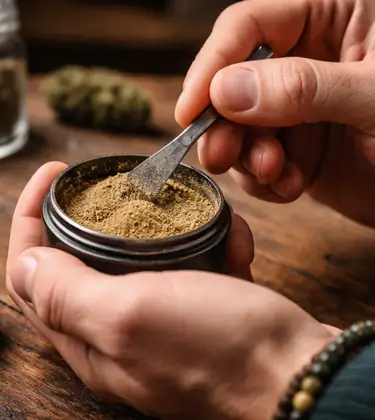
Open the bottom chamber of a well-used grinder and you'll find a pile of fine, golden powder sitting there. Some people scrape it out and waste it. Other people have been collecting it on purpose for centuries. That powder is kief, and it's the most concentrated part of the cannabis plant you can get without any equipment, solvents, or chemistry degree.
If you smoke flower and have never touched your grinder's kief chamber, you've been sitting on free potency.
What is kief in cannabis?
Kief refers to cannabis trichomes that have broken off the plant and collected as a fine powder, usually through shaking or sifting cannabis flowers across a mesh screen. Trichomes are the tiny, mushroom-shaped resin glands that coat every cannabis flower. Under a magnifying glass they look like glass pins with sticky heads. Those heads hold almost all of the cannabinoids and terpenes the plant produces.
When the trichomes detach, through handling, grinding, or shaking, they pile up as a fine powder. That powder is kief. The color ranges from pale blonde to deep amber depending on the strain and how fresh the material is.
Research on cannabinoid biosynthesis in glandular trichomes confirms that these structures are where the plant actually builds THC, CBD, and the dozens of other cannabinoids scientists have isolated. The leaves, stems, and bud tissue barely contribute anything. Trichomes do the work. Kief is just the trichomes without the rest of the plant.
Why is kief so potent?
Flower potency generally sits somewhere between 15% and 25% THC. Kief runs much higher because you've removed all the plant material that doesn't contain cannabinoids in the first place. Once you strip away the leaf, stem, and bract tissue, what remains is almost pure resin.
That concentration has consequences. The U.S. cannabis supply has been trending toward higher potency for decades, with DEA-seized samples climbing from about 4% THC in 1995 to around 12% by 2014. Concentrates pushed that curve even further. When CU Boulder researchers studied real-world users, they found concentrate users more than doubled their THC blood levels compared with flower smokers, even though self-reported intoxication stayed roughly similar thanks to tolerance.
What this means for you: a pinch of kief delivers more THC than the same pinch of ground bud. A lot more. New users, light smokers, and anyone returning to cannabis after a break should treat kief like the concentrate it is. Start tiny.
Where does kief come from?
The word kief comes from the Arabic kif, meaning pleasure or joy. Hashish-making traditions built around sifted trichomes have been documented for centuries across Morocco, Afghanistan, Lebanon, and the Hindu Kush regions of Pakistan. Farmers would dry their plants, beat them gently over fine screens, and press the collected dust into blocks of hash.
Morocco's Rif Mountains and Afghanistan's Hindu Kush remain the two most famous historical centers of dry-sift hash production. Traveling Westerners in the 1960s carried the technique home, which eventually helped shape the North American concentrate market. The grinder with a kief catcher sitting in your pocket is a miniaturized version of the same screen-and-sift logic people have used for hundreds of years.
Feeling lost on how to start? Try taking our quiz!
Start a QuizHow to collect kief at home
You've got options, and most of them are cheap.
Use a three or four-piece grinder. The bottom chamber beneath the mesh screen catches kief every time you grind. The more you grind, the more piles up. A few weeks of regular smoking will produce enough kief to top several bowls.
Drop a coin in the middle chamber. A clean dime or a small ball bearing knocks trichomes loose as the grinder rattles. More trichomes fall through the mesh, more kief in the bottom. Freezing the grinder for a few minutes before grinding also helps. Cold trichomes get brittle and detach faster.
Use a sifter box or pollen box. If you want serious quantity, these wooden boxes have a mesh screen stretched across the middle. You drop your flower in, shake, and let gravity separate the trichomes into a collection tray underneath.
Go full dry sift with silkscreens. Professional hash makers layer mesh screens at different micron sizes, usually between 75 and 125 microns, to filter out plant matter in stages. Home kits are available if you want to produce larger batches of clean kief without solvents.
Pick whichever matches your volume. A grinder will feed a casual smoker fine. A sifter box makes sense if you've got a real stash and care about the output.
The unexamined day is a wasted opportunity. Reflect on what you did, what you learned, and how you can improve.
John Dewey
What to do with kief
Now the fun part. Once you've collected kief, you have several easy options.
Crown a bowl. Pack your bowl normally, then sprinkle a pinch of kief across the top. Light one corner instead of torching the whole thing. This gets you multiple hits at rising potency as you work across the bowl.
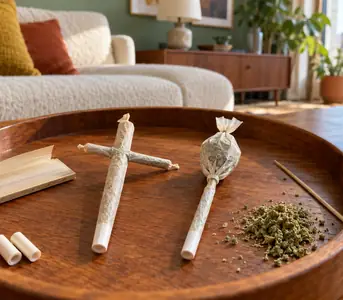
Mix it into a joint. Spread your ground flower across the paper, run a thin line of kief down the middle, and roll as usual. Consistent potency from the first pull to the last.
Twax the outside. Dampen the outside of a rolled joint, then roll it through kief. This coats the paper in a layer of trichomes that burns slower and hits harder. Works for blunts too.
Press it into hash. Wrap kief in parchment paper and apply heat and pressure. A hair straightener works for small amounts. The trichomes melt together into a solid block of hashish, the oldest cannabis concentrate humans have ever made.
Cook with it. Kief can be decarboxylated in the oven and stirred into butter, coconut oil, or directly into recipes. Because it's already concentrated, a small amount goes a long way. Dose carefully and wait at least two hours before eating more.
Dust your morning drink. Some regulars stir a small pinch into hot tea or coffee. The heat decarboxylates the THCA while you drink. A micro-dose for people who like a smoother, slower onset.
Which strains produce the most kief?
This is where breeding matters. Trichome density is heavily genetic, and some varieties produce noticeably more resin than others.
At Barney's Farm, resin production has been a breeding priority since the company's founding in Amsterdam in 1986. Three decades of selection work and more than 40 Cannabis Cup wins have pushed trichome expression in specific directions, producing strains that frost up so heavily the buds look dipped in sugar.
Pineapple Chunk is one of Barney's Farm's most famously resinous strains. A cross of Skunk, Cheese, and Pineapple, it produces dense, compact flowers caked in trichomes. Grind a bowl's worth and your kief catcher fills visibly faster than with leaner strains.
Critical Kush is the other heavy hitter for kief collectors. This indica-dominant cross throws out thick, sticky buds with glandular trichomes packed across every bract. The resin profile leans heavy and sedating, which translates to kief that delivers a slow, body-forward effect.
Genetics aren't the only factor. Growing conditions, harvest timing, and curing all affect final trichome density. But starting with resin-heavy seeds gives you the upper hand before the plant even flowers.
How to store kief so it stays fresh
Kief degrades the same way flower does. Oxygen, heat, light, and moisture all break down cannabinoids and terpenes over time.
Store it in an airtight glass container. Mason jars work well. Keep it in a cool, dark place, a drawer or cabinet away from windows and heat sources. Skip plastic bags. They generate static that clings to the trichomes and makes handling a nightmare.
Don't touch kief with bare fingers. Skin oils degrade trichome resin and lower the quality. Use a small scraper, a dab tool, or the back of a clean spoon.
Stored properly, kief keeps potency and flavor for up to a year. Past that, expect it to lose aromatic top notes and some cannabinoid strength, even if it still smokes fine.
The bottom line
Kief is free concentrate. Every time you grind flower and smoke it, you're leaving behind the most potent part of the plant unless you've got a grinder set up to catch it. Once you start collecting, you unlock a handful of easy, cheap ways to level up a bowl, push a joint harder, or press your own hash from material you already paid for.
Start with a grinder that has a kief catcher, grow or buy flower that throws serious resin, and go slow the first time you top a bowl. That powdery layer at the bottom of your grinder is worth more than you've probably realized.
Barney's Farm has been developing premium cannabis genetics since the 1980s, with over 40 Cannabis Cup wins. Explore our full cannabis seed catalog and find strains bred for every climate and skill level.