

What Happens If a Dog Eats Weed? Symptoms, Risks, and What to Do Next
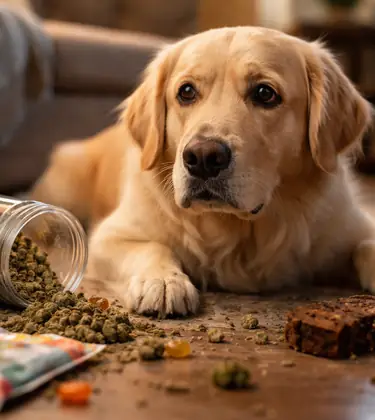
If you're a cannabis enthusiast and a dog owner, this question probably lives in the back of your mind. Maybe your pup already got into your stash and you're panic-scrolling right now. Either way, you're in the right place. Marijuana toxicity in dogs is real, and it's on the rise. But the good news is that most cases are manageable, rarely fatal, and entirely preventable once you know the basics.
Here's what actually happens when your dog eats weed, what symptoms to watch for, and exactly what to do about it.
Can Dogs Get High from Weed?
Short answer: yes, but they don't experience it the way you do. When a dog ingests THC, the psychoactive compound in cannabis, they're not kicking back and enjoying the vibes. They're confused, disoriented, and often terrified. Dogs have significantly more CB1 receptors in their brains than humans do, especially concentrated in the cerebellum, brainstem, and medulla oblongata. The endocannabinoid system is present in all mammals, but the canine version is wired differently. That higher density of receptors means THC hits dogs harder, faster, and longer.
At Barney's Farm, we've spent over 30 years breeding and studying cannabis genetics. We know exactly how potent modern strains can be. THC concentrations in today's flower are dramatically higher than what existed a few decades ago, and concentrates and edibles push those numbers even further. What feels like a mild dose for a human can overwhelm a dog's nervous system. Their bodies metabolize THC more slowly, which means the effects build up and linger. A "high" for your dog is more like a bad trip that can last up to 72 hours.
What Are the Symptoms of Marijuana Toxicity in Dogs?
Symptoms usually show up within 30 to 90 minutes after ingestion and tend to get progressively worse before leveling off. Here's what to look for:
Loss of coordination and balance. This is the most common sign. Your dog may stumble, sway, or walk like they've had a few too many. A 2022 survey of North American veterinarians published in PLoS ONE found that ataxia (that drunken walk) was reported by the vast majority of vets treating cannabis toxicosis cases.
Urinary incontinence. This one surprises a lot of people. Dogs under the influence of THC frequently lose bladder control and dribble urine without realizing it. That same PLoS ONE study flagged urinary incontinence as the single most commonly reported symptom.
Lethargy and disorientation. Your normally bouncy dog might become unresponsive, glassy-eyed, or unable to follow basic commands. They may flinch at sudden movements or sounds.
Dilated pupils and sensitivity to stimuli. Bright lights, loud noises, and sudden touches can cause exaggerated startle responses. This heightened sensitivity, called hyperesthesia, makes the experience genuinely frightening for your pet.
Slow heart rate and low body temperature. THC can suppress cardiovascular function. A normal dog temperature runs between 100 and 102.5°F. If it drops below 99°F, that's a red flag.
Vomiting, tremors, and in rare cases, seizures. These are less common but indicate a more severe reaction. Seizures are an emergency.
How Dangerous Is Weed for Dogs?
In most cases, marijuana toxicity in dogs is uncomfortable but not life-threatening. The vast majority of dogs recover fully within 24 to 72 hours with supportive care. Fatal cases are extremely rare and typically involve additional toxic ingredients, not just THC alone.
That said, the scale of the problem is growing fast. The ASPCA Animal Poison Control Center reported over 451,000 calls related to toxic exposures in 2024, a 4% increase from the previous year. Recreational drugs, including marijuana, have held a spot on their annual top 10 pet toxins list since 2022.
The American Veterinary Medical Association has reported that vets saw roughly 300% more marijuana-related cases over a five-year span through 2022. The pattern is clear: as legalization expands and edibles become more mainstream, dogs are getting into cannabis products more often.
The real danger often comes from what's in the edible, not just the THC. Chocolate, xylitol (an artificial sweetener), raisins, and high-fat butters can each cause their own serious toxicity on top of the cannabis. A dog that eats a pot brownie is dealing with two emergencies at once. That combination is what sends most cases from manageable to critical.
Feeling lost on how to start? Try taking our quiz!
Start a QuizWhat Should You Do If Your Dog Ate Weed?
Stay calm and assess the situation. Try to figure out what your dog ate, roughly how much, and when. If it was an edible, check the ingredient list or packaging for chocolate, xylitol, or other additives. That information is incredibly useful for your vet.
Call your veterinarian or an animal poison control hotline. The ASPCA Animal Poison Control Center can be reached at (888) 426-4435. Pet Poison Helpline is available at (855) 764-7661. Consultation fees may apply, but these services are staffed around the clock by veterinary toxicologists who deal with exactly this scenario.
Do not try to make your dog vomit. This is critical. THC can impair your dog's swallowing reflex, and inducing vomiting at home creates a serious aspiration risk. According to Cornell University's College of Veterinary Medicine, dogs already showing symptoms should not have vomiting induced due to the risk of aspiration. Leave that decision to a professional.
Create a safe, quiet environment. Dim the lights, reduce noise, and keep your dog away from stairs, furniture edges, and other pets. Their coordination is shot and their senses are overwhelmed. A cozy crate or a calm room with blankets works well.
Monitor and don't be embarrassed. Your vet is not going to report you. They have zero obligation to involve law enforcement and genuinely do not care about your stash. They care about your dog. Being upfront about what happened allows them to skip unnecessary (and expensive) diagnostic tests and go straight to the right treatment.
The unexamined day is a wasted opportunity. Reflect on what you did, what you learned, and how you can improve.
John Dewey
Is Weed Toxic to Dogs Long-Term?
For the vast majority of cases, no. Dogs that receive appropriate care typically recover completely with no lasting effects. There is no established lethal dose of THC in dogs, and deaths directly attributable to cannabis alone are exceptionally uncommon in veterinary literature.
Where things get murkier is with repeated exposure or extremely high doses. Dogs that have underlying health conditions, particularly cardiac or neurological issues, face higher risk from any toxin, including THC. Seizures, while rare, can potentially cause lasting neurological damage if they're prolonged or go untreated.
And here's something worth thinking about from a breeding and genetics perspective. At Barney's Farm, our 40+ Cannabis Cup wins reflect decades of work pushing cannabinoid profiles to new levels of potency and complexity. Modern genetics produce flower and concentrates with THC levels that would have been unimaginable 20 years ago. That's fantastic for consumers who understand dosing and tolerance. But for a 15-pound terrier who just ate a 100mg gummy off the coffee table? The math gets ugly fast. Potency matters, and responsible storage is the other side of responsible consumption.
How to Keep Your Stash Safe from Pets
Prevention is everything here, and if you're a cannabis enthusiast with dogs, you probably already think about this more than most people realize. A few practical habits go a long way:
Store everything in sealed, elevated containers. Dogs have roughly 300 million olfactory receptors compared to our six million. They can smell your edibles through a bag, a drawer, and possibly a wall. Airtight containers in a high cabinet or a locked box are your best bet.
Treat edibles like medication. Never leave gummies, baked goods, or tinctures on a counter or nightstand. If you wouldn't leave a bottle of prescription pills out around a toddler, don't leave your edibles out around your dog.
Watch what hits the ground. Roach ends, shake, loose flower, crumbs from an edible. Dogs are scavengers by nature and they work fast. Clean up after sessions and be mindful of what falls.
Brief your guests. House parties, cookouts, 4/20 gatherings. If people are bringing cannabis into your home, let them know the deal. Bags, pockets, and purses left at dog-nose level are fair game in your pet's mind.
Be careful on walks. Especially in urban areas and near parks. Discarded joints, edible wrappers, and even human waste containing THC metabolites have all been documented as sources of accidental canine exposure. Keep an eye on what your dog sniffs and picks up.
Barney's Farm has been developing premium cannabis genetics since the 1980s, with over 40 Cannabis Cup wins. Explore our full cannabis seed catalog and find strains bred for every climate and skill level.