
Trump's Cannabis Rescheduling Executive Order in 2026: What Actually Changes for Growers?
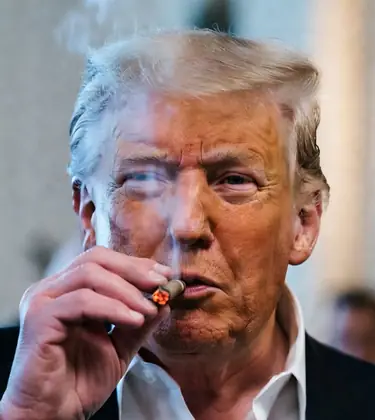
On December 18, 2025, President Trump signed Executive Order 14370, directing the Attorney General to fast-track the rescheduling of marijuana from Schedule I to Schedule III under the Controlled Substances Act. Cannabis stocks jumped. Headlines screamed about a new era. Social media went wild.
But here at Barney's Farm, we've been growing and breeding long enough to know the difference between hype and reality. So let's break down what this executive order actually does, what it doesn't do, and what growers — from small home operations to licensed commercial cultivators — should actually be paying attention to right now.
What the Executive Order Says (and What It Doesn't)
The executive order instructs the Attorney General to "take all necessary steps to complete the rulemaking process" for moving cannabis to Schedule III. That's bureaucratic language for: speed it up. The rescheduling process was already underway since the Biden administration kicked it off in May 2024, but it stalled hard. The DEA hearing got canceled in January 2025, the administrative law judge overseeing the case retired, and the whole thing sat frozen.
Trump's order gives it a push. But a push is not a finish line.
The executive order does not reschedule cannabis. The president doesn't have the authority to unilaterally move a drug between schedules. That requires a formal rulemaking process through the DEA, complete with administrative hearings, public comments, and a final published rule. Until that final rule lands, cannabis remains Schedule I under federal law.
Some legal experts have pointed to a potential shortcut under Section 811 of the Controlled Substances Act, which allows the Attorney General to schedule or reschedule substances to meet international treaty obligations without the usual drawn-out process. This route was used in 2018 to schedule the CBD drug Epidiolex into Schedule V. Whether Attorney General Pam Bondi would take that path remains to be seen.
Schedule III Does Not Mean Legal
This needs to be said clearly because confusion runs rampant every time rescheduling makes headlines. Moving cannabis to Schedule III does not legalize it. It does not authorize interstate commerce. It does not create a recreational free-for-all.
Schedule III substances include things like ketamine, anabolic steroids, and certain codeine formulations. They are recognized as having accepted medical use and lower abuse potential, but they are still tightly regulated. Under the Controlled Substances Act, even at Schedule III, cultivators, producers, processors, and dispensers would need DEA registrations, inventory tracking, transaction records, theft reporting, and proper labeling. Dispensing would technically require a prescription from a DEA-registered practitioner.
For recreational markets, this changes almost nothing on paper. State-level programs would continue operating as they do now. The real action is elsewhere.
The Money Part: 280E Tax Relief
If you're a grower running a commercial operation, this is the headline that matters most.
For decades, Section 280E of the Internal Revenue Code has been strangling cannabis businesses. It prohibits anyone selling a Schedule I or Schedule II substance from deducting ordinary business expenses. That means no deductions for rent, utilities, payroll, marketing, insurance, legal fees, or equipment. The only thing cannabis companies can subtract is the raw cost of goods sold.
The result has been effective tax rates that sometimes exceed 70% for retailers. Cultivators and manufacturers fare slightly better because more of their costs qualify as COGS, but 280E has still been a brutal financial drag across the entire supply chain.
If cannabis moves to Schedule III, 280E no longer applies. Cannabis businesses would finally be able to deduct their expenses like any other legitimate business. For growers specifically, that means deducting facility costs, equipment depreciation, energy bills, labor beyond direct cultivation staff, research and development, and professional services. That freed-up cash flow could be reinvested into better genetics, upgraded grow environments, expanded capacity, or simply surviving in an industry where margins have been paper-thin.
Feeling lost on how to start? Try taking our quiz!
Start a QuizWhat This Means for Cannabis Research
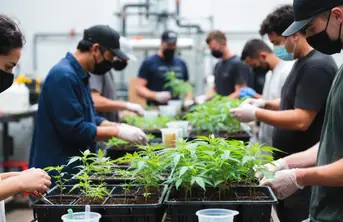
Schedule I has made cannabis research absurdly difficult. Scientists had to navigate a multi-layered DEA approval process, use cannabis only from a small number of federally authorized suppliers, and deal with institutional anxiety about risking federal funding. The result: the plant most of America already uses medicinally has been studied far less rigorously than it deserves.
Schedule III classification would remove Schedule I-specific research barriers. Researchers could operate under standard DEA registration instead of jumping through extra hoops. They could access cannabis through normal procurement channels rather than being locked into a handful of government-approved sources.
The FDA found credible scientific support for cannabis in treating pain, anorexia related to medical conditions, and chemotherapy-induced nausea. Rescheduling would allow the research community to build on those findings properly, with larger studies, better-quality material, and fewer bureaucratic roadblocks.
For breeders and cultivators, this matters. Better research means better understanding of cannabinoid and terpene interactions, clearer data on what specific profiles do in the human body, and stronger scientific backing for the medical strains we develop. At Barney's Farm, we've been investing in lab-tested genetics and cannabinoid profiling for years — because we've always believed the science would eventually catch up to what growers and patients already know.
The unexamined day is a wasted opportunity. Reflect on what you did, what you learned, and how you can improve.
John Dewey
The Hemp Curveball
Here's where things get complicated. While the executive order pushes cannabis toward less restriction, Congress recently went the opposite direction on hemp.
The Fiscal Year 2026 Agriculture Appropriations Act, signed in November 2025, changed the definition of hemp from products with less than 0.3% delta-9 THC to products based on total THC concentration. It also introduced a cap of just 0.4 milligrams of total THC per container. If that definition takes effect as scheduled in November 2026, a massive portion of the current hemp-derived cannabinoid market — estimated at around $30 billion — could suddenly become illegal under federal law.
The executive order signals Trump's support for revising that hemp definition to preserve access to full-spectrum CBD products while restricting genuinely risky ones. But Congress just tightened the definition months ago, so whether there's appetite to revisit it already is an open question.
For growers working with CBD-rich and low-THC genetics, this creates genuine uncertainty. Pay attention to how the hemp definition shakes out over the next year. It could reshape which products are viable and which aren't.
What Growers Should Actually Do Right Now
Model both scenarios. Build your financial projections with and without 280E. If you only plan for one outcome and the other hits, you're caught flat-footed. The timeline for rescheduling is still unclear, and even optimistic estimates put a final rule somewhere in 2026 — with legal challenges likely to follow.
Tighten your compliance. Rescheduling to Schedule III will likely bring FDA-style oversight, tighter Good Manufacturing Practice (GMP) expectations, and much more scrutiny of documentation and processes. Handwritten logs and scattered spreadsheets won't cut it. If you're a cultivator, start building repeatable, documented workflows now. Sensor-driven environmental monitoring, automated climate control, batch tracking — these aren't luxuries anymore. They're the cost of entry for what's coming.
Invest in genetics and quality. As the market matures and federal restrictions loosen, the bar for product quality only goes up. Consumers are already becoming more specific about strains, cannabinoid profiles, and terpene content. At Barney's Farm, we've spent over 30 years collecting landrace genetics from Afghanistan, Pakistan, India, Nepal, Thailand, and beyond. Our research lab continuously optimizes cannabinoid and terpene profiles through targeted selection and crossbreeding, with every batch lab-tested for quality and potency. That kind of genetic foundation is what separates growers who thrive in a more regulated environment from those who get squeezed out.
Watch the banking situation. Schedule III could improve access to financial services for cannabis businesses, but it won't solve the banking problem overnight. The SAFER Banking Act still hasn't passed. Most financial institutions still refuse to serve cannabis operations. Build redundancy into your banking relationships and keep your compliance documentation airtight.
The Skeptic's Perspective
Not everyone is popping champagne. In a piece for Cannabis Business Times, legal experts argue that the executive order is window dressing. They point out that the DEA has historically been reluctant to loosen its grip on cannabis, that Attorney General Bondi was against marijuana legalization during her time as Florida's attorney general, and that the Trump DOJ quietly reversed Biden-era policies on marijuana possession prosecution in late 2025.
That contradiction — an executive order pushing rescheduling while the DOJ ramps up enforcement — is worth sitting with. Progress in cannabis policy has never been a straight line. It's been a long, strange trip of two steps forward and one step back. Sometimes two back.
The Bigger Picture
Cannabis has been locked in Schedule I since 1970. That's over 55 years of the federal government officially claiming a plant used medicinally by millions of people has "no accepted medical use." The executive order, whatever its limitations, cracks that position open.
For growers, the practical impact depends entirely on what happens next in the rulemaking process. The smart play is to prepare for change without betting on a specific timeline. Get your operations tighter. Get your documentation ready for a more regulated future. Invest in the genetics and cultivation practices that will hold up under scrutiny.
At Barney's Farm, we've been doing exactly that since the 1980s, when Derry was crossbreeding landrace strains in the Himalayas long before anyone was talking about executive orders or DEA rulemaking. The tools and the regulations change. The fundamentals of good growing don't. Strong genetics, disciplined processes, and a refusal to cut corners — that's what carries you through every shift in policy and every new law.
Stay informed. Stay ready. And keep growing.
Barney's Farm has been developing premium cannabis genetics since the 1980s, with over 40 Cannabis Cup wins. Explore our full seed catalog and find strains bred for every climate and skill level.