
The Lawsuits Trying to Block Cannabis Rescheduling in 2026
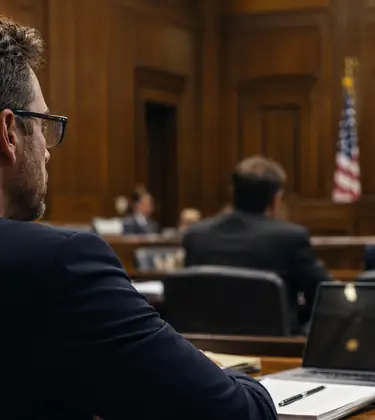
Right now, in a courtroom in Arlington, Virginia, the federal government is standing up and arguing that cannabis has accepted medical use in the United States. Sitting across from it are seven parties who think that is a disaster. Not one of them speaks for a grower, a patient, or a consumer.
Across the Potomac, nine petitioners are asking the D.C. Circuit Court of Appeals to erase the biggest shift in federal cannabis policy in fifty years.
That is where rescheduling actually sits in July 2026. Not in a press release. In court.
What did the April 2026 rescheduling order actually do?
On April 23, 2026, Acting Attorney General Todd Blanche signed an order that immediately moved two categories of cannabis from Schedule I to Schedule III: cannabis inside FDA-approved drug products, and cannabis covered by a state medical marijuana license.
Everything else stayed exactly where it was. Adult-use cannabis, bulk flower, extracts, anything outside a state medical program. All still Schedule I, still filed alongside heroin. The tax penalty of Section 280E still bites the recreational market, which is why the stocks sold off instead of ripping. We broke that down in why cannabis stocks crashed in 2026.
The order also skipped the usual rulemaking grind. Blanche leaned on a clause in the Controlled Substances Act that lets the Attorney General schedule a substance by order to satisfy US treaty obligations, without the fact-finding and public comment process that normally applies.
That shortcut is the whole ballgame. It is why the order landed in April instead of 2028. It is also the crack that nine lawyers are now trying to pry open.
Who is suing over cannabis rescheduling?
Three separate petitions, now consolidated into a single case in the D.C. Circuit.
Smart Approaches to Marijuana and the drug testers. SAM, the best-funded prohibitionist outfit in the country, filed on May 4 alongside the National Drug and Alcohol Screening Association, the trade body for workplace drug testing. Their claim: Blanche exceeded his authority and dodged the rulemaking the law demands.
Three Republican attorneys general. On May 22, Nebraska, Indiana and Louisiana filed their own petition calling the order arbitrary, capricious and procedurally improper. Nebraska Attorney General Mike Hilgers has argued that moving cannabis to Schedule III makes it easier to push for recreational legalization, the exact thing he has spent two years fighting at home after Nebraskans approved medical cannabis at the ballot box. Louisiana later withdrew. Indiana, one of the few states with no medical program at all, stayed in.
A pharma company and an addiction clinic. On May 28, MMJ International Holdings, a would-be cannabinoid drug developer, filed with New Directions Addiction Recovery Services, a group called Cannabis Industry Victims Educating Litigators, and two physicians.
Nine petitioners. One consolidated case. One objective: vacate the order and shove medical cannabis back into Schedule I.
Why does the drug testing industry care this much?
Here is the part that went quiet fast.
In June, NDASA and MMJ asked the court to freeze the April order while the case runs. To win a freeze, you have to prove irreparable harm. Which meant spelling out, under oath, exactly what they stood to lose.
NDASA's executive director told the court that marijuana-positive results are the single biggest revenue source at the medical review offices that interpret drug tests, and projected that revenue could drop by at least 35 percent within a year if the order survives. The Justice Department's July response was blunt about it: these are pocketbook interests, not the sort of public-health injury the Controlled Substances Act was written to weigh.
For a campaign that spent a year insisting rescheduling was bought and paid for by cannabis money, that is an awkward document to file under your own letterhead.
Feeling lost on how to start? Try taking our quiz!
Start a QuizWhy is the DEA hearing stacked with opponents?
Running in parallel is the administrative hearing that decides whether the rest of cannabis, adult-use included, follows medical into Schedule III. It opened June 29 at DEA headquarters in Arlington and has to finish by July 15.
The agency selected seven outside participants, and every single one of them opposes rescheduling: the drug-testing association, the Tennessee Bureau of Investigation, SAM, the states of Nebraska, Idaho, Indiana and Louisiana, an impaired-driving victims group, and two individual medical professionals.
NORML applied and was rejected. The Drug Policy Alliance applied and was rejected. The logic: you cannot be adversely affected by a rule you support, so you do not qualify as an interested person.
That leaves the DEA as the only voice in the room arguing for reform, cross-examined for two weeks by people who want it dead. Read it one way and the government is throwing the match. Read it another and the government is building a record so one-sided that any final rule sails through appeal. Either way, nobody outside can watch. The judge declined to livestream a proceeding of obvious national interest.
The unexamined day is a wasted opportunity. Reflect on what you did, what you learned, and how you can improve.
John Dewey
When will cannabis rescheduling actually be decided?
Slower than anyone wants. The judge writes a recommended decision. The DEA Administrator then issues a final order, and only that final order opens the door to judicial review. Everything before it, the testimony, the evidentiary rulings, the fights over witnesses, is groundwork for the appeal that follows.
Meanwhile the D.C. Circuit is expected to rule on the freeze request in the coming weeks. The merits will take considerably longer.
The honest forecast: medical cannabis stays in Schedule III through 2026 unless the court does something dramatic. Broader rescheduling rides on a hearing record assembled almost entirely by its opponents. Neither fight finishes this year.
What forty years of legal whiplash taught us
Barney's Farm has been breeding cannabis since long before any of these acronyms existed. In the early 1980s, Derry was tracking landrace genetics through Afghanistan and up into the Himalayas, hauling seed stock back to Amsterdam while every government along that route considered the whole operation a crime.
We have watched the legal weather turn more times than we can count. Coffeeshops opened and got squeezed. Countries decriminalised, then reversed. Cups were handed out in rooms that authorities later raided. Through all of it, the plant kept doing the one thing it has always done, which is grow.
Four decades in, the lesson is simple. Policy is temporary. Genetics are permanent. A stable seed line has no idea what schedule it has been assigned. It flowers on its own timeline, in your tent, regardless of what a judge in Arlington decides this week. That is the part nobody can litigate away, and it is the reason we keep our focus on the seed rather than the statute.
What does this mean if you grow at home?
Cut through the legal noise and very little has changed in your grow room. Here is what actually matters.
Rescheduling was never legalization. Schedule III is still a controlled substance. Ketamine and anabolic steroids live there. Nobody is handing out federal permission slips.
Your home grow rights come from your state, not the DEA. Nothing in the April order or any of these lawsuits changes what you are allowed to run in your closet. Check the plant limits where you live, because that is the law that will actually knock on your door.
The federal date that matters to growers is not in the D.C. Circuit. It is November 2026, when the revised hemp definition kicks in and high-THC seeds change legal status. We covered what that does to buying seeds online.
If you are choosing genetics while the lawyers argue, pick plants that reward patience rather than luck. Critical Kush is our Critical Mass and OG Kush cross, a pure indica running to 26 percent THC, finishing indoors in 55 to 60 days and shrugging off mould and mildew in a way that forgives a first-timer's mistakes. It is the one people reach for when they want heavy physical relaxation and a proper knockout stone.
For something with a longer memory, Acapulco Gold pulls straight from Central American heritage stock, a 70 percent sativa cup winner that also hits 26 percent, with fat colas flecked reddish-brown and a fruit cocktail flavour that hangs around. It is a piece of cannabis history that predates the Controlled Substances Act, still growing, still winning, still entirely indifferent to what the Attorney General signed in April.
The takeaway
The people trying to block rescheduling are not a fringe. They are state attorneys general, a drug-testing lobby that has quantified its own losses, and a prohibitionist group with real money behind it. Their case is procedural, and procedural cases sometimes win.
But the direction of travel is not subtle. The DEA is now the party in the courtroom arguing that cannabis works as medicine. That sentence would have been unthinkable five years ago, and it is on the record no matter how the judges rule.
Watch the D.C. Circuit. Watch the final order when it lands. And in the meantime, plant something. The law will catch up eventually. Your harvest will not wait for it.
Barney’s Farm has been developing premium cannabis genetics since 1986, with more than 40 Cannabis Cup wins. Explore our full cannabis seed catalog and find the genetics that fit how you actually medicate.