Home Grow Laws by State: How Many Plants Can You Legally Grow in 2026?
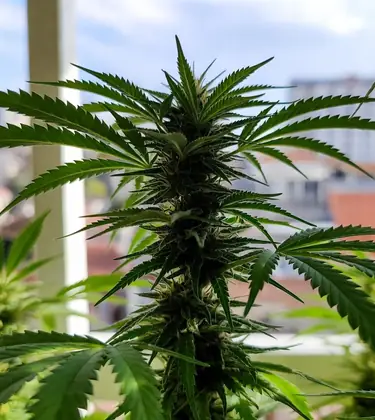
You want to grow your own weed. Maybe you're tired of paying dispensary prices. Maybe you saw a product recall and thought, "I'd rather know exactly what went into my plant." Maybe you just like gardening and want to add something with a little more personality than tomatoes.
Whatever the reason, the first question is always the same: how many cannabis plants can I grow at home, and will I get in trouble for it?
The answer depends entirely on your zip code.
The Patchwork: Where Home Growing Is Legal
As of early 2026, around 24 states plus Washington, D.C. allow some form of home cannabis cultivation. That covers recreational, medical, or both. The rest? You're either stuck buying from a dispensary or stuck with prohibition entirely.
The typical setup across legal states looks something like this: six plants per adult, with limits on how many can be flowering at once. Most states cap a household at 12 plants, regardless of how many adults live there. Your plants need to be locked away, out of public view, and out of reach of minors. Sounds reasonable enough. But the details get weird fast.
State-by-State Breakdown: The Numbers That Matter
California lets adults 21 and older grow up to six plants at home. No limit on how many can be mature versus immature. But your city or county might have its own rules, including permit requirements or indoor-only mandates. Always check local ordinances.
Colorado allows six plants per resident over 21, with a maximum of three flowering at any time. Denver caps households at 12 plants total, even if you've got a house full of adults. The state government's own website reminds you that counties and municipalities can pass stricter laws, so don't assume the state limit is the final word.
Michigan is one of the more generous states: 12 plants per residence for recreational growers. That's a real operation if you know what you're doing.
New York allows three mature and three immature plants per person, with a household cap. The home grow rules went live relatively recently and are still settling in.
Oregon permits four plants per household for recreational use. Medical patients can grow more with a valid card.
Minnesota gives adults up to eight plants at home, though only four can be mature at any time. Go over eight but stay under 17, and you're looking at civil penalties rather than criminal charges.
Missouri takes a different approach. You need to buy an annual grow card for $150. That card lets you grow six flowering plants, six non-flowering plants over 14 inches, and six clones or seedlings under 14 inches. All in a single enclosed, locked facility.
Nevada has one of the strangest rules on the books. You can only grow at home if you live more than 25 miles from an operating recreational dispensary. If there's a shop nearby, you're out of luck.
Connecticut, Maine, Vermont, Montana, Alaska, Arizona, New Mexico, Virginia, Rhode Island, Ohio all have their own variations on the theme. Most hover around six plants per person, 12 per household. The specifics around maturity limits, indoor versus outdoor, and medical patient exceptions vary.
The Holdouts: Where You Still Can't Grow
Several states have fully legalized recreational cannabis purchases but still ban home growing. Washington state is the prime example. Voters legalized recreational cannabis back in 2012. Over a decade later, growing a single plant at home is still illegal. Lawmakers have tried to change this 11 years running. A January 2026 bill would allow six plants per adult, but law enforcement groups and cities keep pushing back, citing concerns about children and policing burdens. Supporters point out that the current ban falls disproportionately on people of color. The data backs this up. Between 2013 and 2019, Black residents in Washington were five times more likely to be arrested for home growing than white residents.
New Jersey, Delaware, and Illinois (for recreational users) also prohibit home cultivation. Illinois does allow medical patients to grow up to five plants, but recreational consumers face fines if they try. The gap between "you can buy it" and "you can grow it" remains a sore point for advocates who believe home cultivation is a basic right.
Feeling lost on how to start? Try taking our quiz!
Start a QuizThe Racial Disparity Problem
Cannabis prohibition has never been enforced equally. A peer-reviewed study published in Social Science & Medicine analyzed FBI arrest data from 2000 to 2019 and found that Black adults were roughly four times more likely than white adults to be arrested for cannabis possession during the baseline period. Decriminalization helped. States that decriminalized saw cannabis arrest rates drop by over 70% for adults, and racial disparities decreased by about 17%. But among youth, the disparity persisted even after policy changes. Home grow legalization matters here because it removes one more avenue for selective enforcement.
The unexamined day is a wasted opportunity. Reflect on what you did, what you learned, and how you can improve.
John Dewey
The New Federal Wrench: Section 781 and the Seed Question
Just when things seemed to be moving forward, federal law threw a curveball. In November 2025, buried inside a government funding bill, Congress quietly changed the legal definition of hemp. The revised language means that cannabis seeds from high-THC genetics are no longer considered legal hemp products. Under the previous framework, seeds were treated as hemp because they contain virtually no THC on their own. Now, if a seed would grow into a plant exceeding 0.3% total THC, it's classified as a controlled substance.
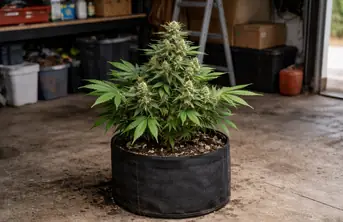
This goes into effect November 12, 2026. High Times reported that the change could reshape the entire home cultivation ecosystem, since every grow starts with access to genetics. State-level home grow rights remain in place, but the federal shift targets the supply chain. For growers in legal states, buying seeds from licensed in-state sources should still be fine. The real impact hits interstate shipping and the online seed market that operated freely under the 2018 Farm Bill's loopholes.
Why People Want to Grow Their Own (and Why It Keeps Growing)
A 2025 Harris Poll survey of over 2,000 American adults found that 64% believe all Americans should have the right to grow cannabis at home. Among cannabis consumers, 62% said they'd prefer to cultivate their own plants rather than buy. The top reasons: cost, quality control, and trust. Over half of the respondents believed that store-bought cannabis contains pesticides. Nearly a third of consumers who followed cannabis news said coverage of product recalls and contamination made them more interested in growing at home.
These numbers track with something Barney's Farm has observed over nearly four decades in the seed business. The company, founded in 1986 by Derry, who spent years in the Himalayas collecting and stabilizing landrace genetics from Afghanistan, Pakistan, India, Nepal, and beyond, has watched the home growing market shift from a niche subculture to a broad, global movement. Today, Barney's Farm operates one of the most awarded breeding programs in the industry, with over 40 Cannabis Cup wins and a catalog spanning high-THC powerhouses, autoflowers built for first-time growers, and CBD-rich varieties.
Growing Smart: What Every Home Grower Should Know
Knowing your legal plant count is step one. Step two is understanding that the rules go beyond a number.
Almost every state requires your plants to be grown in an enclosed, locked space that can't be seen from outside. If you have minors in the house, the lockdown requirements typically get stricter. Some states require separate, dedicated rooms. Others specify that children simply can't access the growing area. Ignoring these rules can turn a perfectly legal grow into a criminal offense.
Keep a paper trail. Document where you bought your seeds, how many plants you have, and your harvest dates. If questions arise, having records puts you in a much stronger position.
And don't get cocky with your plant count. Exceeding the limit, even by one or two plants, can trigger penalties that range from civil fines to felony charges depending on your state. Nevada classifies excess cultivation as a felony punishable by up to four years in prison. Mississippi evaluates home grows based on the total weight of seized plants, which means a single mature plant can trigger felony trafficking charges.
What's Coming Next
The trend line points toward more states allowing home grows. Florida has a medical home grow bill in play for 2026. Georgia introduced legislation that would permit three mature plants for adults. Hawaii is working through multiple legalization proposals. The federal rescheduling process, kicked off by a December 2025 executive order, could change the game entirely if cannabis drops to Schedule III, though the timeline for that remains unclear.
For now, the rules are what they are: a state-by-state puzzle that rewards people who do their homework. Check your state law. Check your county. Check your city. Then check again, because this stuff changes fast.
And when you're ready to actually grow? Start with genetics you can trust. That's where decades of breeding experience, the kind Barney's Farm has built from Himalayan mountains to Amsterdam coffeeshops to labs testing every seed, makes the difference between a frustrating first attempt and a harvest you're proud of.
Your six plants deserve it.
Barney's Farm has been developing premium cannabis genetics since the 1980s, with over 40 Cannabis Cup wins. Explore our full seed catalog and find strains bred for every climate and skill level.