
 Autoflower Seeds
 Feminized Seeds
 New Releases
 USA Cannabis Seeds
 High THC Strains
 High Yield Cannabis Strains
 Precision F1 Hybrids
 Washing Strains
 Cup Winning Cannabis Seeds
 Chill Out Cannabis Strains
 Amsterdam Cannabis Seeds Classics
 Best Taste & Aroma Cannabis Seeds
 Regular Seeds
 Merchandise
 Merchandise
 Blog
Blog Contact Us
 Wholesale Login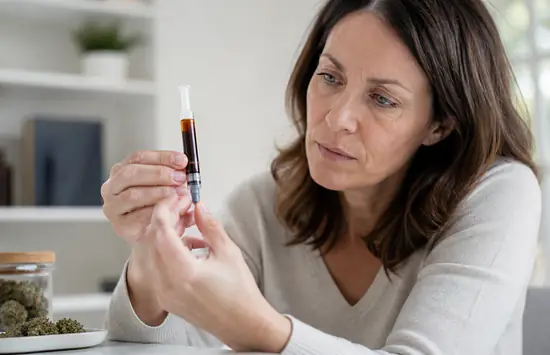
RSO Explained: What Rick Simpson Oil Actually Is and Who Uses It
If you've spent any time reading about cannabis as medicine, you've hit the letters RSO. Rick Simpson Oil. The dark, sticky substance sold in syringes at dispensaries, surrounded by passionate testimonials, scientific debate, and a healthy amount of internet folklore. Some patients swear by it. Some doctors are skeptical. Most consumers don't really understand what it is.
Here is a clean breakdown of what RSO actually is, where it came from, who is using it, and what the research actually shows.
What Is Rick Simpson Oil?
RSO is a cannabis extract made by soaking cannabis flower in a solvent, usually grain alcohol or naphtha, then evaporating the solvent off until what remains is a thick, tar-like oil. The result is a full-spectrum concentrate that pulls everything out of the plant: THC, CBD, CBG, CBN, terpenes, flavonoids, and a long list of minor cannabinoids most consumers never think about.
The look is distinctive. Black or dark brown, syrupy, sometimes thick enough that you have to warm the syringe in your hands before any of it will move. THC content typically lands somewhere between 60% and 90%, which makes it one of the strongest cannabis products on a dispensary shelf.
What separates RSO from other concentrates is the commitment to keeping everything together. Distillate strips the plant down to one or two cannabinoids. Live resin keeps terpenes but loses some compounds. RSO holds the whole chemical fingerprint of the plant in one tiny syringe.
Who Was Rick Simpson and Why Did He Make It?
The oil takes its name from Rick Simpson, a Canadian engineer who fell off a ladder in 1997 while working on asbestos-covered pipes in a hospital boiler room. The fall left him with tinnitus and dizzy spells that prescription medication could not touch.
A few years later, Simpson saw a documentary about cannabis as medicine and started experimenting with extracts. The dizzy spells calmed down. Then, in 2003, he was diagnosed with basal cell carcinoma. He applied his homemade cannabis oil topically to the spots on his arm, covered them with bandages, and waited. As he tells it, the lesions were gone within four days.
Simpson became a folk hero in the medical cannabis world. He refused to patent the recipe, refused to sell the oil for profit, and gave it away to thousands of patients. Canadian authorities raided him repeatedly. He eventually moved to Europe, where he still advocates for medical cannabis access today.
What Is RSO Used For?
The list of conditions people use RSO for is long. It started with cancer and grew from there. The most commonly cited uses:
Cancer symptoms and side effects. Patients undergoing chemotherapy use RSO to manage nausea, pain, and appetite loss. In a study of cancer patients across eight U.S. medical cannabis states, eight participants reported using Rick Simpson Oil specifically as part of their cancer treatment, with several abandoning conventional therapy in favor of RSO alone.
Chronic pain. RSO's high cannabinoid content makes it useful for severe, long-term pain that lower-potency cannabis products can't address.
Insomnia. Heavy indica-derived RSO knocks people out. A grain-of-rice dose before bed is a common protocol.
Skin conditions. Topical RSO gets used for everything from eczema to skin cancers, applied directly to the affected area.
Multiple sclerosis, epilepsy, and PTSD. Anecdotal reports and a handful of small studies suggest cannabinoid extracts help manage symptoms across these conditions.
To be clear: "people use it for X" is not the same as "RSO treats X." That distinction matters.
Does RSO Work for Cancer?
This is where the story gets complicated. The honest answer: RSO has not been proven to cure cancer in humans, but cannabis compounds have shown anti-tumor activity in lab and animal studies, and that science is real.
Lab work has been promising. High-THC cannabis extracts inhibited the growth of squamous cell carcinoma cancer cells by 66% to 92% in cell-culture experiments, and other studies have found anti-tumor effects of cannabinoids on breast, colon, prostate, and brain cancer cell lines.
The big caveat: cell cultures and lab mice are not human cancer patients. No large-scale human clinical trials have demonstrated that cannabis can treat cancer directly. Where the evidence is solid is in symptom management: appetite, pain, nausea, sleep.
A peer-reviewed review of cannabis cancer case reports found that only 11 out of 76 published case reports met a strong appraisal for anticancer impact, and most of those involved CBD rather than THC-heavy RSO. The evidence is not closed, and ongoing research could shift the picture, but the marketing claim that RSO cures cancer is well ahead of the science.
What is worth saying clearly: anyone with a cancer diagnosis considering RSO should be talking to their oncologist, not a forum.
How Do You Use RSO?
RSO is sold in needleless syringes for precision dosing. There are four standard methods:
Oral ingestion. Swallow a small dose directly, or smear it onto a cracker, piece of bread, or fatty food like peanut butter. Cannabinoids are fat-soluble, so taking RSO with healthy fats improves absorption. Onset takes 60 to 90 minutes. Effects last 6 to 8 hours.
Sublingual. Place a small dose under your tongue and hold it for 60 to 90 seconds before swallowing. Onset is faster, around 15 to 45 minutes.
Topical. Smear directly on skin for localized issues. No psychoactive effects from topical use unless the area is broken.
Suppository. Some patients use rectal suppositories for serious conditions because the bioavailability is high and there is no head high involved. This is more medical than recreational.
What you should not do: smoke RSO. The solvent residue makes combustion dangerous. Sublingual or oral ingestion is the standard.
RSO Dosage: Start Low and Go Slow
The Simpson protocol is famous for a reason. Start with a drop the size of half a grain of rice, three times a day. That is roughly 10 to 15 milligrams of THC per dose for most lab-tested products. Wait at least 90 minutes before deciding if you need more.
The original protocol calls for ramping the dose up over four to five weeks until you reach about a gram of RSO per day, split across three doses. The full Simpson treatment runs 60 grams over roughly 90 days for serious conditions like cancer. That is an enormous amount of THC, and it requires building tolerance gradually.
For wellness use like sleep or pain, most people stabilize at a much lower maintenance dose, often a rice-grain amount once or twice daily.
The single most important rule: start low, go slow. RSO is more concentrated than almost any edible you have ever taken. A casual smoker who eats a full grain of rice on day one is going to have a very long, very uncomfortable night.
Why the Strain Behind the Oil Matters
The quality of any cannabis extract is capped by the quality of the flower it came from. RSO is no different. You can build the cleanest extraction setup in the world and end up with mediocre oil if the starting material is weak.
Rick Simpson himself recommended indica-dominant flower with high THC for the most therapeutic results, and there is logic to that. Indica genetics tend to be denser in resin, slower in flowering, and richer in the heavy, body-relaxing cannabinoid and terpene profiles that make RSO work for pain and sleep. Strains like our Critical Kush, an indica cross of Critical Mass and OG Kush testing around 28% THC, were practically built for RSO production. The same goes for our LSD, a heavy-resin indica that has been a staple in our catalog for over a decade and consistently throws THC numbers north of 28%.
After nearly four decades of breeding and over 40 Cannabis Cup wins, this is what we know: cannabinoid content is only part of the story. Terpene volume, trichome density, and the stability of those traits across an entire grow cycle matter more than a single THC number on a label. When patients are using cannabis for serious health reasons, they deserve genetics that produce a consistent, full-spectrum extract every time.
The Bottom Line on RSO
RSO is real, it is potent, and it has been part of cannabis medicine for over twenty years. It is also surrounded by claims that have not been proven. Patients use it for pain, sleep, nausea, and a long list of other symptoms with reasonable success. Whether it can treat cancer directly remains an open scientific question.
If you are trying RSO, buy from a licensed dispensary that lab-tests for residual solvents. Start with half a grain of rice. Talk to a doctor familiar with cannabis if you have a serious medical condition. The plant has been doing real work for human health for a long time, and treating it with the respect that work deserves is the smartest way to get something useful out of a syringe of dark, sticky oil.
Barney's Farm has been developing premium cannabis genetics since the 1980s, with over 40 Cannabis Cup wins. Explore our full cannabis seed catalog and find strains bred for every climate and skill level.