Organic Weed: What Clean Green Certified Actually Means
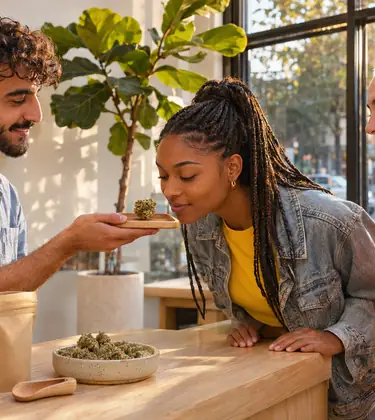
Grocery shoppers know the green-and-white USDA organic seal. Dispensary shoppers never see it, no matter how carefully a farm grows its flower. Instead, menus offer words such as clean, natural, sun-grown and living soil, and a few labels that point to an outside audit.
The best known of those audits is Clean Green Certified, which has been checking cannabis farms for two decades. Understanding what it covers, and what the word organic means in law, tells you how much an organic weed claim is really worth.
Key takeaways
- Marijuana cannot carry the USDA organic seal, since only the federal organic program can approve that word.
- Since 2004, Clean Green Certified has applied organic-style farm standards to cannabis without using the word organic.
- California's OCal seal certifies cannabis to standards comparable to the National Organic Program.
- Indoor cannabis emits 2,283 to 5,184 kg of CO2-equivalent per kilogram of dried flower, depending on location.
- Words such as clean, natural or living soil are claims, and only an outside audit backs them up.
Organic is a federal word
In the US, organic is a legal term owned by the USDA's National Organic Program. California's agriculture department puts the consequence plainly on its OCal page: only that federal program can authorize the word on packaging, and because cannabis is illegal under federal law, cannabis products are not eligible to carry it. The 2026 move of medical cannabis to Schedule III kept marijuana under federal control, so nothing changed for the seal.
For food, the federal rules are strict. Certified land must go three years without prohibited synthetic pesticides or fertilizers, the farm keeps records of every input, and an accredited certifier inspects it every year. A cannabis farm can follow the same playbook to the letter and still cannot print the word.
So there is no USDA organic cannabis on any dispensary shelf, even when a farm follows every organic rule. Hemp is the exception, since federal law treats it as an ordinary crop, which is why hemp products can carry the seal while a bag of state-licensed flower cannot.
That gap left growers with no legal way to prove their methods, and it created the market for private and state certification programs.
Clean Green Certified, explained
The oldest of those programs grew out of a refusal. Chris Van Hook, an organic inspector, asked federal officials whether he could certify cannabis and was overruled, so he wrote his own standards, and Clean Green has certified pot since 2004, Grist reported. He built the program on US and international organic standards and kept one rule above the rest: certified growers may never call their product organic. Van Hook had spent years inspecting farms as a federal contractor, and it shows, since much of what the USDA asks of an organic vegetable farm, Clean Green asks of a cannabis farm.
The checks go beyond a label. Growers apply with details on water and energy use, soil erosion and how they handle pests, weeds and disease. Inspectors visit every farm once a year, review every input from fertilizers to sprays, and the company tests the soil for 75 compounds at a federally licensed agricultural lab, Civil Eats reported. Each certified operation also needs a carbon reduction plan, such as renewable power or more efficient lighting.
A farm that passes can use the Clean Green Certified seal on its packaging. In our experience, the farms that pursue it are the ones proud enough of their methods to pay for an outside inspector, since certification costs money every year.
Feeling lost on how to start? Try taking our quiz!
Start a QuizThree seals side by side
California added a state option in recent years, so anyone comparing organic cannabis certification now has three seals to tell apart:
| What you compare | USDA Organic | Clean Green Certified | California OCal |
|---|---|---|---|
| Who runs it | US Department of Agriculture | A private certifier founded in 2004 | California Department of Food and Agriculture |
| Covers marijuana | No, hemp only | Yes | Yes, California cannabis |
| Label wording | Organic | Never uses the word organic | Comparable-to-organic |
| How farms qualify | Federal organic rules | Yearly inspection, input review and soil tests | State standards matched to the federal program |
| Where it applies | Nationwide | Farms in several states | California only |
| What you compare | Who runs it | Covers marijuana | Label wording | How farms qualify | Where it applies |
|---|---|---|---|---|---|
| USDA Organic | US Department of Agriculture | No, hemp only | Organic | Federal organic rules | Nationwide |
| Clean Green Certified | A private certifier founded in 2004 | Yes | Never uses the word organic | Yearly inspection, input review and soil tests | Farms in several states |
| California OCal | California Department of Food and Agriculture | Yes, California cannabis | Comparable-to-organic | State standards matched to the federal program | California only |
OCal, run by the California Department of Food and Agriculture, sets comparable-to-organic standards for licensed cannabis and lets certified products carry its own seal instead of the federal one. For shoppers, the practical difference is reach, since Clean Green appears on farms in several states while OCal stops at the California border.
The unexamined day is a wasted opportunity. Reflect on what you did, what you learned, and how you can improve.
John Dewey
Menu words that prove nothing
The question "Is weed organic?" has no single answer, because cannabis is only as organic as the way it was grown. One farm feeds living soil with compost and never sprays, another runs synthetic nutrients and fungicides, and both can call their flower clean on a menu. Legal state testing checks residues against limits, but passing a test does not make a crop organic.
Each menu word also means less than it sounds. Sun-grown says where the plant grew, outdoors or in a greenhouse, and nothing about what went on it. Living soil describes a biologically active mix reused from crop to crop, a method many organic growers favor, though no rule defines it. Craft usually means small batches, and pesticide-free means little until a full lab panel backs it up.
Genetics can make clean growing easier. Mold forces more growers into spraying than anything else, so a resistant plant matters. Blue Dream, a Blueberry and Super Silver Haze cross at 28% THC, is resistant to common molds and mildew, its page says, which gives an organic garden one less reason to reach for a fungicide. Outdoors, it is ready in the second or third week of October.
Sun, soil and the carbon bill
Clean Green's carbon plan targets a real problem: indoor growing burns a lot of energy. A 2021 study in Nature Sustainability put the life-cycle emissions of indoor cannabis in the US at 2,283 to 5,184 kg CO2-equivalent per kilogram of dried flower, depending on location, driven mostly by electricity for lights and climate control, natural gas and bottled carbon dioxide. Electricity is the biggest line in the carbon footprint of indoor weed, and sun-grown flower skips most of it. The same study notes that much legal cannabis is grown indoors mainly for quality control and security, so the footprint follows from how the market is built. Greenhouses sit in between, using the sun for most of their light and lamps only to fill the gaps.
That does not make every indoor bud dirty or every outdoor bud clean. It does mean that sun-grown, certified flower answers two questions at once, how the plant was fed and what it cost to grow.
Reading an organic claim at the counter
A label earns trust when someone outside the farm has checked it. Before paying extra for organic-style flower, look for:
- Certifier name you can look up online
- Lab report with a full pesticide panel
- Growing method, such as sun-grown, greenhouse or indoor
- Harvest or packaging date
- Licensed producer named on the package
A good budtender can say where the flower was grown and who certified it. If the only answer is that it is clean, treat that as a sales word and judge the flower by its lab report, smell and look, as you would any other strain.
Growing organic weed at home
Home growers can go further than any seal. In our own gardens, organic growing comes down to a few habits:
- Build living soil with compost, worm castings and slow organic amendments, then feed the soil instead of the plant.
- Bring in beneficial insects such as ladybugs and predatory mites before any spray.
- Keep air moving through the canopy, since still, humid air invites mold.
- Choose strains that finish before the fall rains.
Northern Lights, the Amsterdam coffeeshop classic built from Thai landrace and Afghan genetics at 26% THC, suits that last habit, since outdoor plants are ready in the third or fourth week of September.
Feeding can stay simple. A top-dress of compost and worm castings every few weeks, with a little kelp meal or bat guano in flower, keeps the soil life working, and a layer of mulch holds moisture. Reusing the same soil from crop to crop saves money and builds the biology that gives organic flower its flavor.
Labels that earn their place
Marijuana can’t be USDA organic while it stays under federal control, so organic weed relies on private and state seals instead. Clean Green Certified backs its label with yearly inspections, input reviews, soil tests and a carbon plan, and California’s OCal program certifies cannabis to comparable-to-organic state standards. No outside audit stands behind any other word on a menu. Look for a named certifier, a full lab report and a clear growing method, or grow your own the organic way.
Barney's Farm has been developing premium cannabis genetics since the 1980s, with over 40 Cannabis Cup wins. Explore our full seed catalog and find strains bred for every climate and skill level.