Microdosing Cannabis: Why 2.5mg Is the New Sweet Spot
For decades, the cannabis world obsessed over potency. Higher THC percentages. Stronger edibles. Concentrates that could melt your face. Flower testing at 30%+ became a badge of honour. And then something strange happened. People started going the other way.
The Less-Is-More Revolution
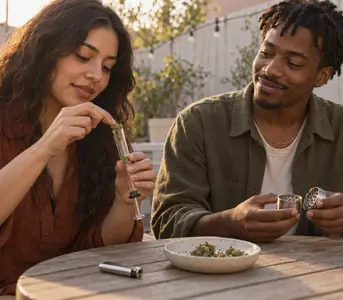
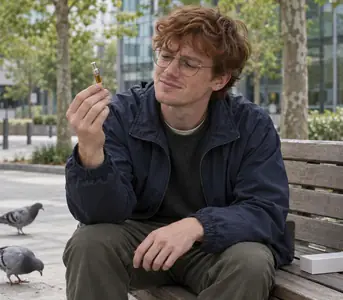
Microdosing cannabis means taking small, controlled amounts of THC, typically between 1 and 5 milligrams, to get functional benefits without getting stoned. The target is subtle. A slight lift in mood. Reduced tension behind the eyes. Enough to take the edge off without losing your ability to hold a conversation, finish a work task, or drive to the grocery store.
The concept borrowed its name from the psychedelics world, where sub-perceptual doses of psilocybin and LSD have been trendy for years. But cannabis microdosing has its own logic. THC is biphasic, meaning it produces different effects at different doses. Low amounts can calm your nerves. Higher amounts can amplify them. Anyone who has ever eaten a 50mg edible on accident understands this distinction deeply and personally.
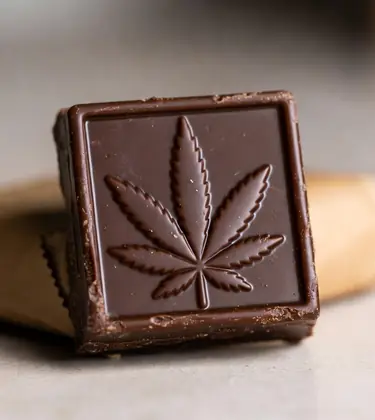
The standard edible dose in most legal markets is 10mg per serving. For a lot of people, that's already too much. They get anxious, sluggish, or couch-locked when they wanted relaxed and functional. Cutting that number to 2.5mg changes the game. You still feel something. You just don't lose yourself in the process.
Your Body Already Runs on Cannabinoids
This is the part that surprises most people. Your body has a built-in system designed to interact with cannabinoids. It's called the endocannabinoid system (ECS), and it was discovered in the early 1990s by researchers tracking what THC actually does once it enters the body.
The ECS is a network of receptors, enzymes, and neurotransmitters spread across your brain, organs, immune cells, and nervous system. CB1 receptors concentrate in the brain. CB2 receptors show up mostly in immune tissue. Together, they regulate mood, sleep, pain perception, appetite, memory, and inflammation. Your body produces its own cannabinoids to activate this system. One of them, anandamide, gets its name from the Sanskrit word for "bliss."
When you consume THC, it binds to these same receptors. In small amounts, the signal is gentle. The system adjusts without getting overwhelmed. In large amounts, the flood of input can cause anxiety, paranoia, or mental fog. As Harvard Health describes it, the ECS acts like a series of traffic cops, turning up or down the activity of whichever system needs adjustment, whether that's hunger, temperature, or alertness.
What the Research Actually Says
Cannabis research moves slowly, partly because THC is still classified as a Schedule I substance in the U.S. (though the White House indicated in December 2025 it is considering rescheduling marijuana to Schedule III). But the studies that do exist on low-dose THC are compelling.
A well-known study from the University of Illinois at Chicago and the University of Chicago, published in Drug and Alcohol Dependence, tested two THC dose levels in healthy volunteers who were put through a stressful mock job interview. The group receiving 7.5mg of oral THC reported reduced negative emotions and rated the stressor as less threatening afterward. The group receiving 12.5mg reported increased anxiety and worse mood throughout the test. Same compound. Different doses. Opposite outcomes.
Researcher Emma Childs, one of the study's authors, emphasized how dose-dependent the effects were. A little THC helped. A moderate amount made things worse. That finding is foundational to the microdosing philosophy.
Pain research points in a similar direction. An Israeli clinical trial found that inhaled doses as low as 0.5mg and 1mg of THC delivered significant pain reduction that lasted over two hours, with almost no side effects and no measurable cognitive impairment. That's hundreds of times less THC than a typical joint contains.
Feeling lost on how to start? Try taking our quiz!
Start a QuizWhy 2.5mg Specifically
There's no universal microdose. Bodies vary. Tolerance varies. But 2.5mg has become the consensus starting point across practitioners, product makers, and the growing community of people who dose low on purpose.
At Barney's Farm, we've spent over three decades studying cannabis genetics at the molecular level. Our breeders have worked with landrace strains from Afghanistan to Thailand, isolating and stabilizing specific traits across thousands of phenotypes. That experience tells us something important about microdosing: what you grow determines what you feel.
A 2.5mg dose from a strain rich in myrcene and linalool will feel different from 2.5mg derived from a limonene-heavy cultivar. Terpene profiles shape the experience even at low doses. When you grow your own plant from stable, tested genetics, you know exactly what cannabinoid and terpene ratios you're working with. That level of control is hard to get from a dispensary shelf where labelling inconsistencies are well documented. Growers who start from genetics bred for specific chemical profiles have a real advantage when precision matters.
At sub-5mg doses, most people report no psychoactive "high" at all. What they notice instead tends to be a reduction in background anxiety, slightly improved focus, better sleep onset at night, or just a general sense that the day feels less sharp around the edges. These aren't dramatic effects. They're liveable ones.
The unexamined day is a wasted opportunity. Reflect on what you did, what you learned, and how you can improve.
John Dewey
The Anxiety Paradox

This is where things get genuinely interesting for anyone searching for a cannabis microdose for anxiety. THC has a complicated relationship with anxious feelings. Heavy use can cause or worsen anxiety. But at low doses, THC appears to activate pathways that reduce it.
The mechanism involves CB1 receptors in the amygdala, the brain region responsible for threat perception and fear responses. When THC gently activates these receptors, stress hormones decrease and emotional reactivity softens. Research on PTSD patients has shown that low-dose THC supplementation improved sleep quality, reduced nightmares, and lowered overall symptom severity.
The catch is that the therapeutic window is narrow. Push the dose too high and you trigger the exact response you were trying to avoid. This is why the "start low, go slow" mantra exists in cannabis culture, and it's why 2.5mg has become the default recommendation for people exploring THC for anxiety for the first time.
How to Actually Start Microdosing
If you're new to this, here's a practical rundown.
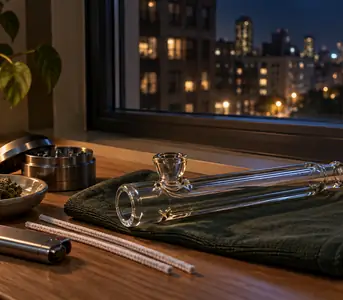
Pick the right product. Edibles and tinctures are the easiest to dose precisely. Gummies that come in 2.5mg portions are ideal. Tinctures with graduated droppers let you measure exact milligram amounts. Smoking and vaping are harder to control because absorption varies with each inhale.
Start at 2.5mg or lower. Take your dose and wait. Edibles can take 60 to 90 minutes to hit. Do not redose during that window. A common mistake is getting impatient and doubling up, which defeats the entire purpose.
Keep a journal. Track your dose, the time you took it, the product used, and how you felt over the next few hours. Patterns emerge quickly. Some people find their sweet spot at 1mg. Others land at 5mg. The journal turns guesswork into data.
Take tolerance breaks. Even at small doses, your CB1 receptors can desensitize over time. A 48-hour break every two to three weeks helps reset sensitivity and keeps your microdose effective without creeping upward.
Pay attention to strain genetics. This is where growing your own makes a real difference. Balanced THC:CBD strains tend to produce smoother, less anxious effects at low doses. At Barney's Farm, our high-CBD seeds were developed for growers who want therapeutic profiles without intensity. Because we stabilize each strain through rigorous back-crossing, growers get consistent cannabinoid and terpene levels across every plant. That consistency translates directly to predictable dosing, which is the whole point when you're measuring in single-digit milligrams.
Who Microdoses and Why
The demographic has shifted dramatically. Early cannabis culture skewed young and recreational. Microdosing pulls in a different crowd: professionals managing work stress, parents looking for something lighter than wine, older adults dealing with chronic pain or sleep issues, and athletes using it for recovery.
The trend also overlaps with the "sober curious" movement. Cannabis-infused beverages in the 2.5 to 5mg range are increasingly popular as alcohol alternatives at social events. The appeal is obvious. Mild relaxation without the hangover, the calories, or the impaired judgement that comes with three glasses of pinot.
A 2025 RAND study estimated that roughly 10 million U.S. adults had microdosed psychedelics in the prior year, and the researchers noted microdosing as a growing practice that has significant public health and policy implications. Cannabis microdosing likely reaches an even larger audience, given legal access in dozens of states and countries.
What Microdosing Won't Do
Let's keep this honest. Microdosing is not a cure for clinical anxiety disorders, chronic pain conditions, or insomnia. It's a tool. For some people, it works remarkably well. For others, the dose is too low to address their symptoms, and they need a different approach entirely.
Cannabis still shows up on drug tests at any dose. THC metabolites accumulate even from 2.5mg servings, and regular microdosers will likely test positive. If your employer tests, factor this in.
And product accuracy remains a real issue. Studies have found that edible labelling can be unreliable, with some products containing significantly more or less THC than stated. Buy from licensed producers with third-party lab testing. Consistency is everything when you're dosing this precisely.
The Future Is Small
Cannabis potency peaked. The market responded. Consumers, especially new ones, are actively choosing control over intensity. The 2.5mg edible is outselling expectations in every legal market where it's available. Beverage companies are building entire product lines around the microdose.
At Barney's Farm, we've watched cannabis culture evolve for over 30 years. We've bred strains for maximum THC, for maximum CBD, for flavour, for resilience, and for medical applications. The rise of microdosing reinforces what we've always known: great cannabis starts with great genetics. When you grow from stable, well-bred seeds, you control the full chain from soil to dose.
Barney's Farm has been developing premium cannabis genetics since the 1980s, with over 40 Cannabis Cup wins. Explore our full seed catalog and find strains bred for every climate and skill level.