
Marinol and Syndros: Why Doctors Prescribe Synthetic THC Instead of the Plant
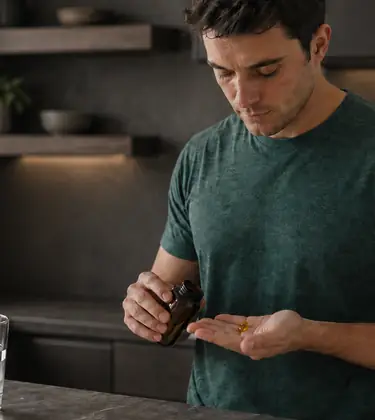
Pure THC has been a legal prescription medicine in the United States since 1985. It has been available in a pharmacy, covered by insurance, in every state, through every year of the drug war.
The molecule inside that capsule is chemically identical to the one in cannabis flower. The legal treatment of the two has never been remotely identical, and the reason is a piece of regulatory logic worth reading slowly.
This guide covers what these drugs are, the scheduling contradiction at the center of them, why the pill feels different from the plant, and what happened when someone finally tested the folklore.
The objection was never the molecule
Synthetic THC is legal medicine because it comes with a manufacturer, a label and a fixed dose. The chemistry was never the objection. Regulators can approve a molecule they can measure and standardize, and a flower with variable cannabinoid content is a thing they cannot. That is most of the story.
What these drugs actually are
Three cannabinoid medicines have been approved in the US, and they are older than most of the debate about them. Marinol is dronabinol, synthetic delta-9-THC dissolved in sesame oil inside a gelatin capsule, approved in 1985. Its label lists two indications: anorexia associated with weight loss in patients with Acquired Immune Deficiency Syndrome (AIDS), and nausea and vomiting from chemotherapy in patients who have failed to respond adequately to conventional antiemetic treatments. Both are second-line by their own wording, which is why oncologists reach for it late or never.
Syndros is the same molecule as a liquid, approved in July 2016, with word-for-word identical indications. It is also 50 percent dehydrated alcohol by weight, which puts a disulfiram interaction warning on a drug frequently described as the safe alternative to smoking. It has since been discontinued and now sits in the FDA's discontinued products list.
Cesamet is nabilone, a synthetic cannabinoid approved the same year as Marinol, for chemotherapy nausea only. It was approved in 1985 and then effectively absent from the American market until 2006, a gap of twenty-one years.
Three approvals, two of them now barely present. This is a corner of medicine that exists more firmly on paper than in pharmacies.
The scheduling contradiction
Now the part that makes the whole subject worth writing about. When the DEA moved Marinol from Schedule II to Schedule III in 1999, it did not reschedule THC. It rescheduled a formulation. The rule says so directly: the transfer did not affect the CSA classification of pure dronabinol, which—as a tetrahydrocannabinol with no currently accepted medical use in treatment in the United States—remains a schedule I controlled substance.
Read that twice. The same molecule has an accepted medical use inside a capsule and no accepted medical use outside one.
It gets stranger. When Syndros arrived, the identical compound in liquid form was placed in Schedule II, one tier stricter than the capsule, because Syndros, unlike Marinol, can be manipulated such that the dronabinol can be evaporated into residues that can be reconstituted for smoking or abused intravenously.
So as of today the scoreboard runs like this. Synthetic THC in a capsule is Schedule III. The same synthetic THC in a bottle is Schedule II. State-licensed medical cannabis moved to Schedule III in April 2026. Everything else the plant produces is still Schedule I.
Four tiers, one molecule, and the deciding variable is packaging.
Feeling lost on how to start? Try taking our quiz!
Start a QuizWhy the pill is not the plant
The pharmacology genuinely differs, and it has nothing to do with purity. Swallowed THC goes through the liver before it reaches the brain. The FDA's own label puts the loss at only 10 to 20% of the administered dose reaches the systemic circulation, with onset at half an hour to an hour and peak effect two to four hours later. Inhaled THC appears in plasma on the first puff.
The bigger difference is chemical. The liver converts a large share of oral THC into 11-hydroxy-THC, a metabolite that is itself active, and after oral dosing the two circulate at roughly equal concentrations. After smoking, 11-hydroxy-THC runs around ten percent of the THC level.
That is the real answer to why Marinol feels wrong to people who know cannabis. A capsule delivers a slow, long, heavily metabolized experience built substantially on a different compound. The plant delivers a fast one built on THC itself. Neither is a purity question.
Add the titration problem. A smoker adjusts dose breath by breath and knows within a minute whether to stop. A patient who swallows 10 mg finds out in two hours, and cannot take it back.
The unexamined day is a wasted opportunity. Reflect on what you did, what you learned, and how you can improve.
John Dewey
What happened when someone tested the folklore
The received wisdom says Marinol is a poor imitation. Somebody ran the experiment.
A Columbia study gave experienced cannabis smokers with HIV both smoked cannabis and oral dronabinol in a double-dummy design, and found that both produced substantial and comparable increases in food intake. The catch sits in the dose: it took four to eight times the labeled amount to get there, and the highest dose was poorly tolerated by some participants.
Patient preference data cuts the same way. In a direct comparison of THC pills against smoked cannabis for chemotherapy nausea reported by the National Academies, 35 percent of the patients said they favored THC pills, 20 percent chose marijuana, and 45 percent had no preference. More patients preferred the pill.
The same review notes the one situation where inhalation clearly wins, and it is mechanical instead of pharmacological: if vomiting is severe, an oral capsule cannot stay down long enough to work.
The entourage argument, honestly
This is where a seed company is supposed to say the whole plant is better. Here is what the evidence actually supports. The entourage effect, the idea that terpenes and minor cannabinoids shape the effect of THC, was proposed in a 2011 review as a hypothesis worth testing. Six years later, science journalism checking on it reported that double-blind clinical trials, the gold standard for research studies in medicine, have never been conducted to investigate the effects of marijuana's terpenes or its cannabinoids other than THC. The researcher who ran the head-to-head study put it plainly in the same piece: the public has taken on the notion of the entourage effect, but there is not a lot of data.
We think the plant is better. We also think saying so as though it were settled science does the argument no favors, because the honest case does not need the exaggeration.
What a breeder contributes
The defensible version of the whole-plant argument comes down to variety. A capsule offers one compound at one dose in one form. A cultivar offers a cannabinoid ratio, a terpene profile, a flowering time and a growth habit, all of which a breeder can select for across generations. Whether terpenes modulate the high in the way the entourage hypothesis proposes is unresolved. That they determine the taste, the smell and the character of the experience is not in dispute by anyone who has used both.
Biscotti Mintz is the terpene showcase, Biscotti crossed with Mintz at 33% THC, 56 to 63 days at 80 to 110 cm indoors, a limonene, caryophyllene and eucalyptol profile reading as creamy mint, chocolate chip cookie and spice, creative and focused over a relaxing body. Tropicana Cherry is the brighter counterpart, Tropicana Cookies crossed with Tropicana Cherry, a 60% sativa at 28%, 60 to 65 days at 100 to 140 cm, cherry and mango over citrus and nuts, euphoric and uplifting.
Four decades of breeding is four decades of work on the variables a pharmaceutical capsule deliberately removes. That is the difference, stated without overclaiming.
Same compound, different answers
Marinol has been legal prescription THC since 1985, and Syndros since 2016, both with identical labels covering AIDS-related appetite loss and chemotherapy nausea in patients who did not respond to standard antiemetics.
The scheduling is the story. Rescheduling Marinol in 1999 explicitly left pure dronabinol in Schedule I, and Syndros was placed one tier stricter than the capsule because a liquid can be evaporated and smoked. One molecule currently sits in three different schedules depending on its container.
The pill genuinely differs from the plant: only 10 to 20 percent of an oral dose reaches circulation, onset takes up to an hour, and the liver converts much of it into a different active compound. When researchers ran the comparison directly, oral THC worked, and slightly more patients preferred the pill.
Barney's Farm has been developing premium cannabis genetics since the 1980s, with over 40 Cannabis Cup wins. Explore our full seed catalog and find strains bred for every climate and skill level.